

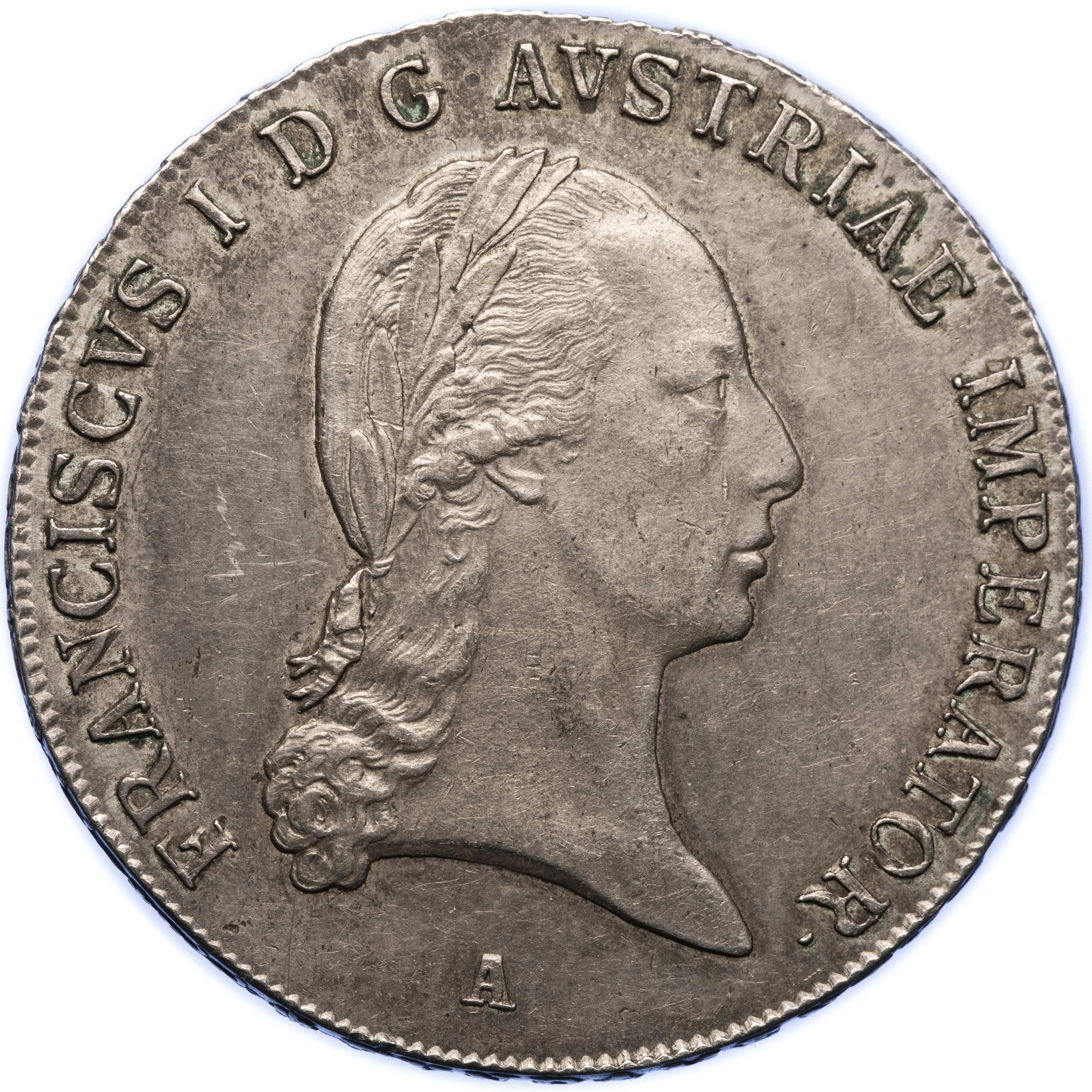
1 thaler – Austrian Empire
Add to wishlist
Austria
Context
Years: 1817–1824
Country: Austria
Issuer: Austrian Empire
Ruler: Francis I of Austria
Currency:
(1754—1857)
Demonetized: Yes
Total mintage: 1,251,000
Material
References
KM: #
Numista: #15154
Value
Bullion value: $58.67
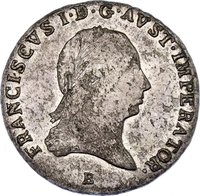
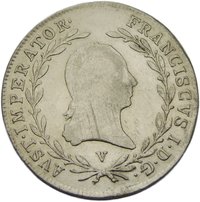
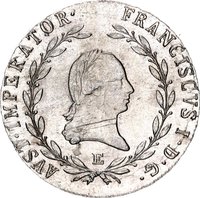
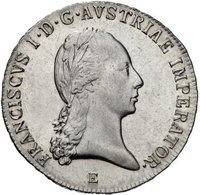
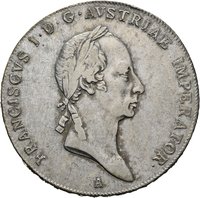
Obverse
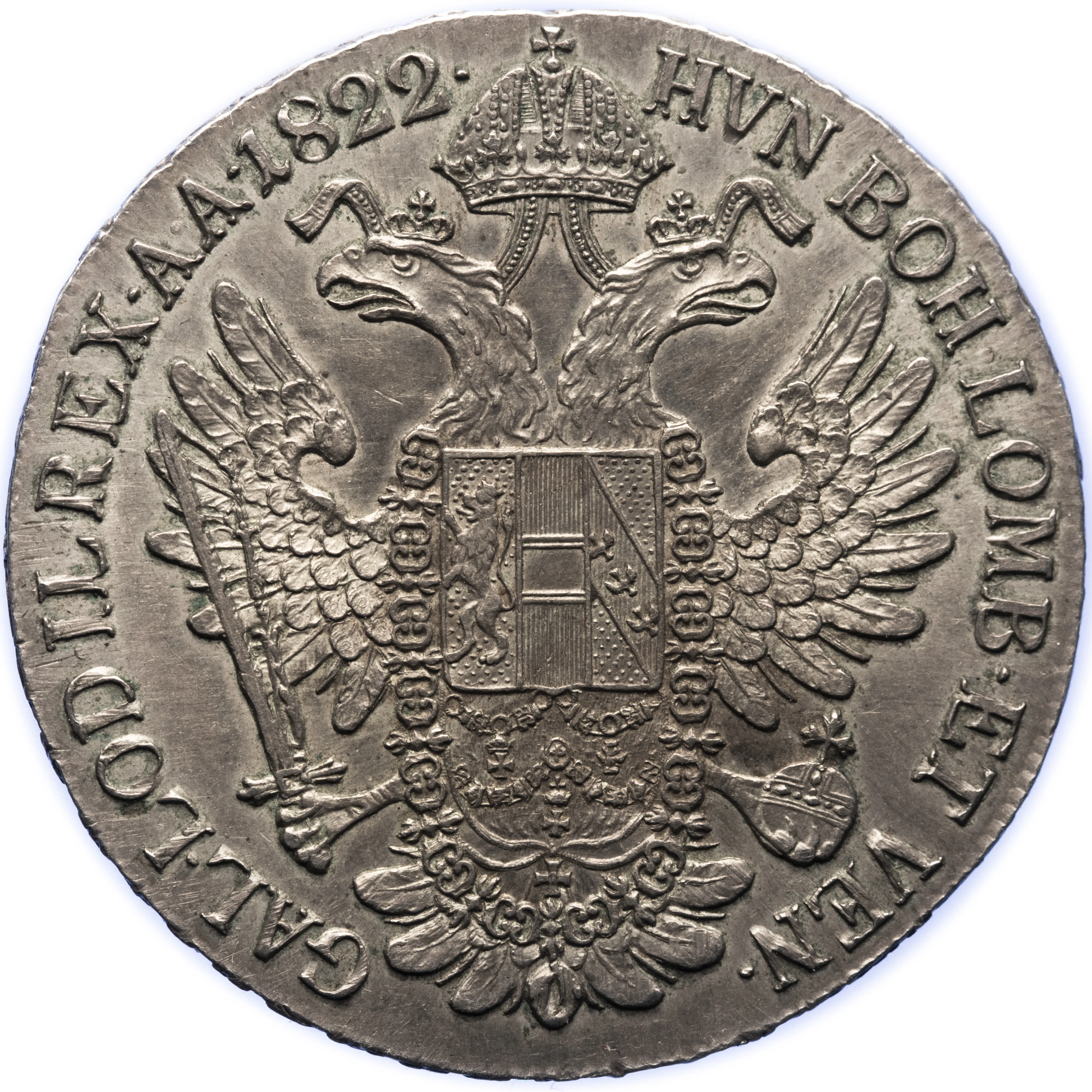
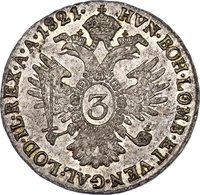
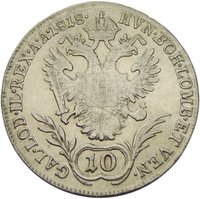
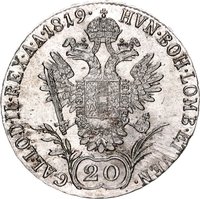
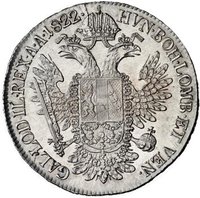
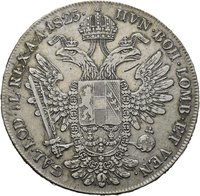
Reverse
Description:
Imperial eagle bearing Habsburg-Lorraine and Austrian arms.
Inscription:
HVN BOH LOMB ET VEN GAL LOD IL REX A A 1822
Translation:
By the Grace of God, King of Hungary, Bohemia, Lombardy and Venice, Galicia and Lodomeria, Illyria, etc. Archduke of Austria 1822
Script: Latin
Language: Latin
Edge
Inscripted text.
Legend:
IVSTITIA REGN FVNDAMENTVM
Categories
| Symbols> Coat of Arms |
Mints
| Name | Mark |
|---|---|
| Münze Österreich | A |
| Kremnica | B |
| Prague | C |
| Alba Iulia | E |
| Baia Mare | G |
| Milan | M |
| Venice | V |
Mintings
| Year | Mint Mark | Mintage | Quality | Collection |
|---|---|---|---|---|
| 1817 | A | — | ||
| 1818 | A | — | ||
| 1818 | B | — | ||
| 1818 | V | — | ||
| 1819 | E | — | ||
| 1819 | G | — | ||
| 1819 | M | — | ||
| 1819 | B | 153,000 | ||
| 1819 | C | — | ||
| 1819 | A | — | ||
| 1820 | B | 250,000 | ||
| 1820 | G | — | ||
| 1820 | M | — | ||
| 1820 | A | — | ||
| 1820 | C | — | ||
| 1820 | E | — | ||
| 1821 | C | — | ||
| 1821 | E | — | ||
| 1821 | G | — | ||
| 1821 | M | — | ||
| 1821 | B | 150,000 | ||
| 1821 | V | — | ||
| 1821 | A | — | ||
| 1822 | A | — | ||
| 1822 | B | 215,000 | ||
| 1822 | C | — | ||
| 1822 | V | — | ||
| 1822 | M | — | ||
| 1822 | E | — | ||
| 1822 | G | — | ||
| 1823 | A | — | ||
| 1823 | G | — | ||
| 1823 | E | — | ||
| 1823 | B | 201,000 | ||
| 1823 | C | — | ||
| 1824 | B | 282,000 | ||
| 1824 | C | — | ||
| 1824 | G | — | ||
| 1824 | A | — | ||
| 1824 | E | — |
Historical background
In 1817, the Austrian Empire was grappling with the severe aftermath of the Napoleonic Wars, which had left its state finances in ruins and its monetary system in chaos. To fund the prolonged conflict, the Habsburg monarchy had heavily relied on paper money, issuing unbacked banknotes known as Bancozettel. By 1811, this had led to catastrophic hyperinflation, forcing the state to declare a bankruptcy. The "Finanzpatent" of 1811 attempted a radical reset, declaring that the paper gulden would be exchanged for new "Einlösungsscheine" (Redemption Notes) at a rate of 5:1, wiping out most of the state's debt and public savings but failing to restore lasting confidence.
The situation in 1817 was defined by the ongoing struggle to implement the monetary reforms initiated by the Staatsbank (National Bank) established in 1816. The bank's primary mission was to introduce a stable, silver-backed currency—the Konventionsmünze—and to gradually withdraw the discredited paper notes from circulation. However, this process was slow and painful. The empire suffered from a chronic shortage of actual silver coinage, and the public, deeply scarred by the earlier bankruptcy, remained distrustful of paper money. Consequently, a confusing dual system persisted, with both old and new notes circulating alongside a limited supply of specie.
Therefore, 1817 represents a critical, yet unstable, transitional year. While the foundational institutions for monetary stability were in place, the practical reality was one of continued financial strain, sluggish economic recovery, and a fragile public trust. The success of the reforms hinged on the state's ability to exercise fiscal discipline—a significant challenge for the vast, multi-ethnic empire—and to accumulate sufficient precious metal reserves to fully back its new currency, a process that would take another two decades to complete.
The situation in 1817 was defined by the ongoing struggle to implement the monetary reforms initiated by the Staatsbank (National Bank) established in 1816. The bank's primary mission was to introduce a stable, silver-backed currency—the Konventionsmünze—and to gradually withdraw the discredited paper notes from circulation. However, this process was slow and painful. The empire suffered from a chronic shortage of actual silver coinage, and the public, deeply scarred by the earlier bankruptcy, remained distrustful of paper money. Consequently, a confusing dual system persisted, with both old and new notes circulating alongside a limited supply of specie.
Therefore, 1817 represents a critical, yet unstable, transitional year. While the foundational institutions for monetary stability were in place, the practical reality was one of continued financial strain, sluggish economic recovery, and a fragile public trust. The success of the reforms hinged on the state's ability to exercise fiscal discipline—a significant challenge for the vast, multi-ethnic empire—and to accumulate sufficient precious metal reserves to fully back its new currency, a process that would take another two decades to complete.
🌟 Uncommon