

1 rial – Iran
Add to wishlist
Circulating commemorative coins
Commemoration: F.A.O.
Iran
Context
Years: 1971–1975
Issuer: Iran
Ruler: Mohammad Reza
Currency:
(since 1932)
Demonetized: Yes
Total mintage: 14,375,000
Material
References
KM: #
Numista: #5103
Value
Exchange value: 1 IRR
Obverse
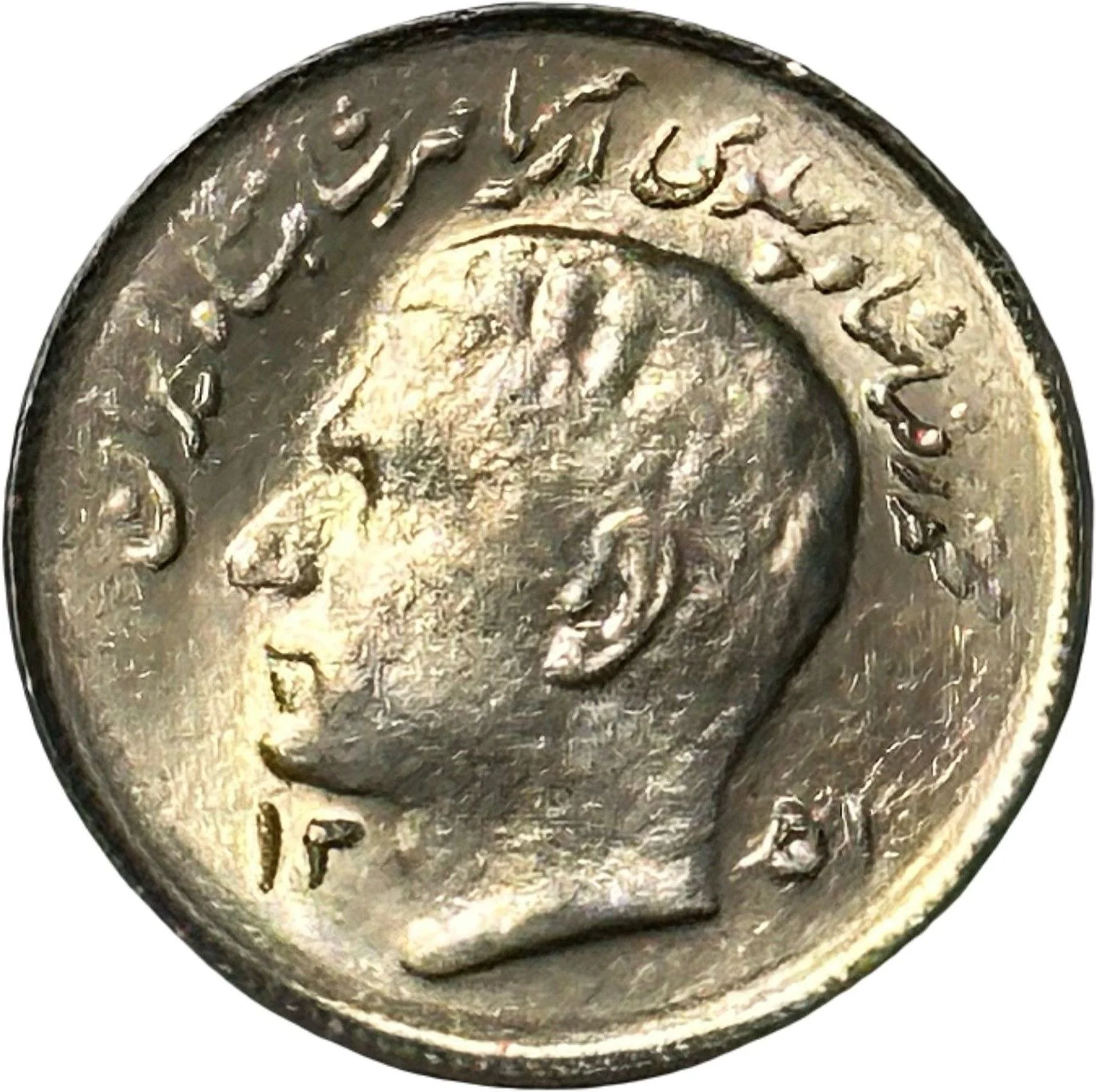
Description:
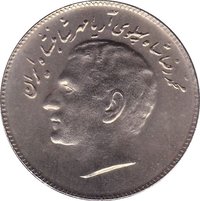
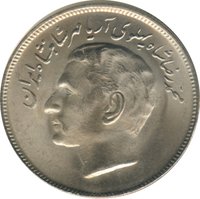
Pahlavi II, left bust. Title above.
Inscription:
محمّدرضا شاه پهلوی آریامهر شاهنشاه ایران
۱۳۵۱
۱۳۵۱
Translation:
Mohammad Reza Shah Pahlavi Aryamehr, King of Kings of Iran
1351
1351
Script: Persian (nastaliq)
Language: Persian
Reverse
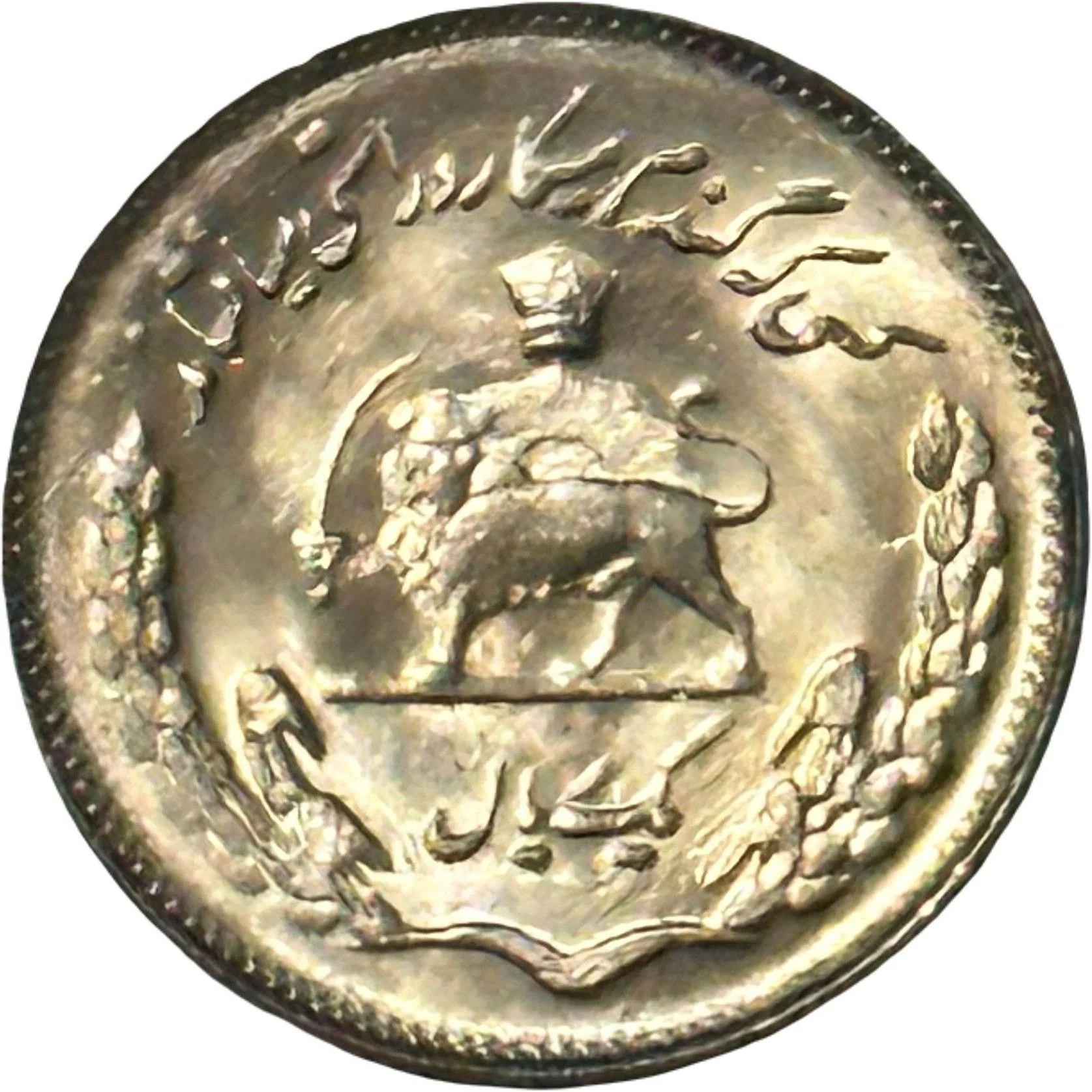
Description:
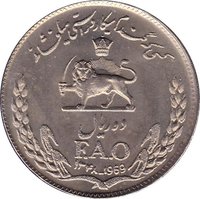
Pahlavi crown with lion and Sun emblem, encircled by wheat.
Inscription:
کسی که گندم میکارد راستی میافشاند
یک ریال
یک ریال
Translation:
He who sows wheat, sows truth.
One Rial
One Rial
Script: Persian (nastaliq)
Language: Persian
Edge
Reeded
Categories
| Organization> FAO |
| Animal> Feline |
| Person> Monarch |
| Symbols> Coat of Arms |
Mints
| Name | Mark |
|---|---|
| Tehran | — |
Mintings
| Year | Mint Mark | Mintage | Quality | Collection |
|---|---|---|---|---|
| 1971 | — | 2,770,000 | ||
| 1972 | — | 8,605,000 | ||
| 1974 | — | 2,000,000 | ||
| 1975 | — | 1,000,000 |
Historical background
In 1971, Iran's currency situation was one of relative strength and stability, underpinned by the nation's booming oil economy. The rial, pegged to the U.S. dollar at a fixed rate of approximately 75.75 rials per dollar, benefited from the Shah's ambitious modernization program and a significant increase in petroleum revenues. This period followed the 1970 "Tehran Agreement," where Iran and other OPEC members successfully negotiated higher oil prices and a greater share of profits from Western oil companies, flooding the state treasury with foreign exchange. The strong currency facilitated massive imports of Western machinery, technology, and consumer goods to fuel industrial and infrastructural projects, creating an atmosphere of economic confidence and prosperity.
However, this apparent stability masked underlying vulnerabilities. The economy was becoming increasingly dependent on volatile oil income, which constituted the vast majority of Iran's foreign exchange earnings. The fixed exchange rate, while a symbol of strength, began to create distortions as domestic inflation started to rise due to heavy government spending, a problem not fully reflected in the official peg. Furthermore, the rapid inflow of petrodollars contributed to growing social inequalities and economic overheating, with the agricultural sector lagging and a reliance on imported goods undermining domestic production.
Thus, the currency picture in 1971 was one of paradoxical duality: a strong and stable rial on the international stage, backed by burgeoning oil wealth and ambitious state plans, yet increasingly fragile due to its monolithic foundation. The fixed exchange rate regime would remain in place until 1975, but the economic pressures building beneath the surface—inflation, dependency, and imbalance—foreshadowed the challenges that would confront the Iranian economy in the later years of the decade and beyond.
However, this apparent stability masked underlying vulnerabilities. The economy was becoming increasingly dependent on volatile oil income, which constituted the vast majority of Iran's foreign exchange earnings. The fixed exchange rate, while a symbol of strength, began to create distortions as domestic inflation started to rise due to heavy government spending, a problem not fully reflected in the official peg. Furthermore, the rapid inflow of petrodollars contributed to growing social inequalities and economic overheating, with the agricultural sector lagging and a reliance on imported goods undermining domestic production.
Thus, the currency picture in 1971 was one of paradoxical duality: a strong and stable rial on the international stage, backed by burgeoning oil wealth and ambitious state plans, yet increasingly fragile due to its monolithic foundation. The fixed exchange rate regime would remain in place until 1975, but the economic pressures building beneath the surface—inflation, dependency, and imbalance—foreshadowed the challenges that would confront the Iranian economy in the later years of the decade and beyond.
🌱 Very Common