

20 Rials – Iran
Circulating commemorative coins
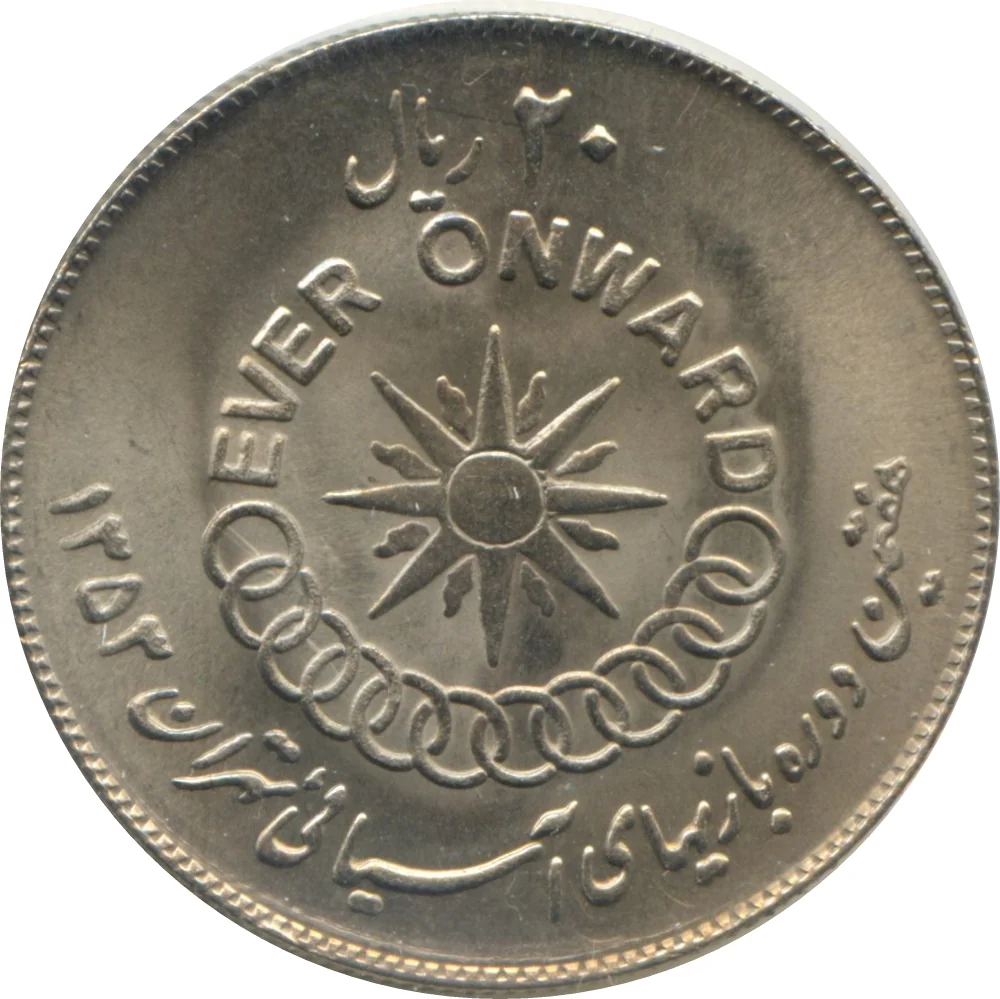
Commemoration: 7th Asian Games
Iran
Context
Year: 1974
Iranian - Persian Year: 1353
Issuer: Iran 
Ruler: Mohammad Reza
Currency:
(since 1932)
Demonetization: 1979
Material
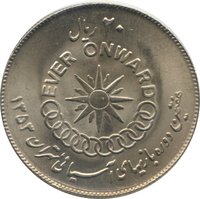
References
KM: #Click to copy to clipboard1196
Numista: #10661
Value
Exchange value: 20 IRR
Obverse
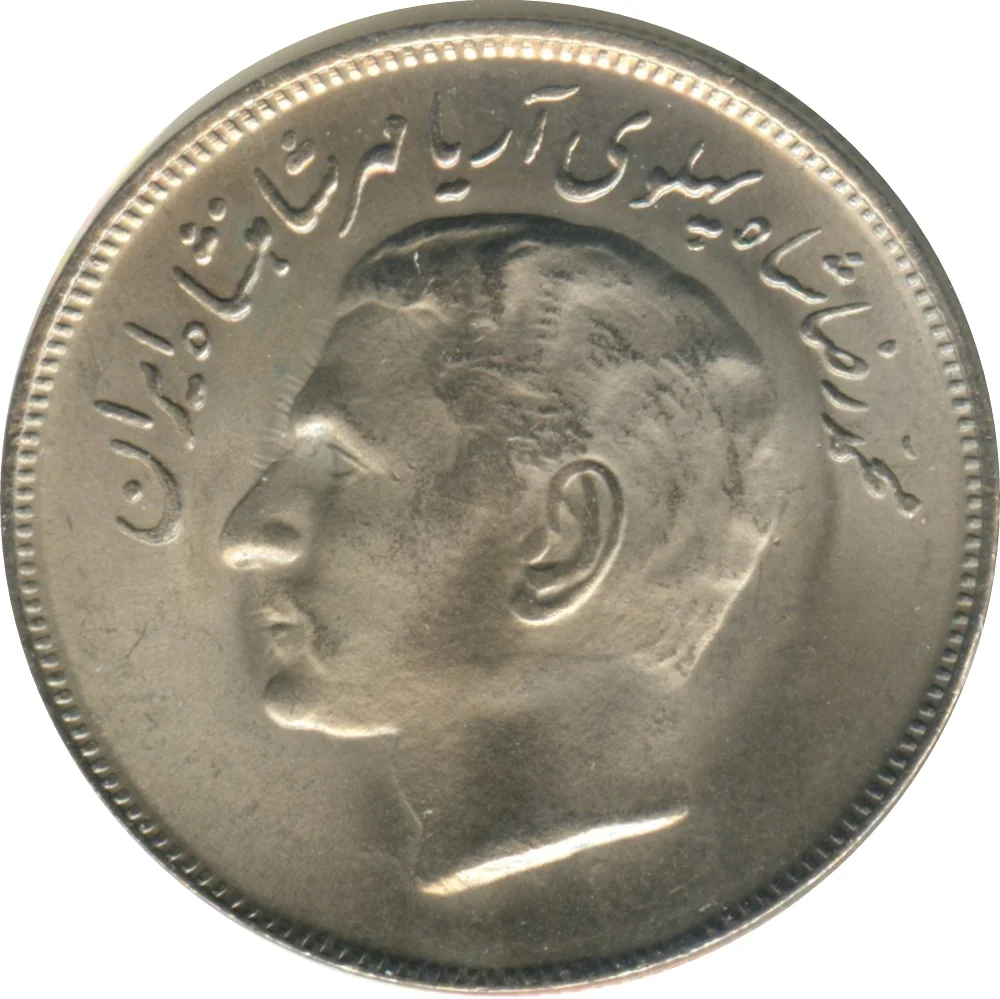
Description:
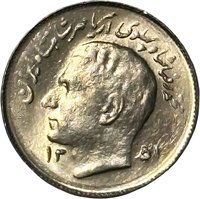
Mohammad Reza Shah Pahlavi of Iran
Inscription:
محمّدرضا شاه پهلوی آریامهر شاهنشاه ایران
Translation:
Mohammad Reza Shah Pahlavi Aryamehr, Shahanshah of Iran
Language: Persian
Reverse
Edge
Reeded
Categories
| Sport> Asian Games |
Mints
| Name | Mark |
|---|---|
| Tehran | — |
Mintings
| Year | Mint Mark | Mintage | Quality | Collection |
|---|---|---|---|---|
| 1974 | — | — |
Historical background
In 1974, Iran’s currency situation was one of apparent strength, underpinned by a dramatic oil boom. Following the 1973 oil embargo and subsequent price shocks, global oil prices quadrupled. As a major OPEC producer, Iran's oil revenues surged from approximately $5 billion in 1973 to over $20 billion in 1974, flooding the state coffers with foreign exchange. The Iranian rial was stable and pegged to the U.S. dollar at a fixed rate of approximately 67.5 rials per dollar, a regime maintained by the Central Bank of Iran (Bank Markazi). This massive inflow created a powerful illusion of permanent prosperity and financial security for the Pahlavi monarchy.
However, this wealth precipitated severe economic distortions. The Shah’s government embarked on an overly ambitious and rapid modernization program, the so-called "Great Civilization," funneling petrodollars into massive infrastructure projects, military expansion, and industrial imports. This led to rampant inflation, estimated at over 15% annually, as domestic production could not keep pace with skyrocketing demand. The economy became dangerously overheated, with bottlenecks in ports and transportation, while the fixed exchange rate made imports artificially cheap, undermining local agriculture and nascent industries and increasing dependency on foreign goods.
Beneath the surface, the currency stability was fragile and artificially maintained. The spending spree was financed almost entirely by oil income rather than sustainable economic development, creating a classic "resource curse" scenario. The fixed exchange rate, while a symbol of stability, masked growing underlying pressures. When global oil demand eventually softened and revenues later in the decade failed to meet projections, the fundamental weaknesses were exposed, leading to balance of payments difficulties, depletion of reserves, and setting the stage for the severe economic crises of the late 1970s that contributed to the revolution. Thus, 1974 represented the peak of a boom that contained the seeds of its own collapse.
However, this wealth precipitated severe economic distortions. The Shah’s government embarked on an overly ambitious and rapid modernization program, the so-called "Great Civilization," funneling petrodollars into massive infrastructure projects, military expansion, and industrial imports. This led to rampant inflation, estimated at over 15% annually, as domestic production could not keep pace with skyrocketing demand. The economy became dangerously overheated, with bottlenecks in ports and transportation, while the fixed exchange rate made imports artificially cheap, undermining local agriculture and nascent industries and increasing dependency on foreign goods.
Beneath the surface, the currency stability was fragile and artificially maintained. The spending spree was financed almost entirely by oil income rather than sustainable economic development, creating a classic "resource curse" scenario. The fixed exchange rate, while a symbol of stability, masked growing underlying pressures. When global oil demand eventually softened and revenues later in the decade failed to meet projections, the fundamental weaknesses were exposed, leading to balance of payments difficulties, depletion of reserves, and setting the stage for the severe economic crises of the late 1970s that contributed to the revolution. Thus, 1974 represented the peak of a boom that contained the seeds of its own collapse.
🌱 Fairly Common