

1 dime – United States
Add to wishlist
United States
Context
Years: 1916–1945
Issuer: United States
Period:
(since 1776)
Currency:
(since 1785)
Subdivision: 1 dime = 10 Cents
Total mintage: 2,375,398,847
Material
References
KM: #
Numista: #51
Value
Exchange value: 0.1 USD = $0.10
Bullion value: $5.50
Inflation-adjusted value: 3.18 USD
Obverse
Description:
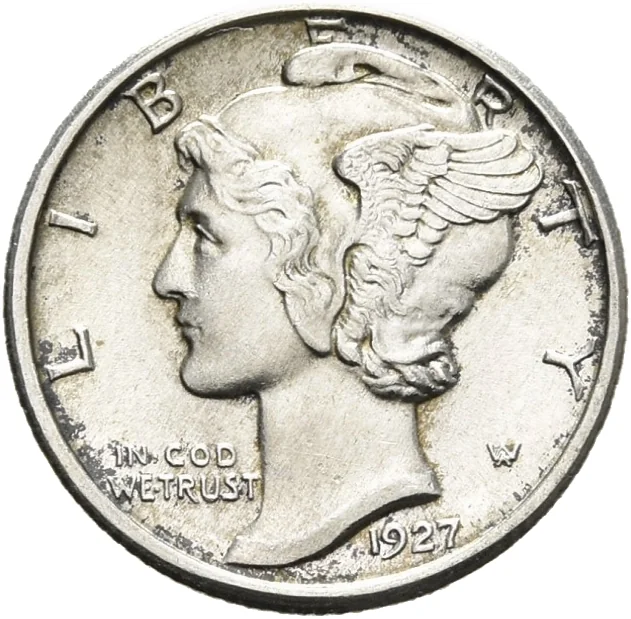
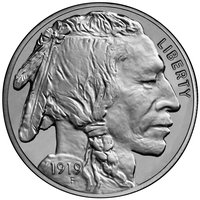
Liberty, wearing a winged Phrygian cap, is encircled by the word "LIBERTY" and the motto "IN GOD WE TRUST."
Inscription:
LIBERTY IN GOD WE TRUST 1919 AAW
Script: Latin
Engraver: Adolph Alexander Weinman
Reverse
Description:
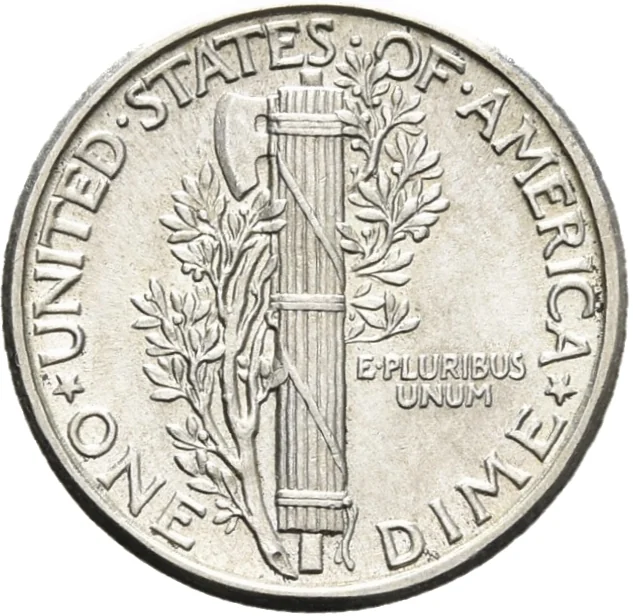
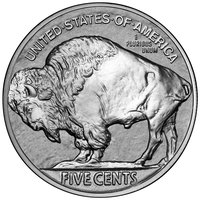
The fasces and olive branch signify America’s readiness for war and desire for peace. It is encircled by “UNITED STATES OF AMERICA,” “E PLURIBUS UNUM,” the face value, and the mintmark beside “ONE.”
Inscription:
E • PLURIBUS UNUM
UNITED • STATES • OF • AMERICA
* ONE DIME *
D
UNITED • STATES • OF • AMERICA
* ONE DIME *
D
Translation:
Out of Many, One
United States of America
One Dime
D
United States of America
One Dime
D
Script: Latin
Engraver: Adolph Alexander Weinman
Edge
Reeded (118 reeds)
Mints
| Name | Mark |
|---|---|
| United States Mint of Philadelphia | — |
| United States Mint of Denver | D |
| United States Mint of San Francisco | S |
Mintings
| Year | Mint Mark | Mintage | Quality | Collection |
|---|---|---|---|---|
| 1916 | — | 22,180,080 | ||
| 1916 | S | 10,450,000 | ||
| 1916 | D | 264,000 | ||
| 1917 | — | 55,230,000 | ||
| 1917 | D | 9,402,000 | ||
| 1917 | S | 27,330,000 | ||
| 1918 | — | 26,680,000 | ||
| 1918 | D | 22,674,800 | ||
| 1918 | S | 19,300,000 | ||
| 1919 | — | — | ||
| 1919 | S | 8,850,000 | ||
| 1919 | D | 9,939,000 | ||
| 1920 | — | 59,030,000 | ||
| 1920 | D | 19,171,000 | ||
| 1920 | S | 13,820,000 | ||
| 1921 | — | 1,230,000 | ||
| 1921 | D | 1,080,000 | ||
| 1923 | — | 50,130,000 | ||
| 1923 | S | 6,440,000 | ||
| 1924 | S | 7,120,000 | ||
| 1924 | — | 24,010,000 | ||
| 1924 | D | 6,810,000 | ||
| 1925 | — | 25,610,000 | ||
| 1925 | D | 5,117,000 | ||
| 1925 | S | 5,850,000 | ||
| 1926 | D | 6,828,000 | ||
| 1926 | — | 32,160,000 | ||
| 1926 | S | 1,520,000 | ||
| 1927 | — | 28,080,000 | ||
| 1927 | D | 4,812,000 | ||
| 1927 | S | 4,770,000 | ||
| 1928 | — | 19,480,000 | ||
| 1928 | D | 4,161,000 | ||
| 1928 | S | 7,400,000 | ||
| 1929 | — | 25,970,000 | ||
| 1929 | D | 5,034,000 | ||
| 1929 | S | 4,730,000 | ||
| 1930 | — | 6,770,000 | ||
| 1930 | S | 1,843,000 | ||
| 1931 | — | 3,150,000 | ||
| 1931 | D | 1,260,000 | ||
| 1931 | S | 1,800,000 | ||
| 1934 | — | 24,080,000 | ||
| 1934 | D | 6,772,000 | ||
| 1935 | — | 58,830,000 | ||
| 1935 | D | 10,477,000 | ||
| 1935 | S | 15,840,000 | ||
| 1936 | — | 87,504,130 | ||
| 1936 | — | 4,130 | Proof | |
| 1936 | D | 16,132,000 | ||
| 1936 | S | 9,210,000 | ||
| 1937 | — | 56,865,756 | ||
| 1937 | — | 5,756 | Proof | |
| 1937 | D | 14,146,000 | ||
| 1937 | S | 9,740,000 | ||
| 1938 | — | 22,198,728 | ||
| 1938 | — | 8,728 | Proof | |
| 1938 | D | 5,537,000 | ||
| 1938 | S | 8,090,000 | ||
| 1939 | — | 9,321 | Proof | |
| 1939 | — | 67,749,321 | ||
| 1939 | D | 24,394,000 | ||
| 1939 | S | 10,540,000 | ||
| 1940 | — | 65,361,827 | ||
| 1940 | — | 11,827 | Proof | |
| 1940 | D | 21,198,000 | ||
| 1940 | S | 21,560,000 | ||
| 1941 | — | 175,106,557 | ||
| 1941 | — | 16,557 | Proof | |
| 1941 | D | 45,634,000 | ||
| 1941 | S | 43,090,000 | ||
| 1942 | — | — | ||
| 1942 | — | 22,329 | Proof | |
| 1942 | D | — | ||
| 1942 | S | 49,300,000 | ||
| 1943 | — | 191,710,000 | ||
| 1943 | D | 71,949,000 | ||
| 1943 | S | 60,400,000 | ||
| 1944 | — | 231,410,000 | ||
| 1944 | D | 62,224,000 | ||
| 1944 | S | 49,490,000 | ||
| 1945 | — | 159,130,000 | ||
| 1945 | D | 40,245,000 | ||
| 1945 | S | 41,920,000 |
Historical background
In 1916, the United States operated under the Classical Gold Standard, a system where the value of the dollar was directly convertible into a fixed quantity of gold. This provided long-term price stability and facilitated international trade, but it also meant the domestic money supply was largely dictated by the nation's gold reserves and the flow of capital across borders. The nation's central bank, the Federal Reserve System, was a new and still-testing institution, having been established just two years prior in 1914 to provide a more elastic currency and act as a lender of last resort, addressing the banking panics that had plagued the 19th century.
The dominant physical currency in circulation consisted of U.S. Notes (greenbacks from the Civil War era), Gold Certificates, and Silver Certificates, alongside national bank notes issued by private banks. However, the outbreak of World War I in Europe profoundly disrupted global financial flows. The United States, initially neutral, became a safe haven for capital and a major supplier to the Allied powers, leading to a massive inflow of gold. This gold influx increased the U.S. monetary base, creating inflationary pressures that began to push prices upward, a concern that contrasted with the pre-war era's general price stability.
Politically, the currency landscape was still marked by the fading but potent debates of the late 19th century, particularly the "Free Silver" movement championed by William Jennings Bryan, which had advocated for the monetization of silver to inflate the currency and aid debtors. By 1916, this battle was largely over, with gold undisputed as the monetary anchor. The financial system's focus was shifting toward managing the economic distortions caused by the European war and preparing for potential American involvement. The stage was being set for the Federal Reserve to take on a more active role in managing the nation's money and credit, a responsibility that would be fully tested when the U.S. entered World War I the following year and suspended gold exports to conserve its reserves for the war effort.
The dominant physical currency in circulation consisted of U.S. Notes (greenbacks from the Civil War era), Gold Certificates, and Silver Certificates, alongside national bank notes issued by private banks. However, the outbreak of World War I in Europe profoundly disrupted global financial flows. The United States, initially neutral, became a safe haven for capital and a major supplier to the Allied powers, leading to a massive inflow of gold. This gold influx increased the U.S. monetary base, creating inflationary pressures that began to push prices upward, a concern that contrasted with the pre-war era's general price stability.
Politically, the currency landscape was still marked by the fading but potent debates of the late 19th century, particularly the "Free Silver" movement championed by William Jennings Bryan, which had advocated for the monetization of silver to inflate the currency and aid debtors. By 1916, this battle was largely over, with gold undisputed as the monetary anchor. The financial system's focus was shifting toward managing the economic distortions caused by the European war and preparing for potential American involvement. The stage was being set for the Federal Reserve to take on a more active role in managing the nation's money and credit, a responsibility that would be fully tested when the U.S. entered World War I the following year and suspended gold exports to conserve its reserves for the war effort.
🌱 Very Common