

5 cents – United States
Add to wishlist
United States
Context
Years: 1913–1938
Issuer: United States
Period:
(since 1776)
Currency:
(since 1785)
Total mintage: 1,055,482,399
Material
Diameter: 21.2 mm
Weight: 5 g
Thickness: 1.95 mm
Shape: Round
Composition: Copper-nickel
Technique: Milled
Alignment: Coin alignment
flip
References
KM: #
Numista: #1109
Value
Exchange value: 0.05 USD = $0.05
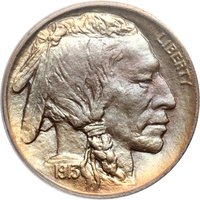
Obverse
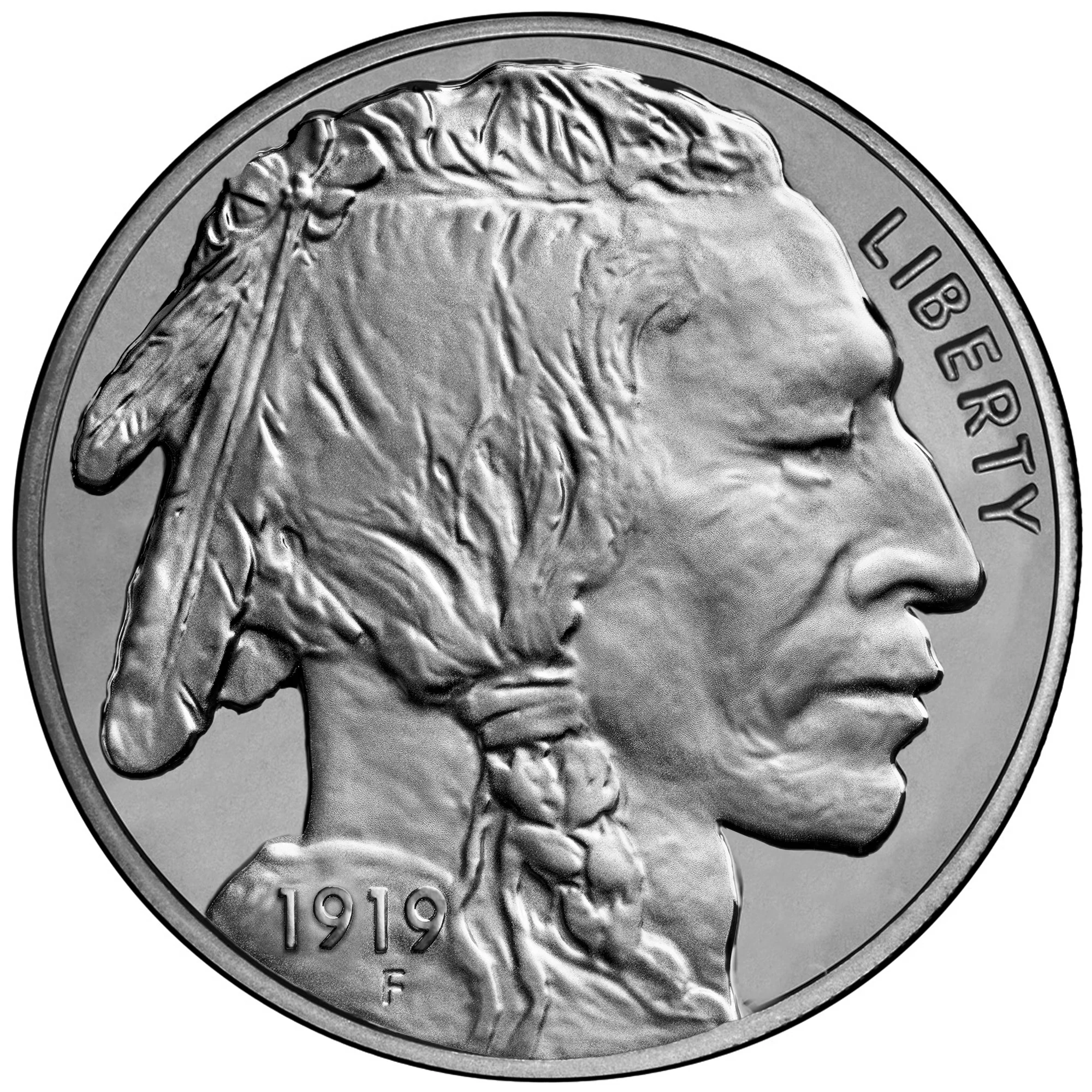
Description:
Three chiefs: Iron Tail (Oglala Sioux), Two Moons (Cheyenne), and Big Tree (Kiowa).
Inscription:
LIBERTY
1936
F
1936
F
Script: Latin
Engraver: James Earle Fraser
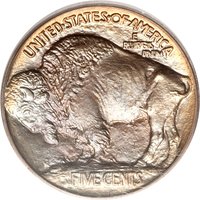
Reverse
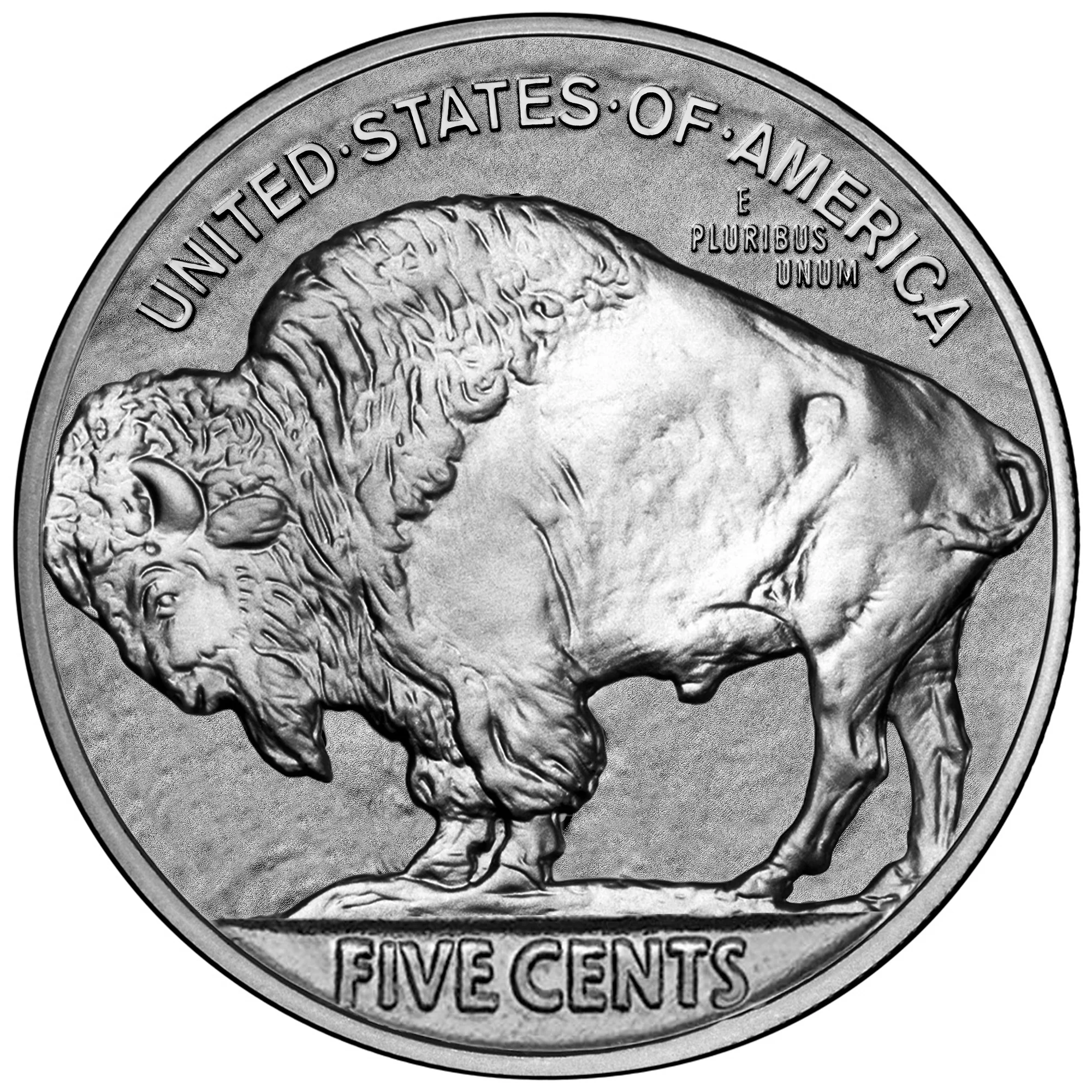
Description:
American bison facing left, with country above and denomination below.
Inscription:
UNITED·STATES·OF·AMERICA
E
PLURIBUS
UNUM
FIVE CENTS
E
PLURIBUS
UNUM
FIVE CENTS
Translation:
Out of Many, One
Five Cents
Five Cents
Script: Latin
Engraver: James Earle Fraser
Edge
Plain
Mints
| Name | Mark |
|---|---|
| United States Mint of Philadelphia | — |
| United States Mint of Denver | D |
| United States Mint of San Francisco | S |
Mintings
| Year | Mint Mark | Mintage | Quality | Collection |
|---|---|---|---|---|
| 1913 | — | 29,857,186 | ||
| 1913 | — | 1,514 | Proof | |
| 1913 | D | 4,156,000 | ||
| 1913 | S | 1,209,000 | ||
| 1914 | D | 3,912,000 | ||
| 1914 | S | 3,470,000 | ||
| 1914 | — | 20,664,463 | ||
| 1914 | — | 1,275 | Proof | |
| 1915 | D | 7,569,000 | ||
| 1915 | S | 1,505,000 | ||
| 1915 | — | 1,050 | Proof | |
| 1915 | — | 20,986,220 | ||
| 1916 | — | 63,497,466 | ||
| 1916 | — | 600 | Proof | |
| 1916 | D | 13,333,000 | ||
| 1916 | S | 11,860,000 | ||
| 1917 | — | 51,424,019 | ||
| 1917 | D | 9,910,000 | ||
| 1917 | S | 4,193,000 | ||
| 1918 | — | 32,086,314 | ||
| 1918 | D | 8,362,000 | ||
| 1918 | S | 4,882,000 | ||
| 1919 | — | 60,868,000 | ||
| 1919 | D | 8,006,000 | ||
| 1919 | S | 7,521,000 | ||
| 1920 | S | 9,689,000 | ||
| 1920 | — | 63,093,000 | ||
| 1920 | D | 9,418,000 | ||
| 1921 | — | 10,663,000 | ||
| 1921 | S | 1,557,000 | ||
| 1923 | — | 35,715,000 | ||
| 1923 | S | 6,142,000 | ||
| 1924 | — | 21,620,000 | ||
| 1924 | D | 5,258,000 | ||
| 1924 | S | 1,437,000 | ||
| 1925 | — | 35,565,100 | ||
| 1925 | D | 4,450,000 | ||
| 1925 | S | 6,256,000 | ||
| 1926 | — | 44,693,000 | ||
| 1926 | D | 5,638,000 | ||
| 1926 | S | 970,000 | ||
| 1927 | — | 37,981,000 | ||
| 1927 | D | 5,730,000 | ||
| 1927 | S | 3,430,000 | ||
| 1928 | D | 6,436,000 | ||
| 1928 | S | 6,936,000 | ||
| 1928 | — | 23,411,000 | ||
| 1929 | D | 8,370,000 | ||
| 1929 | S | 7,754,000 | ||
| 1929 | — | 36,446,000 | ||
| 1930 | — | 22,849,000 | ||
| 1930 | S | 5,435,000 | ||
| 1931 | S | 1,200,000 | ||
| 1934 | — | 20,213,003 | ||
| 1934 | D | 7,480,000 | ||
| 1935 | — | 58,264,000 | ||
| 1935 | D | 12,092,000 | ||
| 1935 | S | 10,300,000 | ||
| 1936 | D | 24,814,000 | ||
| 1936 | — | — | ||
| 1936 | — | 4,420 | Proof | |
| 1936 | S | 14,930,000 | ||
| 1936 | D | — | BU | |
| 1937 | S | 5,635,000 | ||
| 1937 | — | 79,480,000 | ||
| 1937 | — | 5,769 | Proof | |
| 1937 | D | 17,826,000 | ||
| 1937 | D | — | BU | |
| 1938 | D | 7,020,000 |
Historical background
The year 1913 marked a pivotal turning point in the financial history of the United States, culminating in a fundamental restructuring of the nation's monetary system. The preceding decades were characterized by financial instability, with a series of severe banking panics—most notably in 1907—exposing the fragility of a system reliant on an inelastic currency and decentralized reserves. These crises were often alleviated only by the intervention of private financiers like J.P. Morgan, highlighting the urgent need for a centralized mechanism to manage the money supply, provide liquidity in times of stress, and act as a lender of last resort. This environment of recurrent turmoil created a powerful political consensus for reform, setting the stage for monumental legislative change.
This reform was realized with the passage of the Federal Reserve Act on December 23, 1913. The Act established the Federal Reserve System, a hybrid public-private central banking framework designed to provide a safer and more flexible monetary and financial system. It created a network of twelve regional Federal Reserve Banks, overseen by a central board in Washington, D.C., tasked with regulating the money supply by setting discount rates, buying and selling government securities, and issuing a new uniform national currency: Federal Reserve Notes. Crucially, the system mandated that member banks hold reserves with their regional Fed bank, creating a pool of capital to be drawn upon during periods of high demand.
Thus, by the close of 1913, the U.S. currency situation transitioned from a decentralized and crisis-prone system to one with a permanent central banking authority. The era of relying on individual bank notes and the cumbersome process of clearing checks through correspondent banks was being phased out in favor of a more coordinated and elastic currency. While the Federal Reserve's full powers and role would be tested and defined by future events, including World War I and the Great Depression, its creation in 1913 fundamentally reshaped American finance by introducing a central institution responsible for monetary policy and financial stability.
This reform was realized with the passage of the Federal Reserve Act on December 23, 1913. The Act established the Federal Reserve System, a hybrid public-private central banking framework designed to provide a safer and more flexible monetary and financial system. It created a network of twelve regional Federal Reserve Banks, overseen by a central board in Washington, D.C., tasked with regulating the money supply by setting discount rates, buying and selling government securities, and issuing a new uniform national currency: Federal Reserve Notes. Crucially, the system mandated that member banks hold reserves with their regional Fed bank, creating a pool of capital to be drawn upon during periods of high demand.
Thus, by the close of 1913, the U.S. currency situation transitioned from a decentralized and crisis-prone system to one with a permanent central banking authority. The era of relying on individual bank notes and the cumbersome process of clearing checks through correspondent banks was being phased out in favor of a more coordinated and elastic currency. While the Federal Reserve's full powers and role would be tested and defined by future events, including World War I and the Great Depression, its creation in 1913 fundamentally reshaped American finance by introducing a central institution responsible for monetary policy and financial stability.
🌱 Very Common