

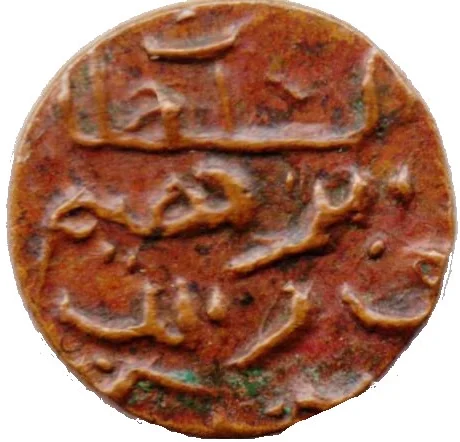
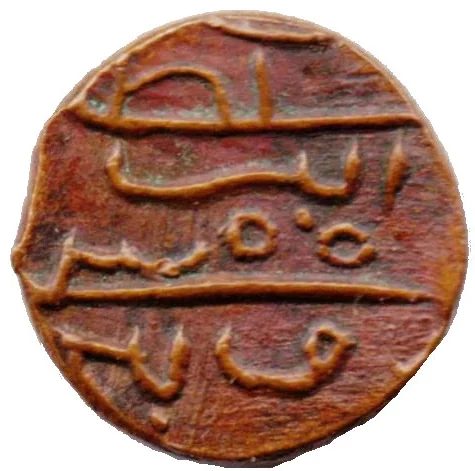
¼ larin – Maldives
Add to wishlist
Maldives
Context
Year: 1883
Islamic (Hijri) Year:: 1300
Issuer: Maldives
Ruler: Ibrahim Nooraddeen
Currency:
(1660—1947)
Demonetized: Yes
Material
References
KM: #
Numista: #50893
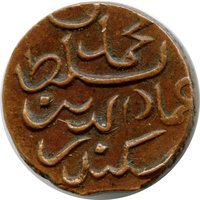
Obverse
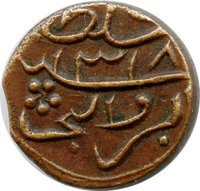
Reverse
Edge
Plain
Mintings
| Year | Mint Mark | Mintage | Quality | Collection |
|---|---|---|---|---|
| 1883 | — | — |
Historical background
In 1883, the Maldives operated under a complex and informal currency system, heavily influenced by its status as a British protectorate (established in 1887) and its historic trade networks. The official medium of exchange was the Larin, a silver wire coinage of Persian Gulf origin that had been used for centuries. However, the supply of physical Larins was inconsistent, leading to a chronic shortage of coined money for everyday transactions across the atolls. Consequently, a significant portion of domestic trade was conducted through barter, with dried fish, coir rope, and cowrie shells serving as common substitutes for currency.
Internationally, the economy was tied to the British Indian rupee, which was increasingly circulating in the capital, Malé, due to the archipelago's growing administrative and commercial links with British Ceylon (Sri Lanka) and India. This created a dual-system where high-value trade and government dealings were increasingly conducted in rupees, while the outer atolls relied on the older Larin and barter. The Sultanate’s authority to issue its own coinage was limited, and it did not have a formal mint, leaving the islands dependent on foreign silver imports and subject to the fluctuating values of regional currencies.
This monetary fragmentation reflected the Maldives' transitional political and economic position in the late 19th century. While still autonomous in internal affairs, its external trade and monetary stability were becoming increasingly intertwined with the British Empire. The informal and multi-currency system of 1883 was ultimately unsustainable, paving the way for the formal adoption of the Ceylonese rupee as the official currency in the early 20th century, a move that would fully anchor the Maldivian economy to the British imperial system.
Internationally, the economy was tied to the British Indian rupee, which was increasingly circulating in the capital, Malé, due to the archipelago's growing administrative and commercial links with British Ceylon (Sri Lanka) and India. This created a dual-system where high-value trade and government dealings were increasingly conducted in rupees, while the outer atolls relied on the older Larin and barter. The Sultanate’s authority to issue its own coinage was limited, and it did not have a formal mint, leaving the islands dependent on foreign silver imports and subject to the fluctuating values of regional currencies.
This monetary fragmentation reflected the Maldives' transitional political and economic position in the late 19th century. While still autonomous in internal affairs, its external trade and monetary stability were becoming increasingly intertwined with the British Empire. The informal and multi-currency system of 1883 was ultimately unsustainable, paving the way for the formal adoption of the Ceylonese rupee as the official currency in the early 20th century, a move that would fully anchor the Maldivian economy to the British imperial system.
⭐ Rare