

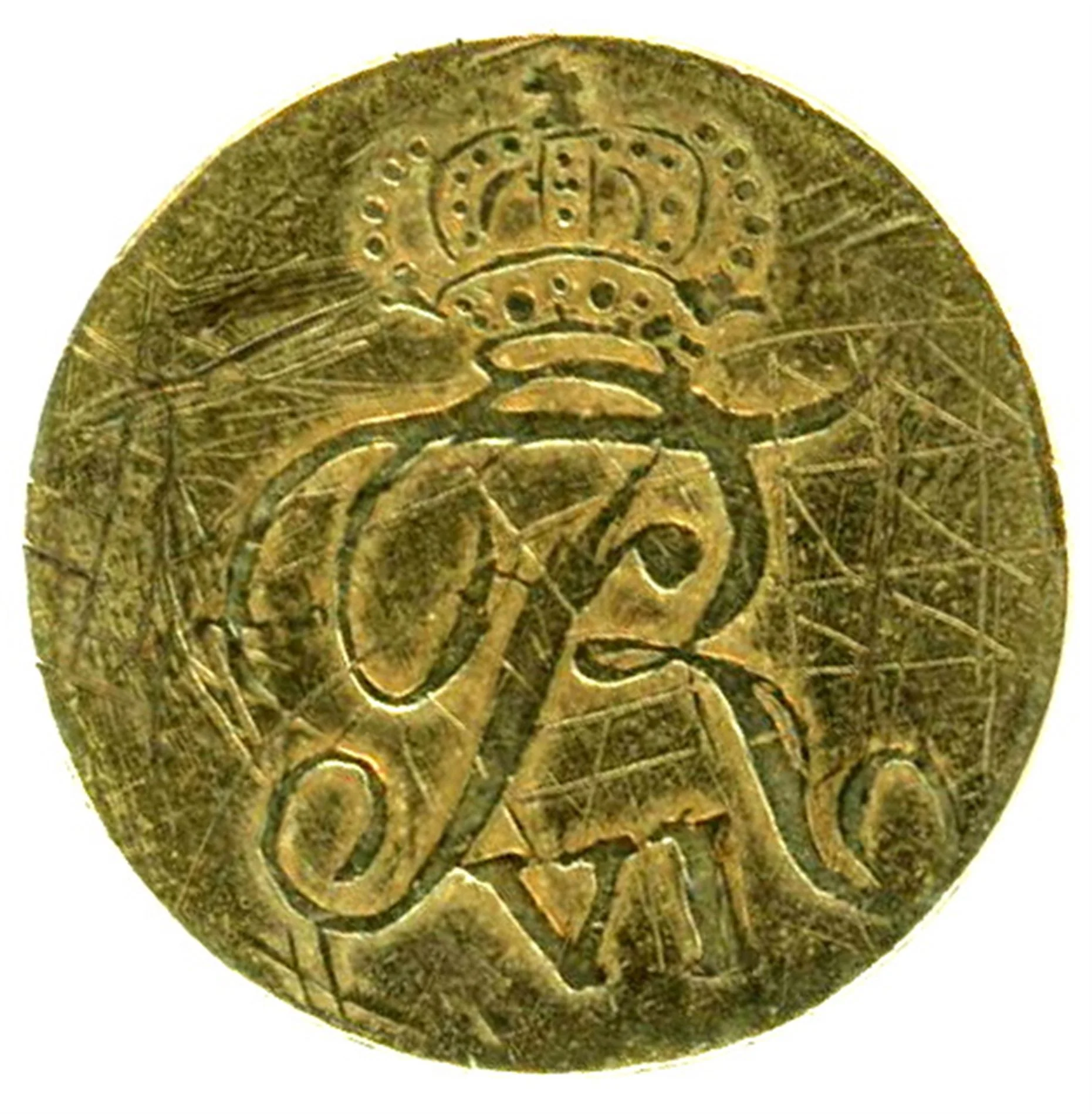
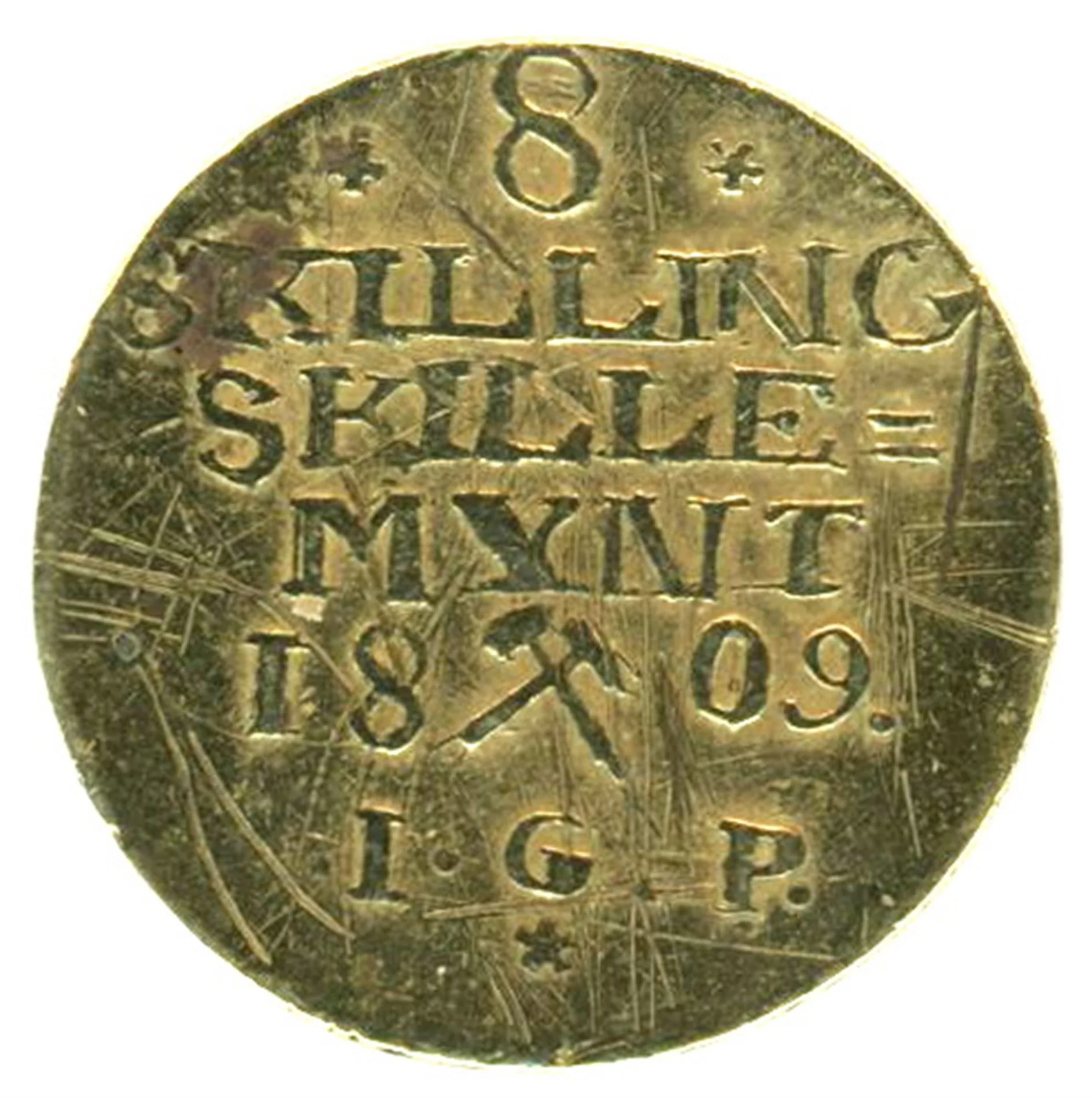
8 Skilling – Norway
Norway
Context

Material
References
Numista: #500866
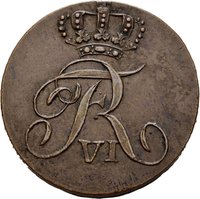
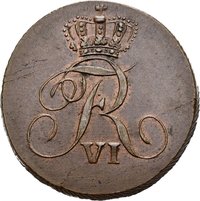
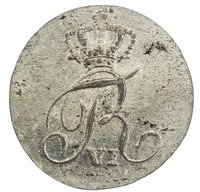
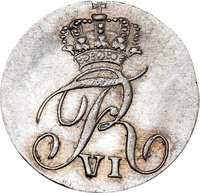
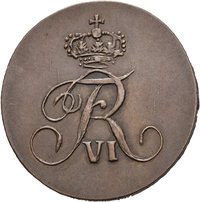
Obverse
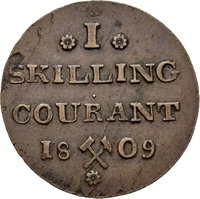
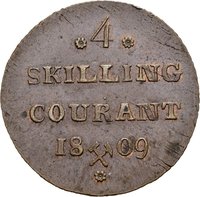
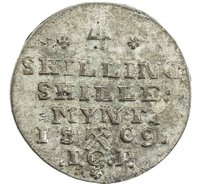
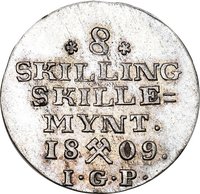
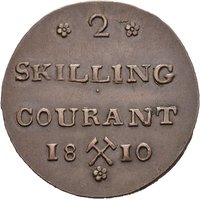
Reverse
Edge
Mintings
| Year | Mint Mark | Mintage | Quality | Collection |
|---|---|---|---|---|
| 1809 | — | — |
Historical background
In 1809, Norway found itself in a precarious monetary crisis, a direct consequence of the Napoleonic Wars and its forced union with Denmark. As a belligerent, Denmark-Norway faced a severe British naval blockade, which crippled its economy and severed vital import and export routes. This isolation led to acute shortages of essential goods, including silver, which was the bedrock of the currency system. The Danish state, financially desperate, responded by dramatically increasing the production of paper money from the central bank, the Rigsbank, without sufficient metallic backing, leading to rapid depreciation and a collapse in public confidence.
The situation was particularly severe in Norway, which was geographically farther from the central bank in Copenhagen and more severely impacted by the blockade. As the paper rigsdaler notes plummeted in value, a chaotic multi-currency system emerged. Older, more trusted coins like the speciedaler circulated at a high premium, while foreign coins, including Swedish and even counterfeit money, flooded the market. The effective result was a stark divergence between the official face value of currency and its actual market worth, causing price inflation, hoarding of solid coin, and widespread economic hardship for ordinary Norwegians.
This monetary disintegration spurred local Norwegian initiatives. Merchants in key cities like Christiania (Oslo) and Trondheim began issuing private emergency tokens and credit notes to facilitate local trade and pay workers, attempting to create islands of stability. These actions highlighted the growing administrative separation between Norway and Denmark and underscored the inability of the distant Copenhagen government to manage the crisis. The currency chaos of 1809 thus became a significant factor in eroding the legitimacy of Danish rule, setting the stage for the constitutional crisis and the establishment of an independent Norwegian central bank, Norges Bank, just a few years later in 1816.
The situation was particularly severe in Norway, which was geographically farther from the central bank in Copenhagen and more severely impacted by the blockade. As the paper rigsdaler notes plummeted in value, a chaotic multi-currency system emerged. Older, more trusted coins like the speciedaler circulated at a high premium, while foreign coins, including Swedish and even counterfeit money, flooded the market. The effective result was a stark divergence between the official face value of currency and its actual market worth, causing price inflation, hoarding of solid coin, and widespread economic hardship for ordinary Norwegians.
This monetary disintegration spurred local Norwegian initiatives. Merchants in key cities like Christiania (Oslo) and Trondheim began issuing private emergency tokens and credit notes to facilitate local trade and pay workers, attempting to create islands of stability. These actions highlighted the growing administrative separation between Norway and Denmark and underscored the inability of the distant Copenhagen government to manage the crisis. The currency chaos of 1809 thus became a significant factor in eroding the legitimacy of Danish rule, setting the stage for the constitutional crisis and the establishment of an independent Norwegian central bank, Norges Bank, just a few years later in 1816.
Series: 1809 Norway circulation coins
✨ Legendary