

Norway
Context
Material
References
KM: #Click to copy to clipboard280
Numista: #20936
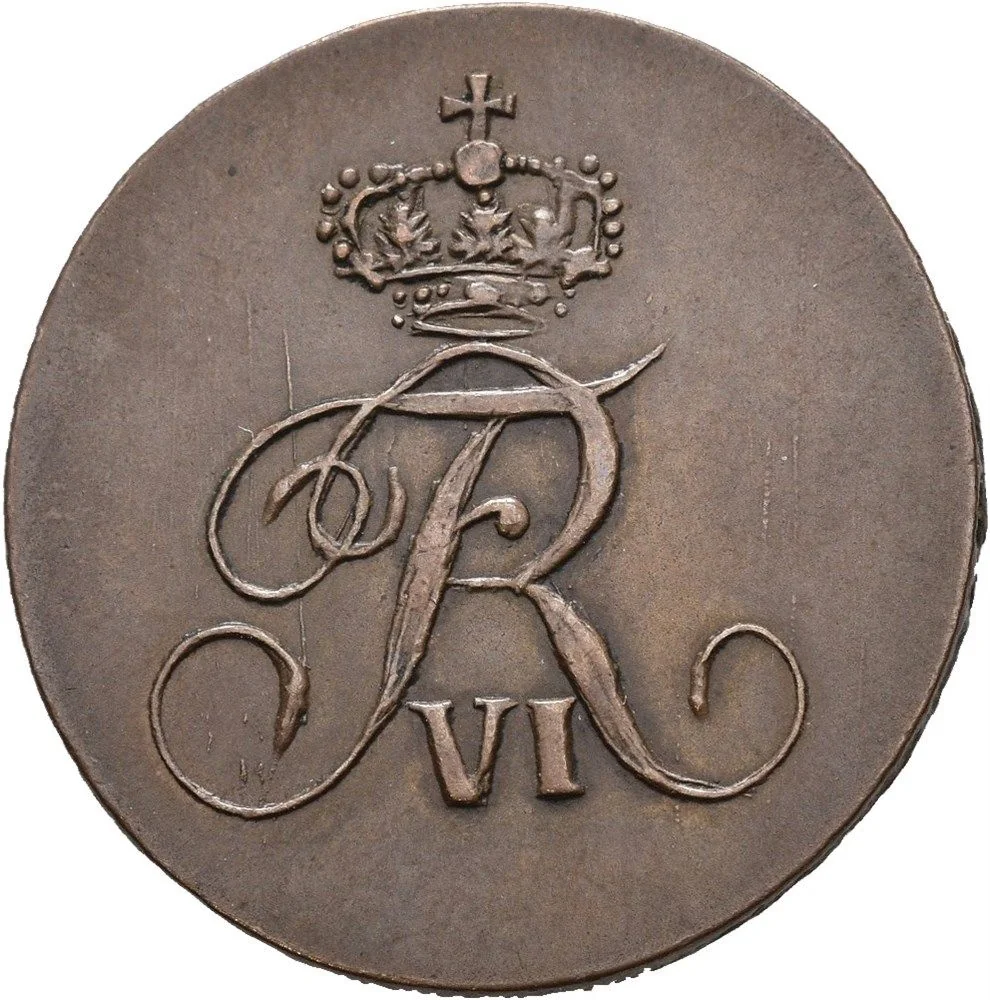
Obverse
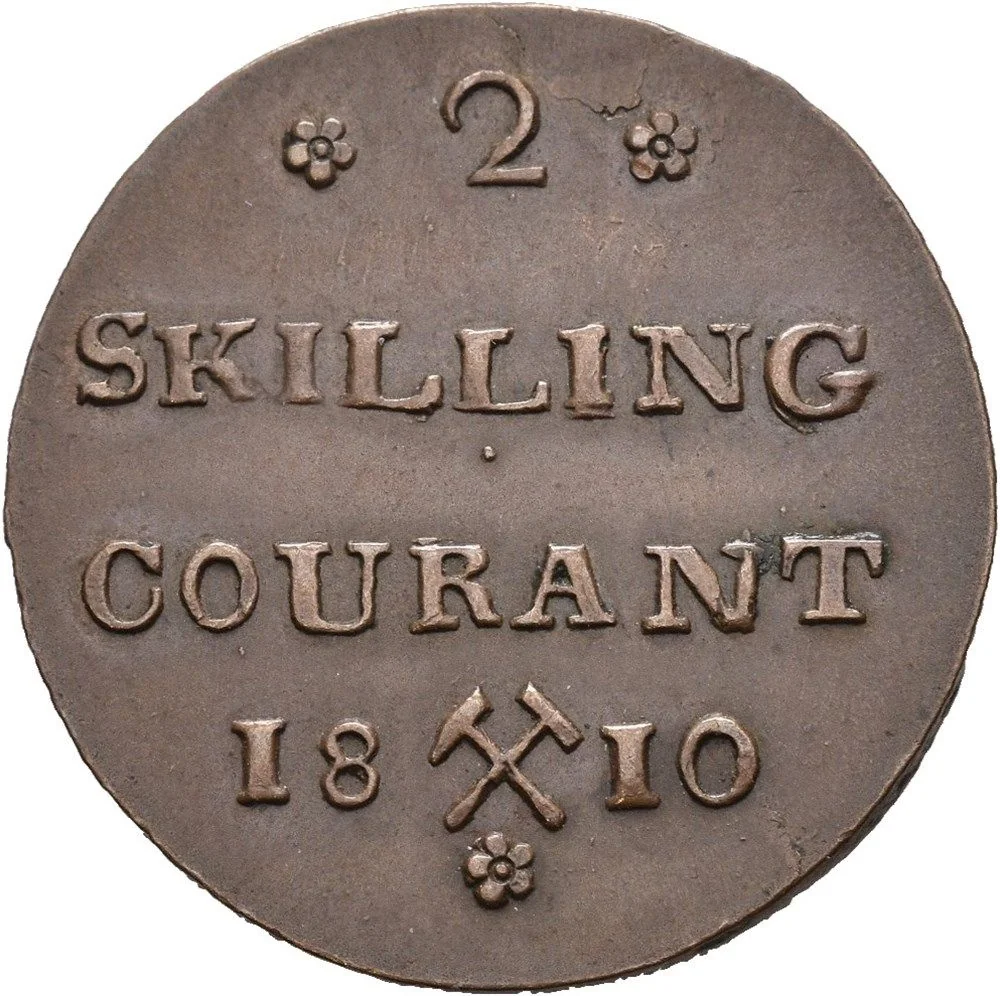
Reverse
Description:
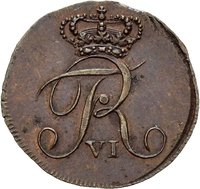
Value and date.
Four lines.
Date divided by mintmark.
Four lines.
Date divided by mintmark.
Inscription:
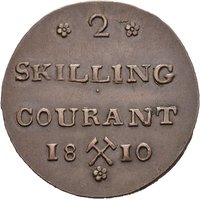
⁕ 2 ⁕
SKILLING
COURANT
18 ⚒ 10
⁕
SKILLING
COURANT
18 ⚒ 10
⁕
Script: Latin
Edge
Plain
Mints
| Name | Mark |
|---|---|
| Norwegian Mint | — |
Mintings
| Year | Mint Mark | Mintage | Quality | Collection |
|---|---|---|---|---|
| 1810 | — | — | ||
| 1811 | — | — |
Historical background
In 1810, Norway found itself in a complex and strained monetary situation, deeply entangled in the geopolitical upheavals of the Napoleonic Wars. Although in a personal union with Denmark, Norway was effectively cut off from its Danish sovereign by the British naval blockade, leading to severe isolation and economic hardship. The Danish-Norwegian state had declared bankruptcy in 1813, but the precursors to this crisis were already felt years earlier, with a depreciating paper currency (the rigsdaler) and widespread shortages of essential goods, including silver for coinage.
The circulating medium was a chaotic mix. The official currency was the rigsdaler, divided into 96 skilling, but its value was unstable. Due to the blockade, physical silver and copper coinage became scarce, leading to a reliance on over-issued and depreciating government paper notes. Alongside this, a wide variety of foreign coins, particularly Spanish dollars (pieces of eight) and German reichsthalers, circulated out of necessity, their values fluctuating based on metal content and demand. This created a confusing and inefficient system for trade and daily transactions.
This monetary instability was more than an economic inconvenience; it was a symptom of Norway's vulnerable position. The scarcity of sound money exacerbated inflation and hindered commerce, contributing to public discontent and a growing sense of Norwegian separateness from Denmark. The crisis would culminate just a few years later, in 1814, with the Treaty of Kiel, Norway's attempted independence, and the subsequent establishment of its own central bank (Norges Bank) and a new currency, the speciedaler, aimed at restoring financial stability and sovereignty.
The circulating medium was a chaotic mix. The official currency was the rigsdaler, divided into 96 skilling, but its value was unstable. Due to the blockade, physical silver and copper coinage became scarce, leading to a reliance on over-issued and depreciating government paper notes. Alongside this, a wide variety of foreign coins, particularly Spanish dollars (pieces of eight) and German reichsthalers, circulated out of necessity, their values fluctuating based on metal content and demand. This created a confusing and inefficient system for trade and daily transactions.
This monetary instability was more than an economic inconvenience; it was a symptom of Norway's vulnerable position. The scarcity of sound money exacerbated inflation and hindered commerce, contributing to public discontent and a growing sense of Norwegian separateness from Denmark. The crisis would culminate just a few years later, in 1814, with the Treaty of Kiel, Norway's attempted independence, and the subsequent establishment of its own central bank (Norges Bank) and a new currency, the speciedaler, aimed at restoring financial stability and sovereignty.
🌱 Fairly Common