

1 rial – Mutawakkilite Kingdom
Add to wishlist
Yemen
Context
Years: 1924–1946
Country: Yemen
Issuer: Mutawakkilite Kingdom
Ruler: Yahya Muhammad Hamid ed-Din
Currency:
(1918—1974)
Demonetized: Yes
Material
References
Y: #
Numista: #49566
Value
Bullion value: $70.34
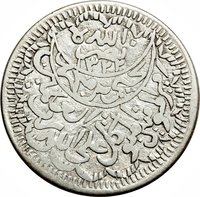
Obverse
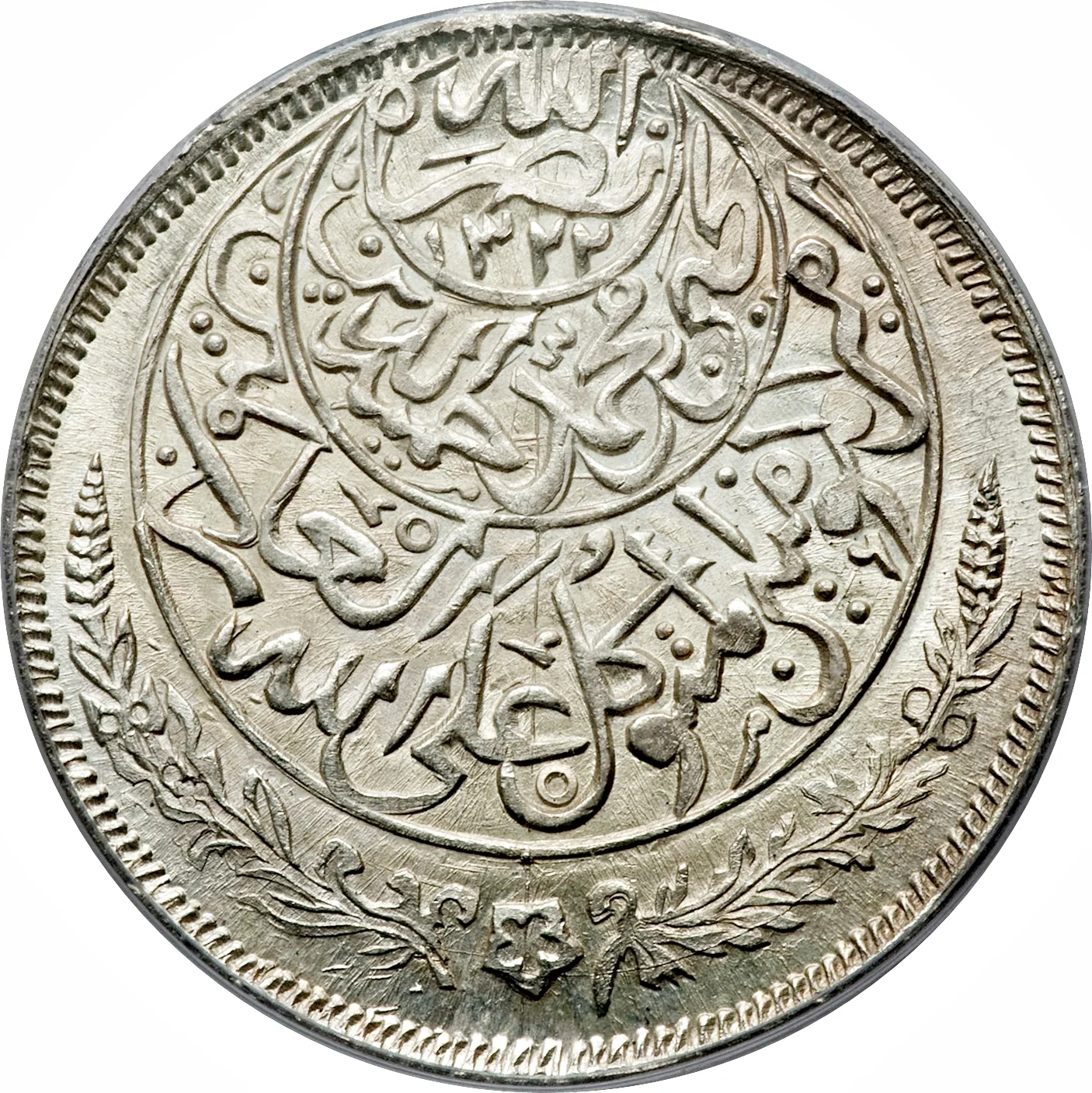
Description:
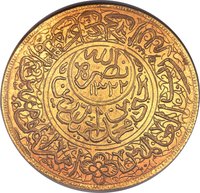
AH1322 with double crescents below.
Inscription:
نصَره الله
١٣٢٢
يحيى محمّد حميد الدين
أمير المؤمنين المتوكل على الله رب العالمين
١٣٢٢
يحيى محمّد حميد الدين
أمير المؤمنين المتوكل على الله رب العالمين
Translation:
May God grant him victory
1322
Yahya Muhammad Hamid al-Din
Commander of the Faithful, who relies on God, Lord of the Worlds
1322
Yahya Muhammad Hamid al-Din
Commander of the Faithful, who relies on God, Lord of the Worlds
Script: Arabic
Language: Arabic
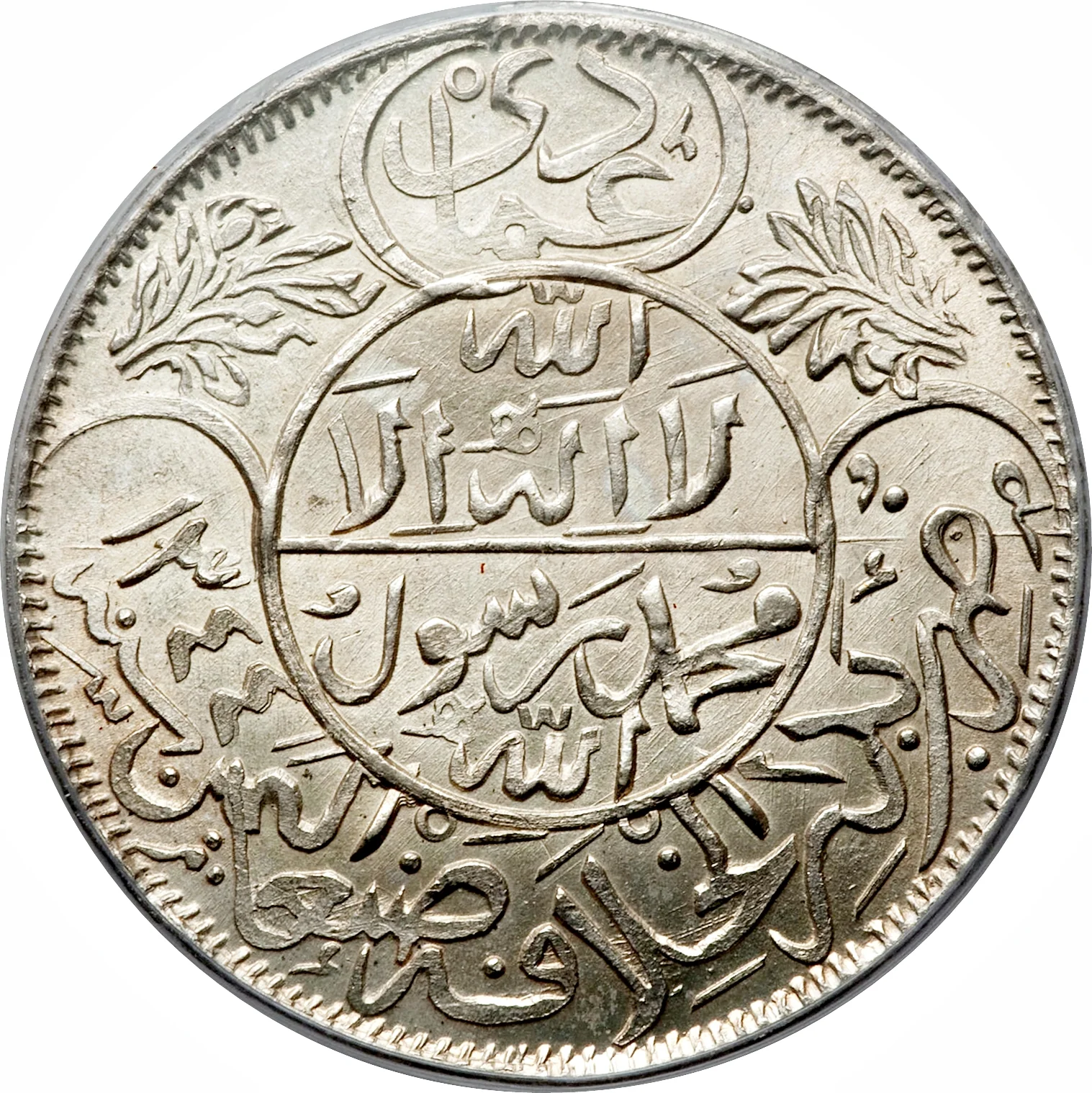
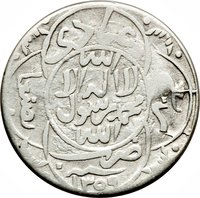
Reverse
Edge
Mintings
| Year | Mint Mark | Mintage | Quality | Collection |
|---|---|---|---|---|
| 1924 | — | — | ||
| 1926 | — | — | ||
| 1946 | — | — |
Historical background
The currency situation in the Mutawakkilite Kingdom of Yemen in 1924 was defined by a complex and fragmented monetary system, reflecting the kingdom's political isolation and traditional economy. Imam Yahya Muhammad Hamid ed-Din, who had recently secured full independence from the Ottoman Empire, ruled a realm with limited modern financial infrastructure. The economy was largely subsistence-based and reliant on subsistence agriculture and trade, with no unified national currency issued by a central bank. Instead, circulation was dominated by a diverse array of foreign coins, the most important being the Austrian Maria Theresa thaler (MTT). This large silver coin, minted in 1780 but still produced in Europe, was the preferred store of value and medium for large transactions and external trade due to its consistent silver content and wide acceptance across the Red Sea region.
Alongside the thaler, a variety of other coins circulated, creating a cumbersome system of exchange. These included Ottoman coins like the qirsh (piastre) and the gold lira, as well as British sovereigns and Indian rupees, which entered through the British-controlled port of Aden. Smaller transactions were conducted using a confusing array of lower-denomination coins, often heavily worn or clipped. The lack of a standard mint and the variable wear on coins meant that their value was often assessed by weight and perceived silver content rather than face value, requiring merchants and money changers (sarraf) to be highly skilled. This monetary heterogeneity made commerce internally inefficient and complicated the kingdom's nascent attempts at foreign trade and state finance.
Imam Yahya’s government, focused on consolidating political and military control, had not yet undertaken major monetary reform by 1924. The state collected taxes in kind and in silver, often in the form of thalers, which served as the de facto treasury reserve. While this system sustained the traditional economy, it left the kingdom vulnerable to fluctuations in global silver prices and dependent on the continued foreign minting of its primary currency. The currency picture of 1924 was thus one of entrenched tradition and practical complexity, setting the stage for the limited monetary reforms that would begin in the subsequent decades as the Imam sought to strengthen central authority and economic sovereignty.
Alongside the thaler, a variety of other coins circulated, creating a cumbersome system of exchange. These included Ottoman coins like the qirsh (piastre) and the gold lira, as well as British sovereigns and Indian rupees, which entered through the British-controlled port of Aden. Smaller transactions were conducted using a confusing array of lower-denomination coins, often heavily worn or clipped. The lack of a standard mint and the variable wear on coins meant that their value was often assessed by weight and perceived silver content rather than face value, requiring merchants and money changers (sarraf) to be highly skilled. This monetary heterogeneity made commerce internally inefficient and complicated the kingdom's nascent attempts at foreign trade and state finance.
Imam Yahya’s government, focused on consolidating political and military control, had not yet undertaken major monetary reform by 1924. The state collected taxes in kind and in silver, often in the form of thalers, which served as the de facto treasury reserve. While this system sustained the traditional economy, it left the kingdom vulnerable to fluctuations in global silver prices and dependent on the continued foreign minting of its primary currency. The currency picture of 1924 was thus one of entrenched tradition and practical complexity, setting the stage for the limited monetary reforms that would begin in the subsequent decades as the Imam sought to strengthen central authority and economic sovereignty.

⭐ Somewhat Rare