

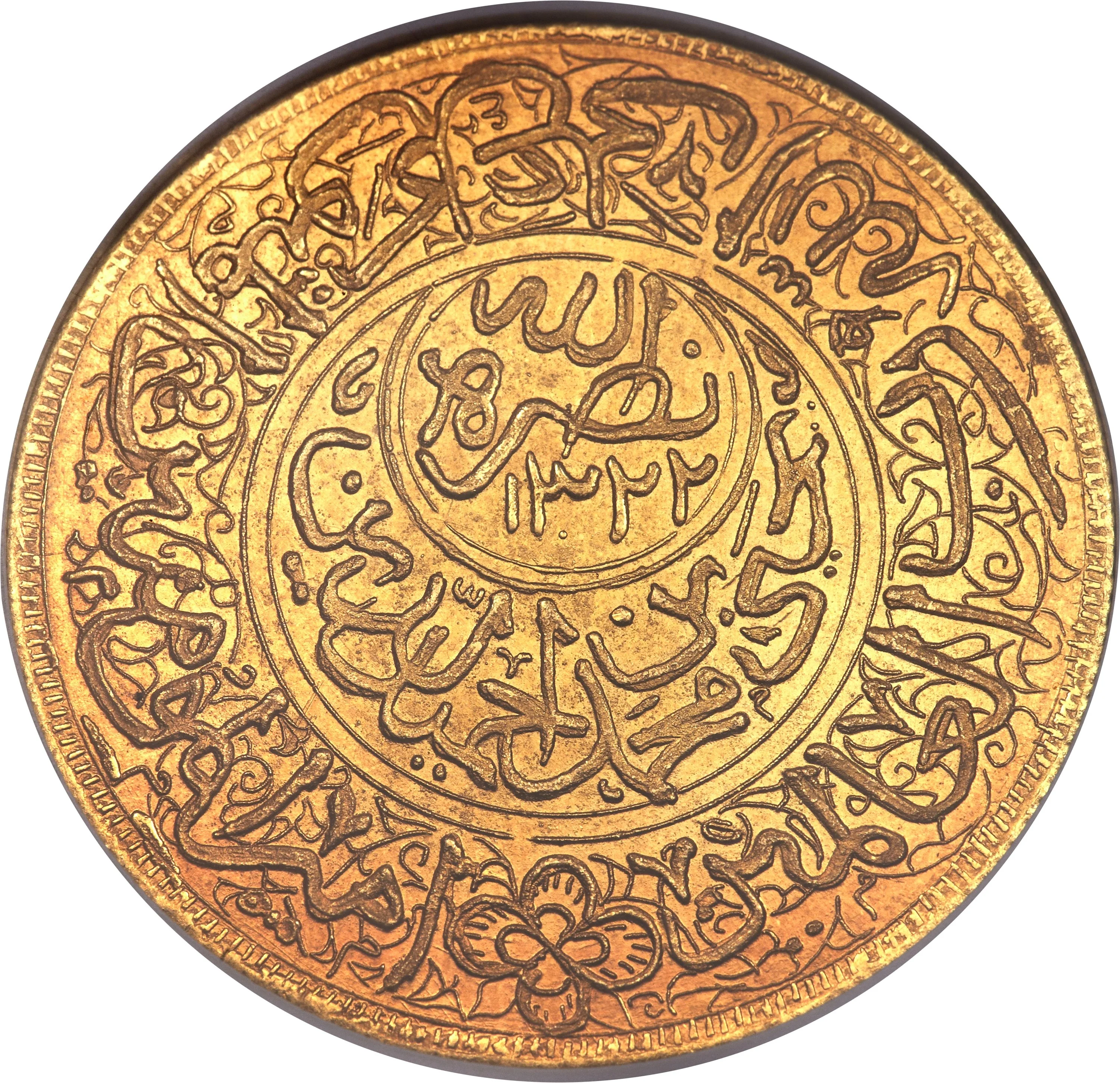
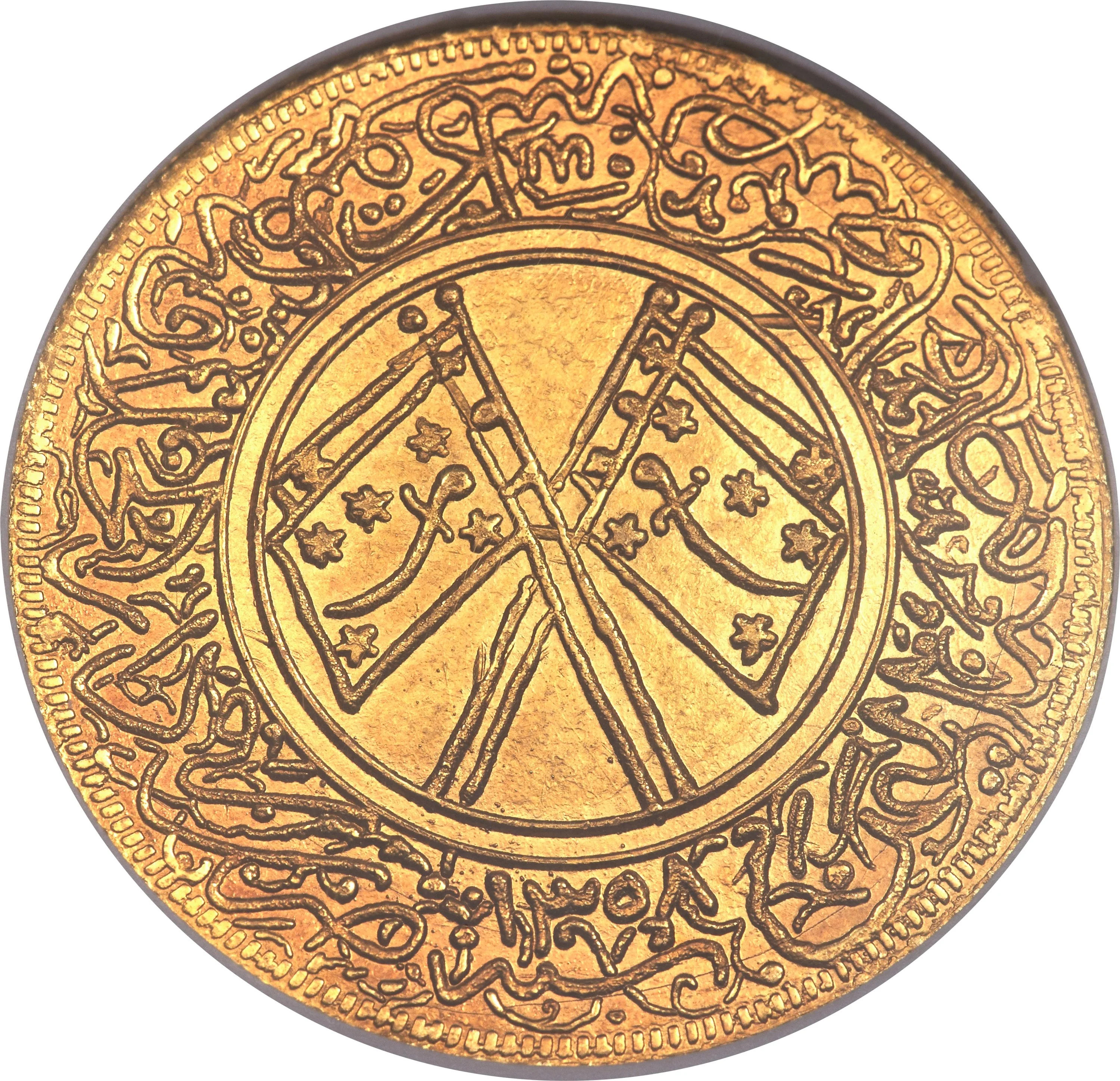
2 rials – Mutawakkilite Kingdom
Add to wishlist
Yemen
Context
Year: 1939
Islamic (Hijri) Year:: 1358
Country: Yemen
Issuer: Mutawakkilite Kingdom
Ruler: Yahya Muhammad Hamid ed-Din
Currency:
(1918—1974)
Demonetized: Yes
Material
References
Y: #
Numista: #88986
Value
Bullion value: $10727.91
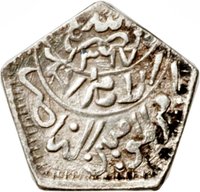
Obverse
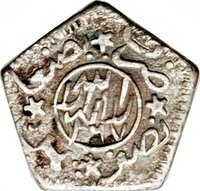
Reverse
Edge
Categories
| Symbol> Flag |
| Object> Cold weapons |
Mintings
| Year | Mint Mark | Mintage | Quality | Collection |
|---|---|---|---|---|
| 1939 | — | — |
Historical background
In 1939, the Mutawakkilite Kingdom of Yemen, ruled by Imam Yahya Muhammad Hamid ed-Din, operated a monetary system that was a direct reflection of its extreme isolation and underdeveloped economy. The state had no central bank and did not issue its own formal paper currency. Instead, the domestic economy functioned primarily through barter and a diverse circulation of foreign silver coins, which served as the de facto hard currency. The most important of these was the Maria Theresa thaler (MT$), a large silver coin minted in Austria but used extensively across the Red Sea region for over a century due to its consistent silver content and trusted reputation.
This reliance on foreign coinage created a complex and vulnerable financial situation. Alongside the thaler, various Ottoman, British, and Indian coins also circulated, their values fluctuating based on weight and silver purity rather than a fixed exchange rate. Imam Yahya, seeking to assert monetary sovereignty and generate revenue, had begun minting local imadi and buqsha coins. However, these were crudely produced, often of inferior silver alloy, and were not trusted by the population or foreign merchants. They circulated at a steep discount to the "real" money—the Maria Theresa thaler—and failed to displace it.
Consequently, Yemen in 1939 existed in a dual monetary reality. Internally, a fragmented system of barter and low-value local coins facilitated daily subsistence. For significant trade, particularly with the outside world, the economy was anchored to the imported Maria Theresa thaler. This system left the kingdom with no control over its money supply, unable to pursue modern fiscal policy, and acutely sensitive to global shifts in the price of silver. The currency situation thus mirrored the kingdom itself: inwardly focused, traditional, and struggling to maintain its autonomy in a rapidly modernizing world.
This reliance on foreign coinage created a complex and vulnerable financial situation. Alongside the thaler, various Ottoman, British, and Indian coins also circulated, their values fluctuating based on weight and silver purity rather than a fixed exchange rate. Imam Yahya, seeking to assert monetary sovereignty and generate revenue, had begun minting local imadi and buqsha coins. However, these were crudely produced, often of inferior silver alloy, and were not trusted by the population or foreign merchants. They circulated at a steep discount to the "real" money—the Maria Theresa thaler—and failed to displace it.
Consequently, Yemen in 1939 existed in a dual monetary reality. Internally, a fragmented system of barter and low-value local coins facilitated daily subsistence. For significant trade, particularly with the outside world, the economy was anchored to the imported Maria Theresa thaler. This system left the kingdom with no control over its money supply, unable to pursue modern fiscal policy, and acutely sensitive to global shifts in the price of silver. The currency situation thus mirrored the kingdom itself: inwardly focused, traditional, and struggling to maintain its autonomy in a rapidly modernizing world.
✨ Legendary