

½ skilling – Norway
Add to wishlist
Norway
Context
Year: 1863
Issuer: Norway
Ruler: Charles IV
Currency:
(1816—1875)
Demonetized: Yes
Total mintage: 480,000
Material
References
KM: #
Numista: #49468
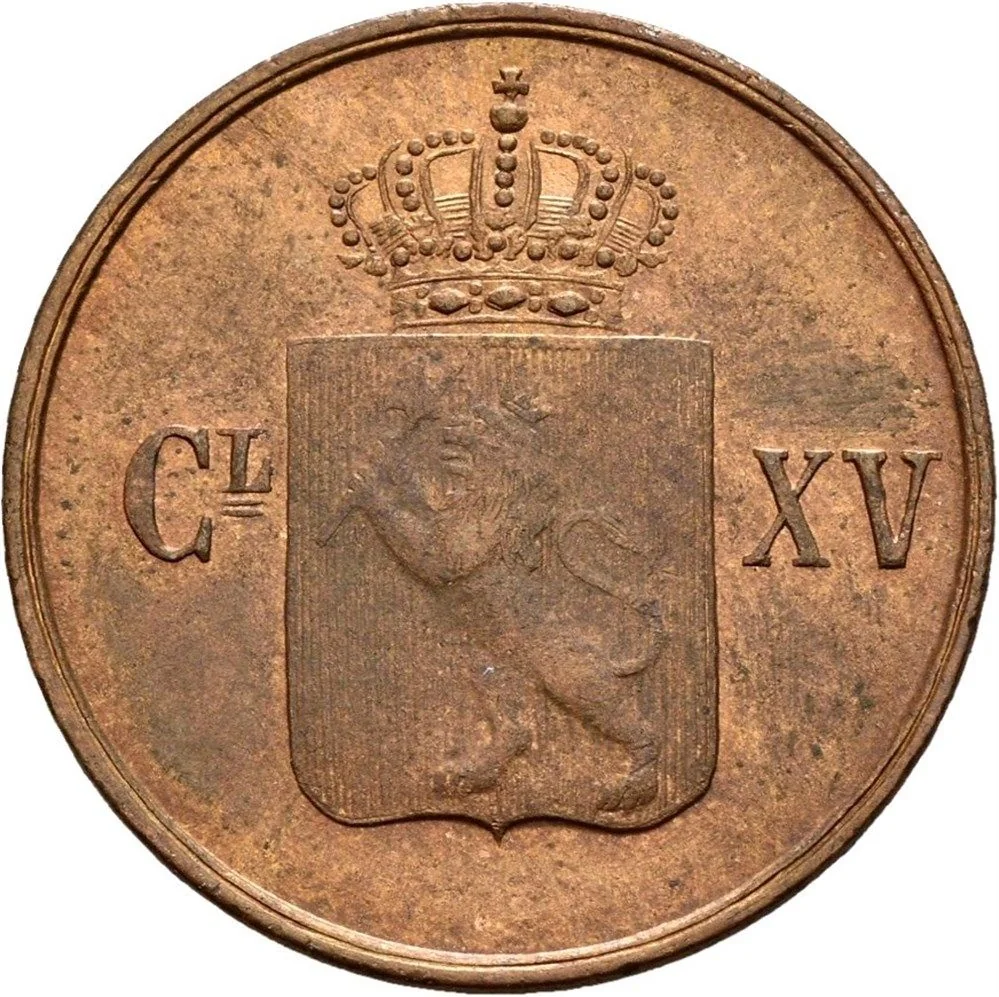
Obverse
Description:
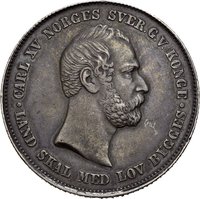
Crowned shield with a Norwegian lion holding a halberd, on a vertically lined field. Inscription split by the shield, within a solid ring.
Inscription:
CL= | XV
Translation:
Imperator Caesar Lucius Aelius Aurelius Commodus Augustus, Conqueror of the Germans.
Script: Latin
Language: Latin
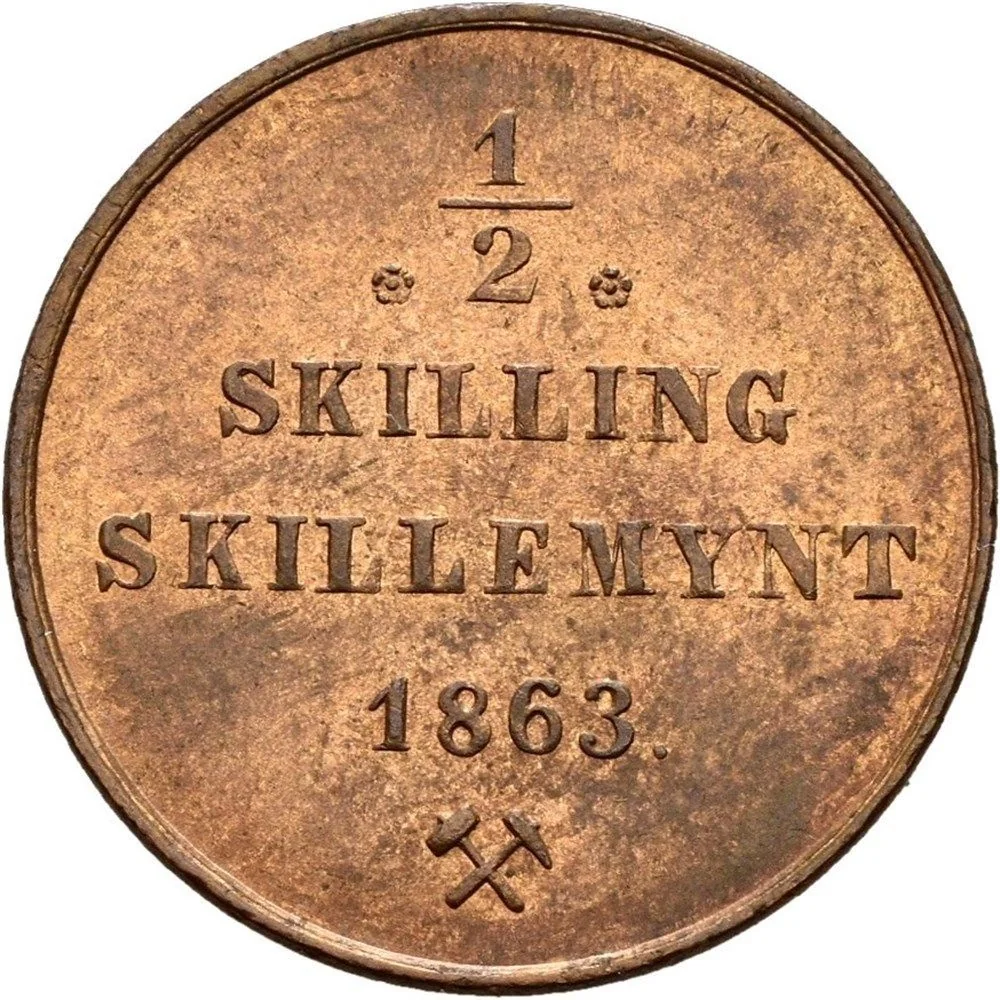
Reverse
Description:
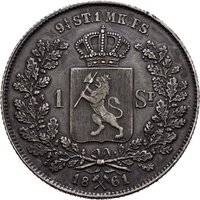
Value and date stacked.
Mintmark under date.
Solid rim ring.
Mintmark under date.
Solid rim ring.
Inscription:
🏵½🏵
SKILLING
SKILLEMYNT
1863.
⚒
SKILLING
SKILLEMYNT
1863.
⚒
Script: Latin
Edge
Mints
| Name | Mark |
|---|---|
| Norwegian Mint | — |
Mintings
| Year | Mint Mark | Mintage | Quality | Collection |
|---|---|---|---|---|
| 1863 | — | 480,000 |
Historical background
In 1863, Norway’s currency system was in a state of transition and complexity, operating within the Scandinavian Monetary Union (SMU) established just two years prior with Denmark and Sweden. The union was based on a common gold standard, with the Norwegian speciedaler being officially defined as containing 4.4803 grams of fine gold. However, the reality on the ground was mixed; while the new gold-based krone (divided into 100 øre) was the official unit, the older silver speciedaler banknotes and coins remained in widespread circulation and were still the unit of account most familiar to the general public. This created a dual system where people had to navigate between the old and new denominations.
The period was marked by significant economic strain, which pressured the currency. Norway was experiencing a banking crisis following the collapse of several private commercial banks in the late 1850s and early 1860s, leading to a contraction of credit. Furthermore, the ongoing American Civil War (1861-1865) caused a cotton crisis that severely impacted Norway’s important textile industry and contributed to a trade deficit. These factors put downward pressure on the nation's gold reserves, testing the fledgling gold standard commitments of the Monetary Union.
Consequently, the Norwegian government and Norges Bank (the central bank) faced the difficult task of maintaining convertibility to gold while managing a fragile economy. There was intense political debate about monetary policy, with some advocating for a temporary suspension of the gold standard to issue more banknotes and stimulate the economy. In 1863, however, Norway remained formally committed to the SMU's rules, striving to uphold the value of its currency amidst internal crisis and external shocks, setting the stage for the monetary challenges that would culminate in the suspension of gold convertibility in 1873.
The period was marked by significant economic strain, which pressured the currency. Norway was experiencing a banking crisis following the collapse of several private commercial banks in the late 1850s and early 1860s, leading to a contraction of credit. Furthermore, the ongoing American Civil War (1861-1865) caused a cotton crisis that severely impacted Norway’s important textile industry and contributed to a trade deficit. These factors put downward pressure on the nation's gold reserves, testing the fledgling gold standard commitments of the Monetary Union.
Consequently, the Norwegian government and Norges Bank (the central bank) faced the difficult task of maintaining convertibility to gold while managing a fragile economy. There was intense political debate about monetary policy, with some advocating for a temporary suspension of the gold standard to issue more banknotes and stimulate the economy. In 1863, however, Norway remained formally committed to the SMU's rules, striving to uphold the value of its currency amidst internal crisis and external shocks, setting the stage for the monetary challenges that would culminate in the suspension of gold convertibility in 1873.
⭐ Rare