

1 speciedaler – Norway
Add to wishlist
Norway
Context
Years: 1864–1869
Issuer: Norway
Ruler: Charles IV
Currency:
(1816—1875)
Demonetized: Yes
Total mintage: 417,700
Material
References
KM: #
Numista: #55913
Value
Bullion value: $63.01
Obverse
Description:
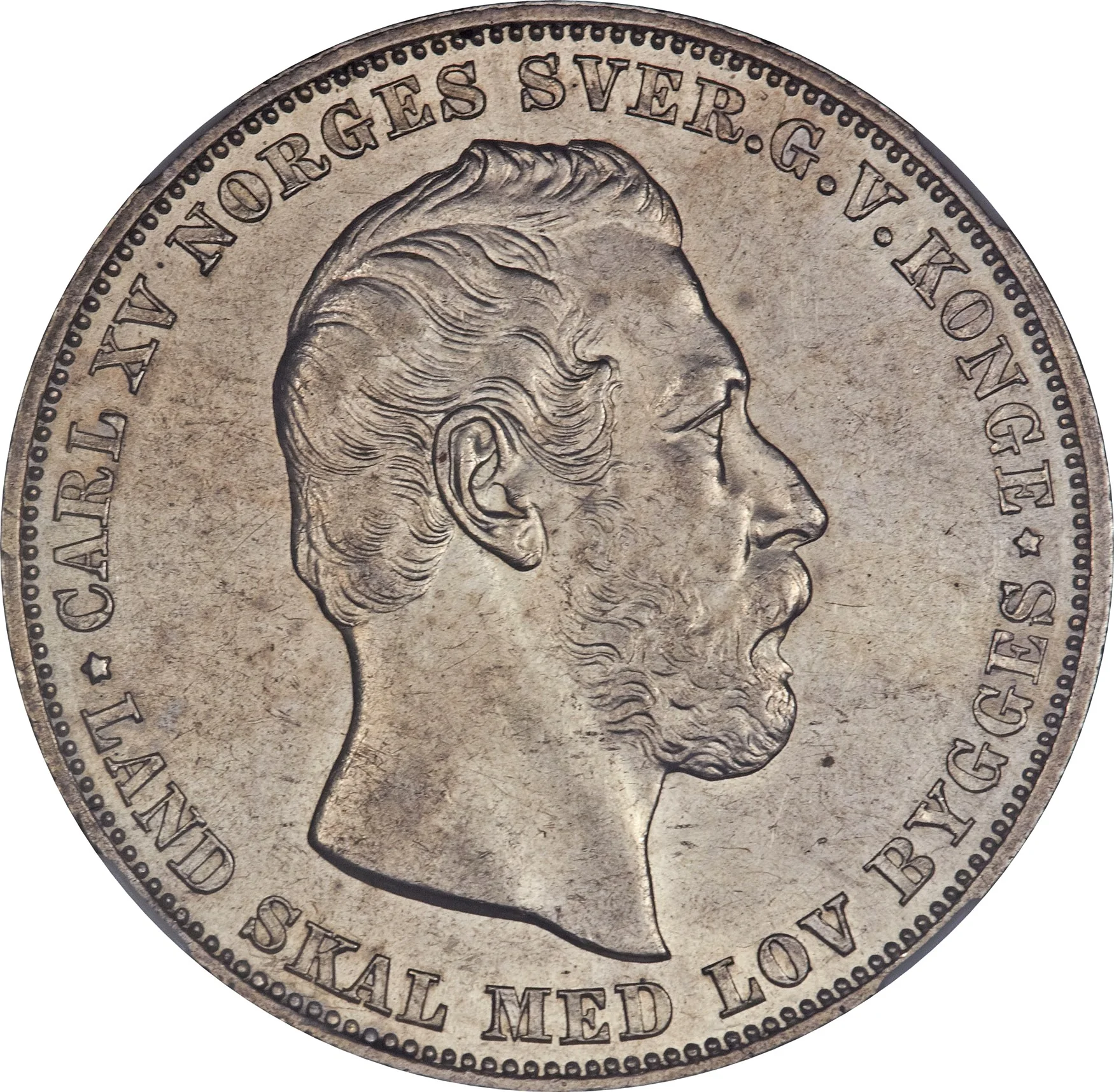
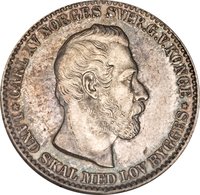
Bust of Carl XV facing right, with inscription and beaded rim.
Inscription:
CARL XV NORGES SVER. G. V. KONGE
⋆ LAND SKAL MED LOV BYGGES ⋆
⋆ LAND SKAL MED LOV BYGGES ⋆
Translation:
Land shall with law be built.
Script: Latin
Engraver: Brynjulf Larson Bergslien
Reverse
Description:
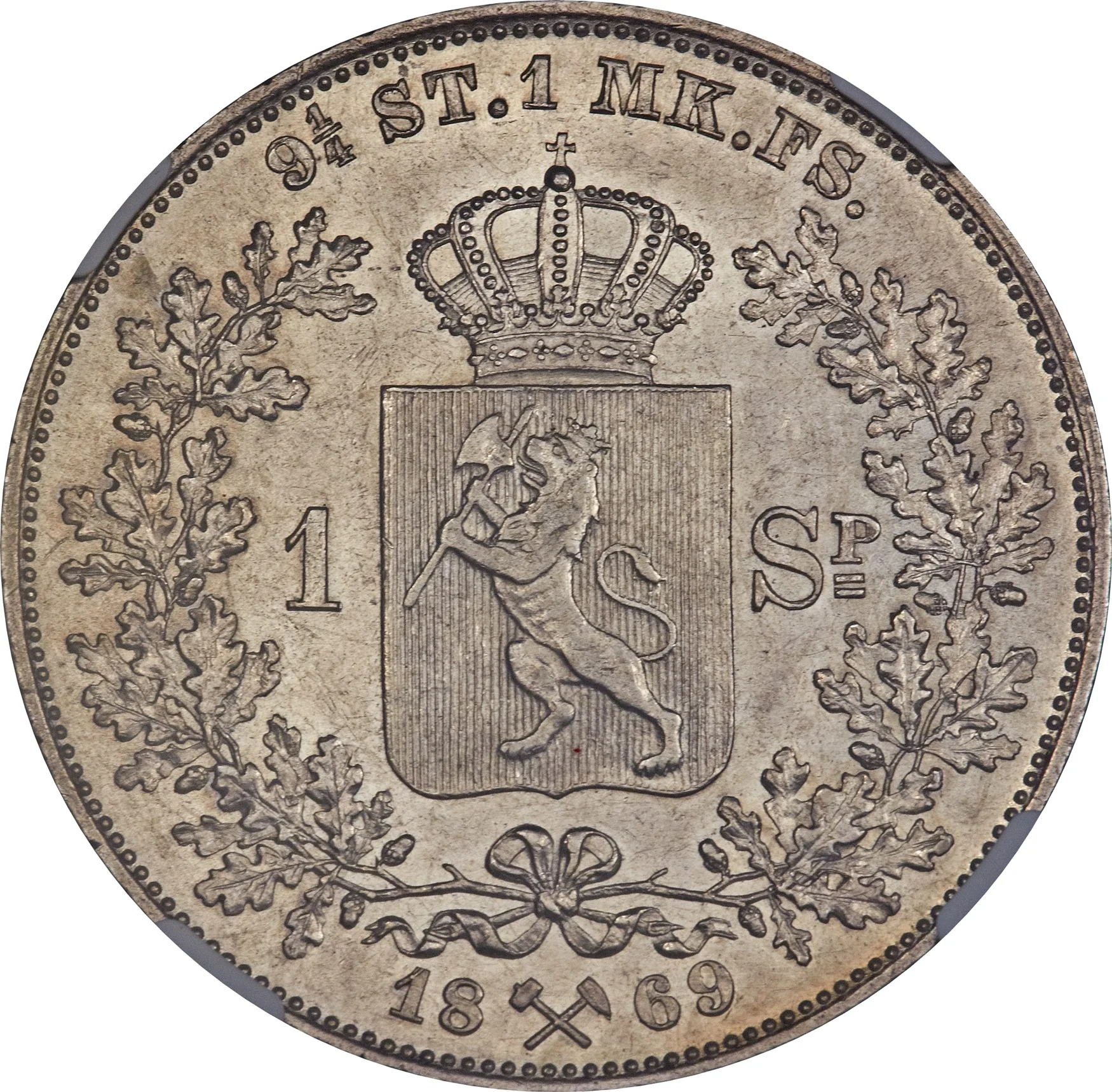
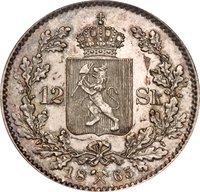
Shield with crowned lion holding a halberd on vertical lines. Value flanking shield, wreath surrounds. Value above crown, date and mintmark below. Beaded rim.
Inscription:
9 ¼ ST. 1 MK. FS.
1 | SP=
18 ⚒ 69
1 | SP=
18 ⚒ 69
Script: Latin
Engraver: Brynjulf Larson Bergslien
Edge
Mints
| Name | Mark |
|---|---|
| Norwegian Mint | — |
Mintings
| Year | Mint Mark | Mintage | Quality | Collection |
|---|---|---|---|---|
| 1864 | — | 130,100 | ||
| 1865 | — | 86,100 | ||
| 1867 | — | 30,000 | ||
| 1868 | — | 114,400 | ||
| 1869 | — | 57,100 |
Historical background
In 1864, Norway’s currency situation was defined by its membership in the Scandinavian Monetary Union (SMU), established just two years prior in 1872. This union, formed with Sweden and later joined by Denmark, created a common gold standard where the Norwegian krone (crown) was pegged to a fixed amount of gold and declared legally equivalent to the Swedish and Danish kroner. The goal was to facilitate trade and economic stability across the region by allowing the coins of each nation to circulate freely within all three, effectively creating a single currency area.
However, the union's stability was immediately tested by broader European financial turbulence. The period following its founding saw a dramatic fall in the value of silver globally, which threatened the value of subsidiary silver coins used in daily transactions. To maintain public confidence and the integrity of the system, Norway, like its partners, had to take defensive measures. In 1873, it suspended the convertibility of its banknotes into silver for a time, a move that underscored the challenges of maintaining a fixed monetary system amid external shocks.
Therefore, by 1864, Norway was in a transitional phase, having recently committed to the gold standard and the ambitious framework of the SMU. The system was still new and not yet fully stress-tested, but it represented a significant modernization of Norway’s monetary policy, moving away from the older speciedaler and aligning the nation more closely with international gold-based finance and its Scandinavian neighbours. The foundational work was complete, but the practical challenges of maintaining parity and confidence were becoming apparent.
However, the union's stability was immediately tested by broader European financial turbulence. The period following its founding saw a dramatic fall in the value of silver globally, which threatened the value of subsidiary silver coins used in daily transactions. To maintain public confidence and the integrity of the system, Norway, like its partners, had to take defensive measures. In 1873, it suspended the convertibility of its banknotes into silver for a time, a move that underscored the challenges of maintaining a fixed monetary system amid external shocks.
Therefore, by 1864, Norway was in a transitional phase, having recently committed to the gold standard and the ambitious framework of the SMU. The system was still new and not yet fully stress-tested, but it represented a significant modernization of Norway’s monetary policy, moving away from the older speciedaler and aligning the nation more closely with international gold-based finance and its Scandinavian neighbours. The foundational work was complete, but the practical challenges of maintaining parity and confidence were becoming apparent.
💎 Extremely Rare