

1 speciedaler – Norway
Add to wishlist
Norway
Context
Years: 1861–1862
Issuer: Norway
Ruler: Charles IV
Currency:
(1816—1875)
Demonetized: Yes
Total mintage: 105,900
Material
References
KM: #
Numista: #39003
Value
Bullion value: $62.01
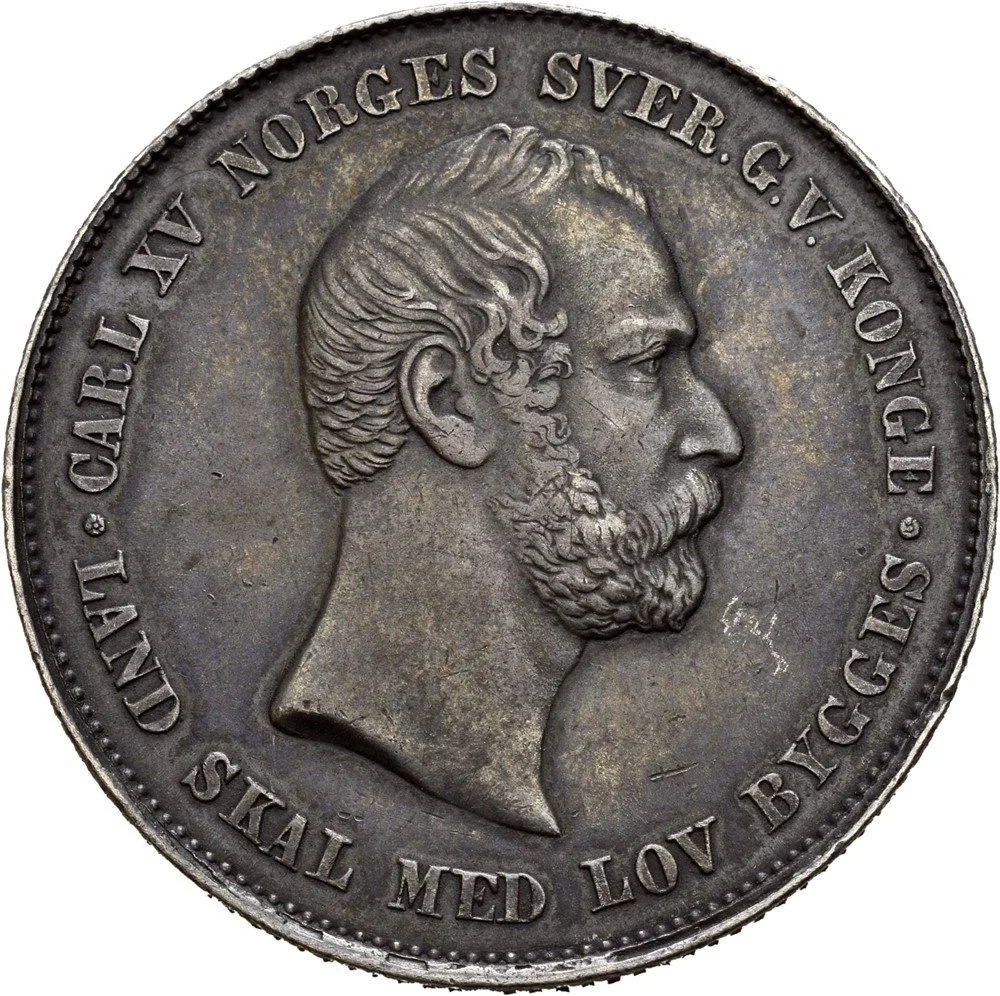
Obverse
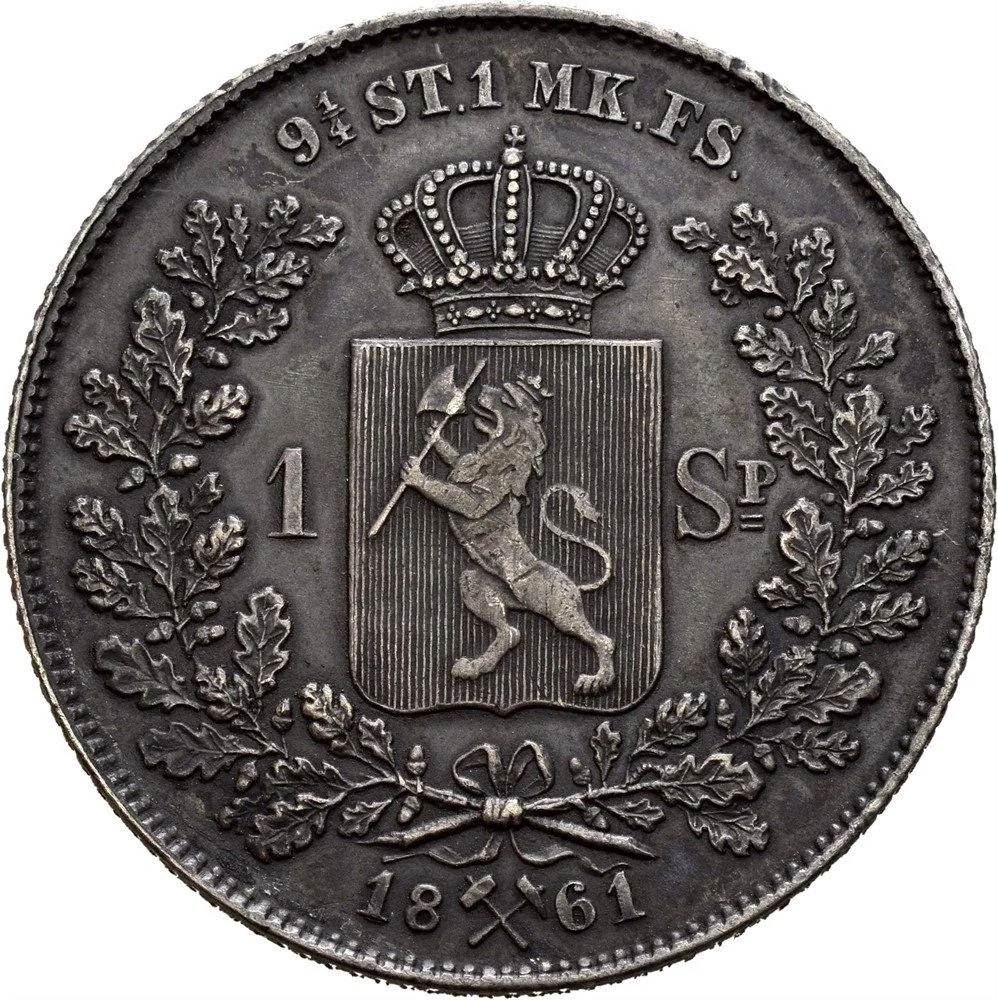
Reverse
Description:
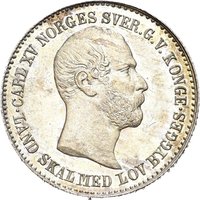
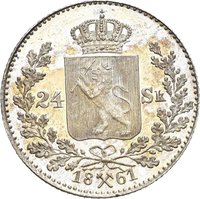
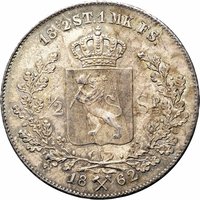
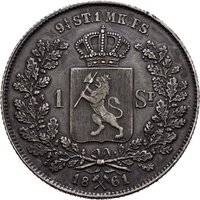
Shield with crowned lion holding a halberd on vertical lines. Value flanking shield, wreath surrounds. Value above crown, date and mintmark below. Beaded rim.
Inscription:
9 ¼ ST. 1 MK. FS.
1 | SP=
18 ⚒ 61
1 | SP=
18 ⚒ 61
Script: Latin
Edge
Mints
| Name | Mark |
|---|---|
| Norwegian Mint | — |
Mintings
| Year | Mint Mark | Mintage | Quality | Collection |
|---|---|---|---|---|
| 1861 | — | 43,800 | ||
| 1862 | — | 62,100 |
Historical background
In 1861, Norway’s currency system was in a state of transition and complexity, rooted in its political union with Sweden. Since 1816, Norway had its own distinct currency, the speciedaler, established by the Norges Bank after the country's bankruptcy. However, the speciedaler existed within a dual system: it was divided into 120 skilling, but also had a fixed relationship to the Swedish riksdaler riksmynt. This created a cumbersome reality for trade and accounting, as cross-border transactions within the union required constant conversion.
The period leading up to 1861 was marked by intense debate over monetary reform. A strong political and economic movement advocated for Norway to adopt the Scandinavian Monetary Union, a proposed common currency with Sweden and Denmark based on a gold standard. Proponents argued this would simplify trade, stabilize the economy, and align Norway with modern European financial practices. The alternative was to maintain and potentially reform the existing silver-based speciedaler independently.
By 1861, these discussions were reaching a critical point. The Norwegian parliament, the Storting, was actively investigating the issue, weighing the benefits of monetary integration against national sovereignty. The decision would have profound implications, influencing Norway's economic independence and its relationship with its union partner. Ultimately, this ferment would lead to Norway joining the Scandinavian Monetary Union just a few years later, in 1875, when it adopted the krone as its new currency.
The period leading up to 1861 was marked by intense debate over monetary reform. A strong political and economic movement advocated for Norway to adopt the Scandinavian Monetary Union, a proposed common currency with Sweden and Denmark based on a gold standard. Proponents argued this would simplify trade, stabilize the economy, and align Norway with modern European financial practices. The alternative was to maintain and potentially reform the existing silver-based speciedaler independently.
By 1861, these discussions were reaching a critical point. The Norwegian parliament, the Storting, was actively investigating the issue, weighing the benefits of monetary integration against national sovereignty. The decision would have profound implications, influencing Norway's economic independence and its relationship with its union partner. Ultimately, this ferment would lead to Norway joining the Scandinavian Monetary Union just a few years later, in 1875, when it adopted the krone as its new currency.
Series: 1861 Norway circulation coins
✨ Legendary