

2 euro (Admission to the United Nations) – Monaco
Add to wishlist
Circulating commemorative coins
Commemoration: 20th Anniversary of Admission to the United Nations
Monaco
Obverse
Description:
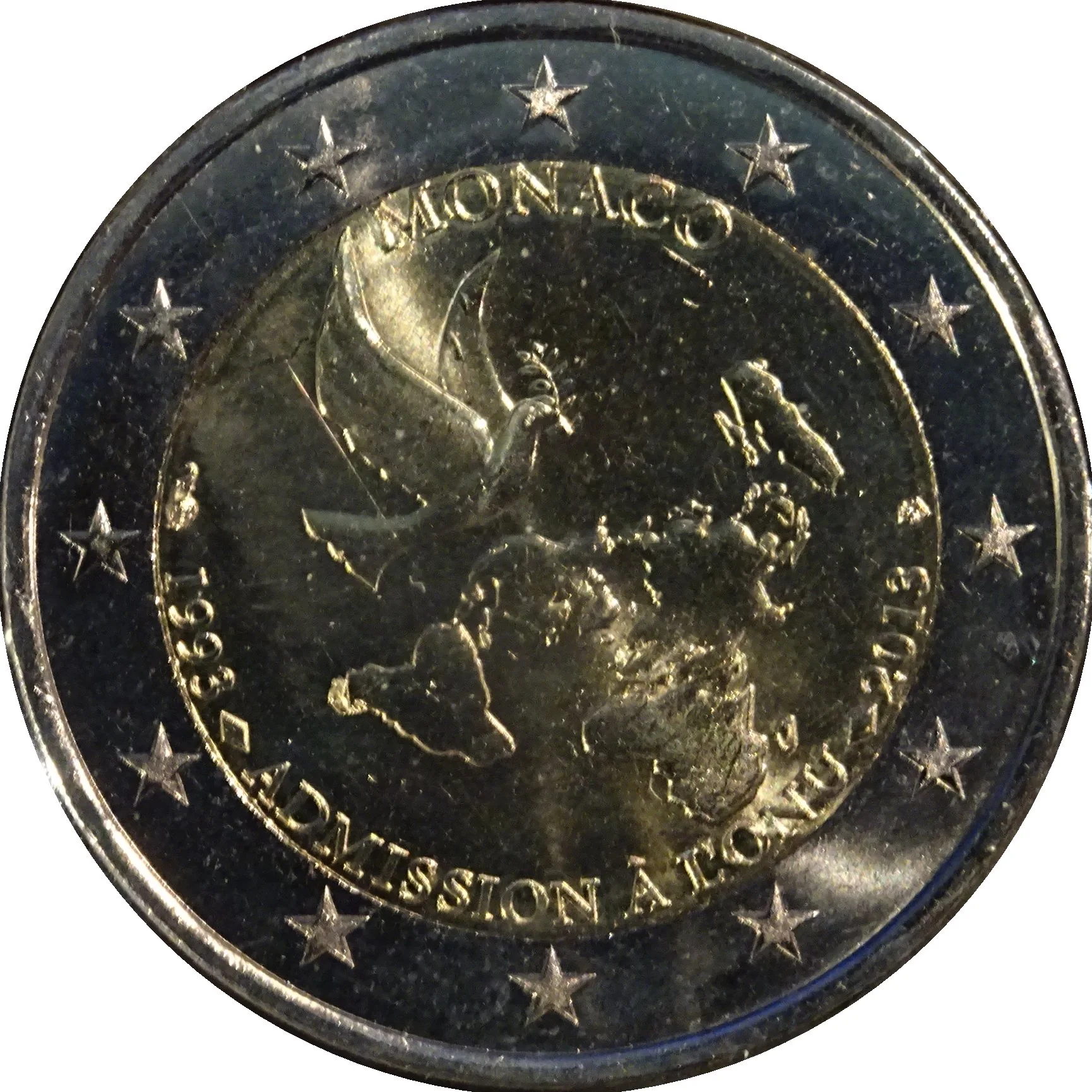
The coin features a dove with an olive branch, flanked by the cornucopia and the Paris Mint punch mark. "MONACO" arcs above, with "1993 ADMISSION À L'ONU 2013" below. The outer ring bears the 12 stars of the EU.
Inscription:
MONACO
1993 ADMISSION À L'ONU 2013
1993 ADMISSION À L'ONU 2013
Translation:
MONACO
1993 ADMISSION TO THE UN 2013
1993 ADMISSION TO THE UN 2013
Script: Latin
Language: French
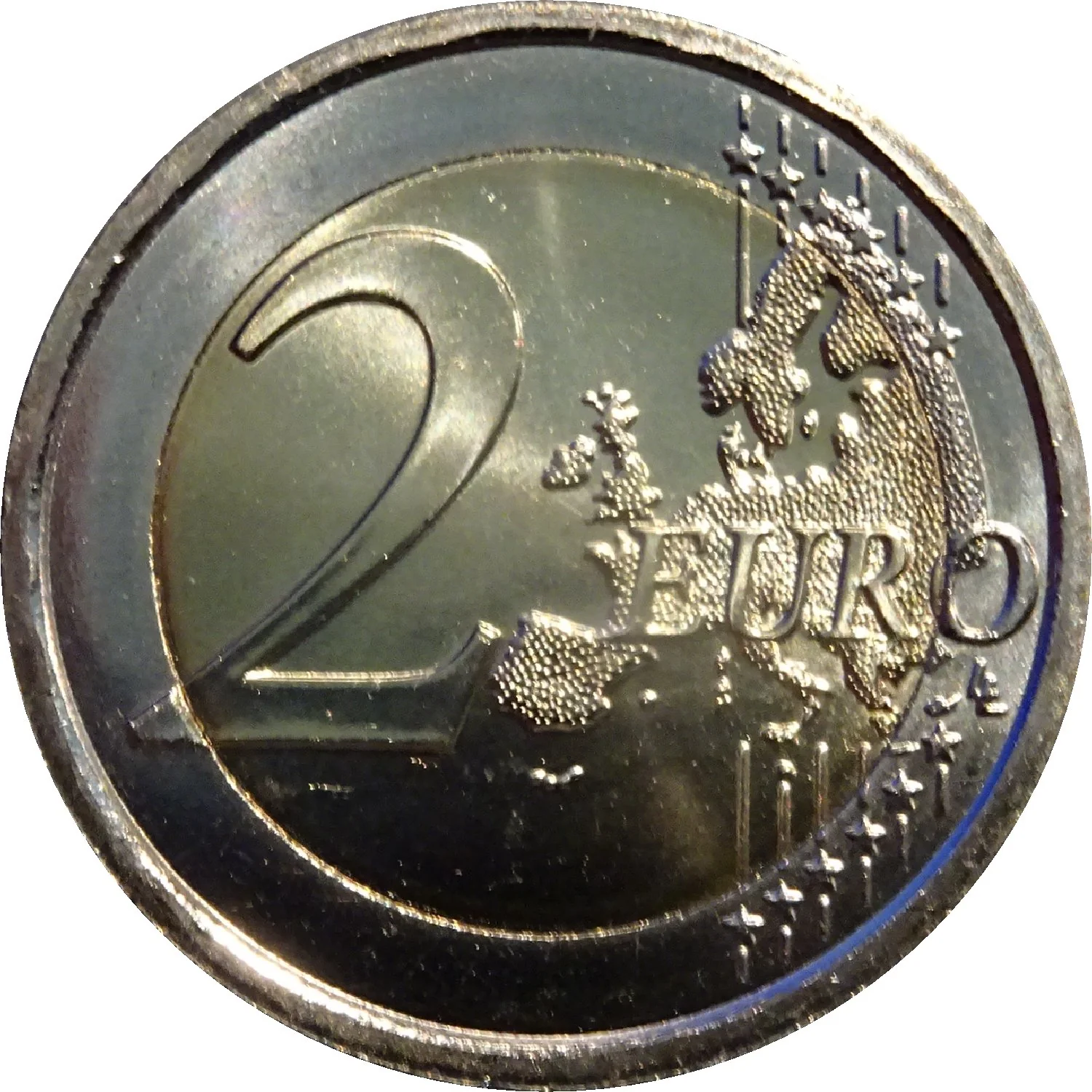
Reverse
Edge
Reeded with inscription
Legend:
2 ** 2 ** 2 ** 2 ** 2 ** 2 **
Categories
| Animal> Bird |
| Map |
| Organization> United Nations |
| Symbol> Cornucopia |
Mints
| Name | Mark |
|---|---|
| Monnaie de Paris | — |
Mintings
| Year | Mint Mark | Mintage | Quality | Collection |
|---|---|---|---|---|
| 2013 | — | 10,000 | BU | |
| 2013 | — | 10,000 | Proof | |
| 2013 | — | 1,249,131 |
Historical background
In 2013, Monaco, while not a member of the European Union, operated under a formal monetary agreement with the EU, making the euro its official and exclusive currency. This arrangement, established in 2002, granted Monaco the right to issue its own limited quantity of euro coins (with Monegasque designs on the national side) while using euro banknotes issued by the European Central Bank. This provided the principality with monetary stability and seamless integration with its largest economic partner, France, and the wider eurozone, which was crucial for its tourism and banking sectors.
The year 2013 fell within the turbulent period following the European sovereign debt crisis. While Monaco's economy was relatively insulated due to its wealth and niche status, the broader eurozone's economic fragility and austerity measures posed an indirect risk. The principality's currency situation was stable, but its economy was not entirely immune to the subdued economic growth and financial uncertainty prevailing in the surrounding region, which could impact high-end tourism and foreign investment.
Furthermore, 2013 preceded significant international regulatory shifts. Monaco, under the leadership of Prince Albert II, was actively working to shed its historical reputation as a tax haven and align with global transparency standards. This ongoing effort to strengthen financial regulation and combat money laundering, driven largely by external pressure from the EU and OECD, was a more pressing financial policy issue for the government than the currency itself, which functioned without controversy under its well-established agreement.
The year 2013 fell within the turbulent period following the European sovereign debt crisis. While Monaco's economy was relatively insulated due to its wealth and niche status, the broader eurozone's economic fragility and austerity measures posed an indirect risk. The principality's currency situation was stable, but its economy was not entirely immune to the subdued economic growth and financial uncertainty prevailing in the surrounding region, which could impact high-end tourism and foreign investment.
Furthermore, 2013 preceded significant international regulatory shifts. Monaco, under the leadership of Prince Albert II, was actively working to shed its historical reputation as a tax haven and align with global transparency standards. This ongoing effort to strengthen financial regulation and combat money laundering, driven largely by external pressure from the EU and OECD, was a more pressing financial policy issue for the government than the currency itself, which functioned without controversy under its well-established agreement.
🌱 Very Common