

1 rupia – Portuguese India
Add to wishlist
India
Context
Years: 1807–1817
Country: India
Issuer: Portuguese India
Ruler: João
Currency:
(1706—1880)
Demonetized: Yes
Material
Diameter: 22 mm
Weight: 11 g
Silver Weight:: 11.00 g
Shape: Irregular round
Composition: Silver
Magnetic: No
Technique: Hammered
References
KM: #
Numista: #49367
Value
Bullion value: $28.11
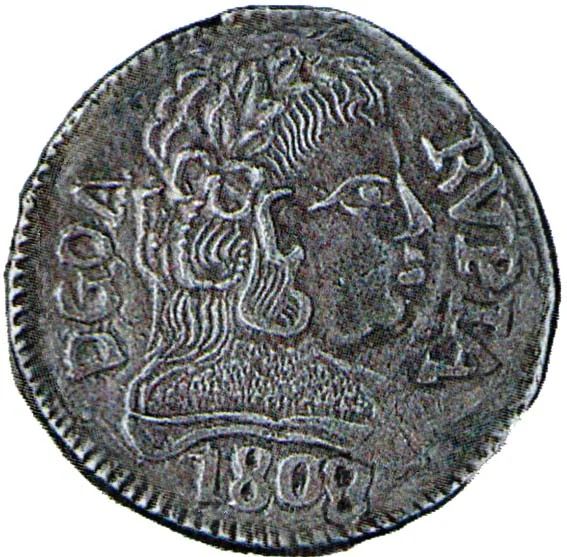
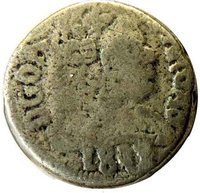
Obverse
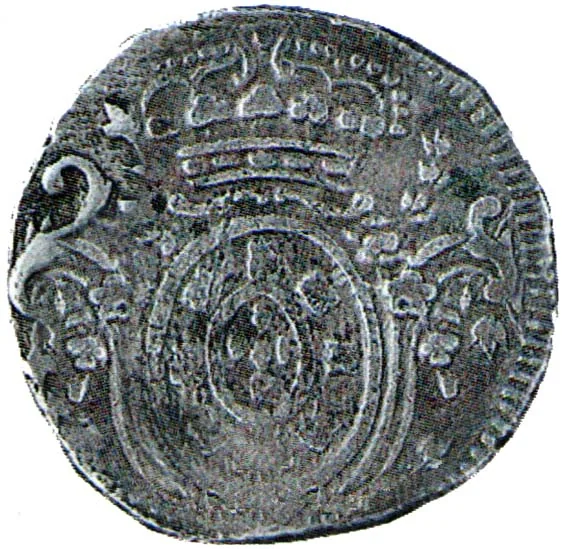
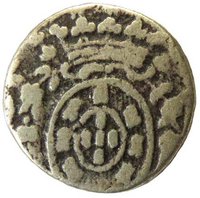
Reverse
Description:
Prince's Arms
Edge
Mints
| Name | Mark |
|---|---|
| Goa | — |
Mintings
| Year | Mint Mark | Mintage | Quality | Collection |
|---|---|---|---|---|
| 1807 | D | — | ||
| 1807 | GOA | — | BU | |
| 1807 | GOA | — | ||
| 1808 | DGOA | — | ||
| 1809 | DGOA | — | ||
| 1810 | GOA | — | ||
| 1811 | DGOA | — | ||
| 1811 | DGOA | — | BU | |
| 1811 | GOA | — | BU | |
| 1812 | DGOA | — | ||
| 1812 | GOA | — | ||
| 1813 | DGOA | — | ||
| 1814 | DGOA | — | ||
| 1815 | DGOA | — | ||
| 1816 | GOA | — | ||
| 1817 | DGOA | — |
Historical background
In 1807, the currency situation in Portuguese India, centered at Goa, was a complex and fragmented system reflecting its role as a commercial crossroads. The official Portuguese currency, the réis, formed the theoretical backbone, but in practice it circulated alongside a multitude of foreign coins. The most dominant of these was the Spanish silver 8-real piece (the "Spanish dollar" or peso), which served as the de facto standard for high-value trade due to its wide acceptance across Asia and the Americas. Alongside it circulated other silver coins like the French écu and the Dutch rijksdaalder, as well as various gold coins, particularly the Portuguese moeda and the British gold mohur, used for larger transactions and hoarding.
This monetary bazaar was further complicated by the persistent circulation of local and regional currencies. The old Portuguese-Indian xerafim* (divided into 60 réis) remained a key unit of account for local administration and smaller commerce. Additionally, coins from neighboring Indian states, such as the Mughal silver rupee and smaller copper coins like pice, were essential for everyday retail trade and payment of wages. This created a constant need for money changers (sarafs*) and a fluctuating web of exchange rates, leading to inefficiency, uncertainty, and opportunities for arbitrage.
The underlying cause of this chaos was the chronic shortage of official Portuguese specie and the inability of the cash-strapped metropole, itself under the strain of the Napoleonic Wars, to supply its colony with sufficient and stable coinage. Consequently, the economy operated on a pragmatic, multi-currency basis where the value of money was determined more by its metallic content and mercantile demand than by royal decree. This situation would persist until the mid-19th century, when concerted efforts were finally made to impose a uniform decimal currency system.
This monetary bazaar was further complicated by the persistent circulation of local and regional currencies. The old Portuguese-Indian xerafim* (divided into 60 réis) remained a key unit of account for local administration and smaller commerce. Additionally, coins from neighboring Indian states, such as the Mughal silver rupee and smaller copper coins like pice, were essential for everyday retail trade and payment of wages. This created a constant need for money changers (sarafs*) and a fluctuating web of exchange rates, leading to inefficiency, uncertainty, and opportunities for arbitrage.
The underlying cause of this chaos was the chronic shortage of official Portuguese specie and the inability of the cash-strapped metropole, itself under the strain of the Napoleonic Wars, to supply its colony with sufficient and stable coinage. Consequently, the economy operated on a pragmatic, multi-currency basis where the value of money was determined more by its metallic content and mercantile demand than by royal decree. This situation would persist until the mid-19th century, when concerted efforts were finally made to impose a uniform decimal currency system.
💎 Extremely Rare