

1 pardau – Portuguese India
Add to wishlist
India
Context
Years: 1808–1818
Country: India
Issuer: Portuguese India
Ruler: João
Currency:
(1706—1880)
Subdivision: 1 pardau = ½ Rupia
Demonetized: Yes
Material
Diameter: 20 mm
Weight: 5.8 g
Silver Weight:: 5.80 g
Shape: Irregular round
Composition: Silver
Magnetic: No
Technique: Hammered
References
KM: #
Numista: #49364
Value
Bullion value: $14.53
Obverse
Description:
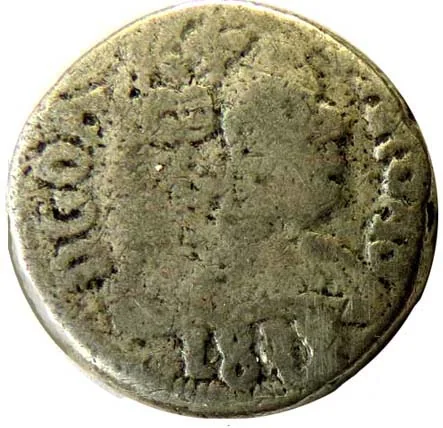
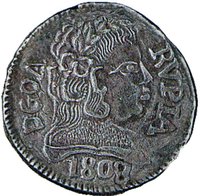
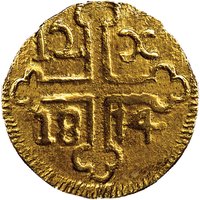
Bust left, date below. Value and mint flank sides.
Inscription:
DGOA / PARDAO
1811
1811
Translation:
DGOA / PARDAO
1811
1811
Script: Latin
Language: Portuguese
Reverse
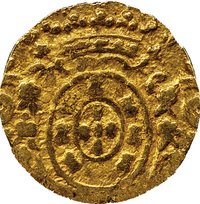
Description:
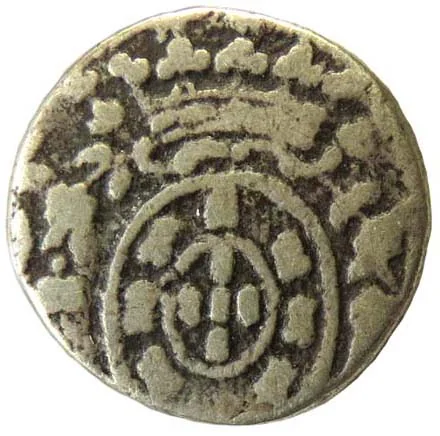
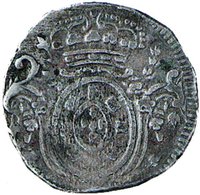
Prince's Arms
Edge
Mints
| Name | Mark |
|---|---|
| Goa | — |
Mintings
| Year | Mint Mark | Mintage | Quality | Collection |
|---|---|---|---|---|
| 1808 | DGOA | — | ||
| 1809 | DGOA | — | ||
| 1810 | DGOA | — | ||
| 1811 | DGOA | — | ||
| 1812 | DGOA | — | ||
| 1815 | DGOA | — | ||
| 1816 | DGOA | — | ||
| 1817 | DGOA | — | ||
| 1818 | GOA | — | ||
| 1818 | DGOA | — |
Historical background
In 1808, the currency situation in Portuguese India was a complex and fragmented system, reflecting both its colonial administration and its deep integration into regional trade networks. The official currency was the Portuguese Indian Rupia (Rupia da Índia Portuguesa), which was pegged to and physically similar to the silver rupee of British India, the dominant trade currency in the Indian Ocean. However, this official coinage circulated alongside a plethora of other coins, including older Portuguese issues like the Xerafim and Tangas, as well as a multitude of foreign coins from neighboring Indian states, the Ottoman Empire, and other European trading powers. This created a chaotic monetary environment where exchange rates fluctuated and transactions required specialized knowledge.
The year 1808 fell within a period of significant geopolitical and economic disruption due to the Napoleonic Wars. The Portuguese royal court had just fled to Brazil in 1807, and while this event's direct impact was felt more acutely in the Atlantic, it contributed to a sense of administrative distraction and weakened metropolitan control over distant possessions like Goa. Furthermore, the British East India Company's rising dominance in the region placed economic pressure on Portuguese territories. The British rupee's increasing prevalence underscored the economic subordination of Portuguese India, as its own currency system struggled to maintain stability and sovereignty amidst a sea of more powerful competitors.
Consequently, the monetary economy was characterized by a chronic shortage of standardized, high-quality coinage, leading to widespread use of cut and worn coins, counterfeiting, and complex valuation tables. The authorities in Goa attempted to regulate this by periodically setting official rates of exchange (bancos) between the various coins in circulation, but these measures were often ineffective outside the capital. Thus, in 1808, the currency situation was one of de facto pluralism and confusion, where the official Portuguese system was forced to accommodate the realities of a vibrant and competitive Asian trade arena, all while the foundations of Portuguese colonial power were increasingly strained.
The year 1808 fell within a period of significant geopolitical and economic disruption due to the Napoleonic Wars. The Portuguese royal court had just fled to Brazil in 1807, and while this event's direct impact was felt more acutely in the Atlantic, it contributed to a sense of administrative distraction and weakened metropolitan control over distant possessions like Goa. Furthermore, the British East India Company's rising dominance in the region placed economic pressure on Portuguese territories. The British rupee's increasing prevalence underscored the economic subordination of Portuguese India, as its own currency system struggled to maintain stability and sovereignty amidst a sea of more powerful competitors.
Consequently, the monetary economy was characterized by a chronic shortage of standardized, high-quality coinage, leading to widespread use of cut and worn coins, counterfeiting, and complex valuation tables. The authorities in Goa attempted to regulate this by periodically setting official rates of exchange (bancos) between the various coins in circulation, but these measures were often ineffective outside the capital. Thus, in 1808, the currency situation was one of de facto pluralism and confusion, where the official Portuguese system was forced to accommodate the realities of a vibrant and competitive Asian trade arena, all while the foundations of Portuguese colonial power were increasingly strained.
✨ Legendary