

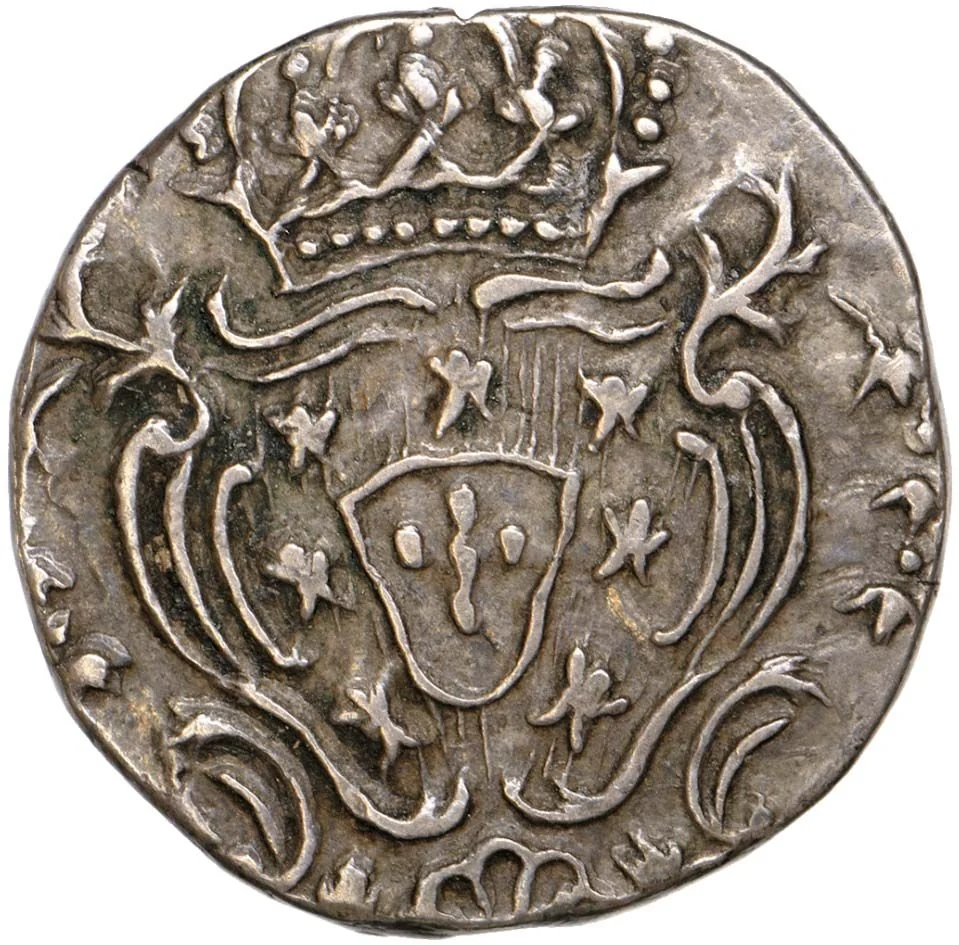
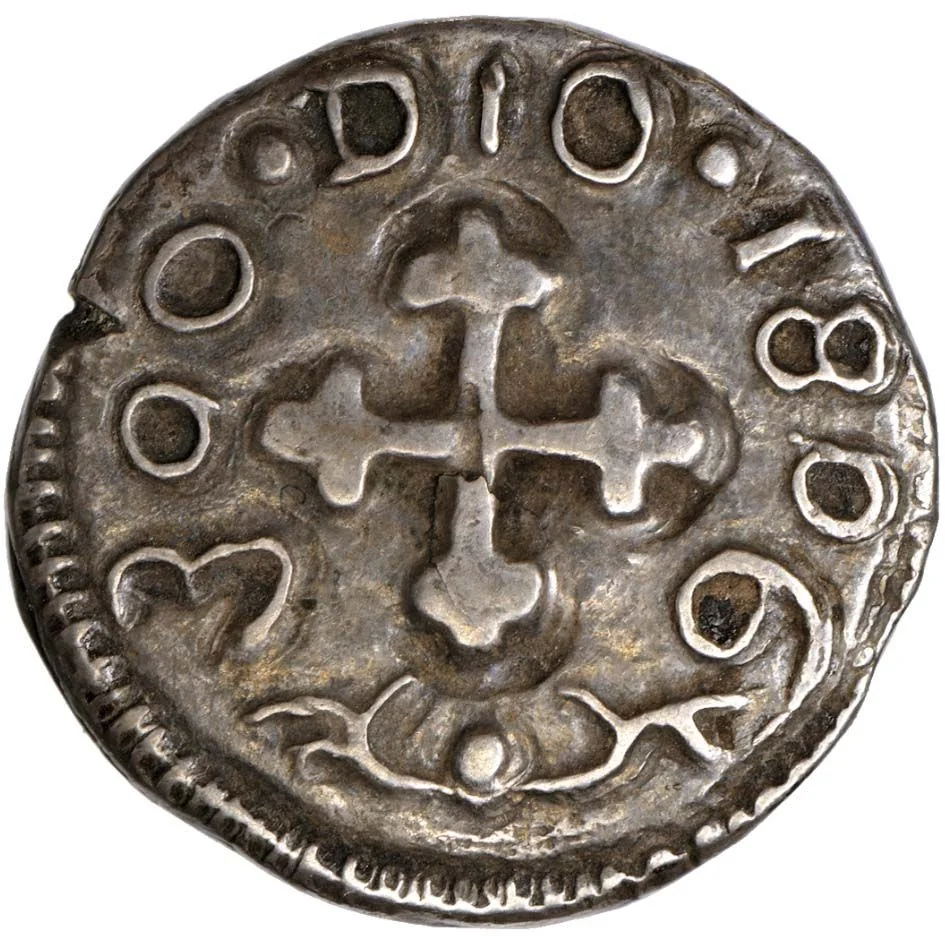
1 pardau – Portuguese India
Add to wishlist
India
Context
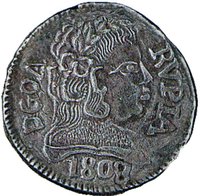
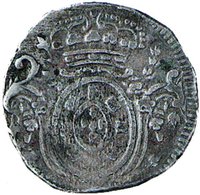
Year: 1806
Country: India
Issuer: Portuguese India
Ruler: Maria I
Currency:
(1706—1880)
Subdivision: 1 pardau = ½ Rupia
Demonetized: Yes
Material
Diameter: 17 mm
Weight: 3.8 g
Silver Weight:: 3.80 g
Shape: Irregular round
Composition: Silver
Magnetic: No
Technique: Hammered
References
Numista: #51002
Value
Bullion value: $9.52
Mints
| Name | Mark |
|---|---|
| Dio | — |
Mintings
| Year | Mint Mark | Mintage | Quality | Collection |
|---|---|---|---|---|
| 1806 | DIO | — |
Historical background
In 1806, the currency situation in Portuguese India, centred on the colony of Goa, was complex and strained, reflecting both its regional trade dynamics and its declining position within the Portuguese Empire. The official currency was the Portuguese Indian Rupia (Rupia) and its smaller unit, the Bazaruco, but the monetary landscape was dominated by a chaotic multiplicity of coins. Alongside worn and often clipped Portuguese issues, a vast array of foreign silver coins circulated freely, most notably Spanish American pesos (especially the "Carolus" peso of Charles III and IV) and various Indian rupees from neighbouring Maratha and Mughal territories. This proliferation created chronic problems of valuation, counterfeiting, and a lack of uniform standard, hampering both local commerce and government revenue collection.
The root of this instability lay in Goa's role as a trade entrepôt with a chronic deficit in its balance of payments. While the colony imported textiles and foodstuffs from the Indian hinterland, it had few export goods of equivalent value, leading to a persistent outflow of silver to settle accounts. The Portuguese state treasury, the Fazenda Real, struggled to mint sufficient quantities of reliable coinage to stem this outflow or to establish monetary sovereignty. Consequently, the economy operated on a de facto silver standard dictated by the weight and purity of the foreign coins in circulation, with merchants and money-changers (sarafs) playing a more crucial role in daily exchange than the colonial administration.
Attempts at reform were largely reactive and ineffective. The authorities periodically issued proclamations fixing exchange rates for the myriad of coins, but these official rates frequently diverged from market reality, leading to confusion and evasion. The monetary chaos of 1806 was symptomatic of a deeper colonial decline, as Portugal itself was enmeshed in the Napoleonic Wars and unable to provide economic or military support. This unstable system would persist until more forceful, but still problematic, reforms were attempted in the 1830s, yet the legacy of a heterogeneous and externally dependent currency remained a feature of Goa's economy until its integration with India in 1961.
The root of this instability lay in Goa's role as a trade entrepôt with a chronic deficit in its balance of payments. While the colony imported textiles and foodstuffs from the Indian hinterland, it had few export goods of equivalent value, leading to a persistent outflow of silver to settle accounts. The Portuguese state treasury, the Fazenda Real, struggled to mint sufficient quantities of reliable coinage to stem this outflow or to establish monetary sovereignty. Consequently, the economy operated on a de facto silver standard dictated by the weight and purity of the foreign coins in circulation, with merchants and money-changers (sarafs) playing a more crucial role in daily exchange than the colonial administration.
Attempts at reform were largely reactive and ineffective. The authorities periodically issued proclamations fixing exchange rates for the myriad of coins, but these official rates frequently diverged from market reality, leading to confusion and evasion. The monetary chaos of 1806 was symptomatic of a deeper colonial decline, as Portugal itself was enmeshed in the Napoleonic Wars and unable to provide economic or military support. This unstable system would persist until more forceful, but still problematic, reforms were attempted in the 1830s, yet the legacy of a heterogeneous and externally dependent currency remained a feature of Goa's economy until its integration with India in 1961.
✨ Legendary