

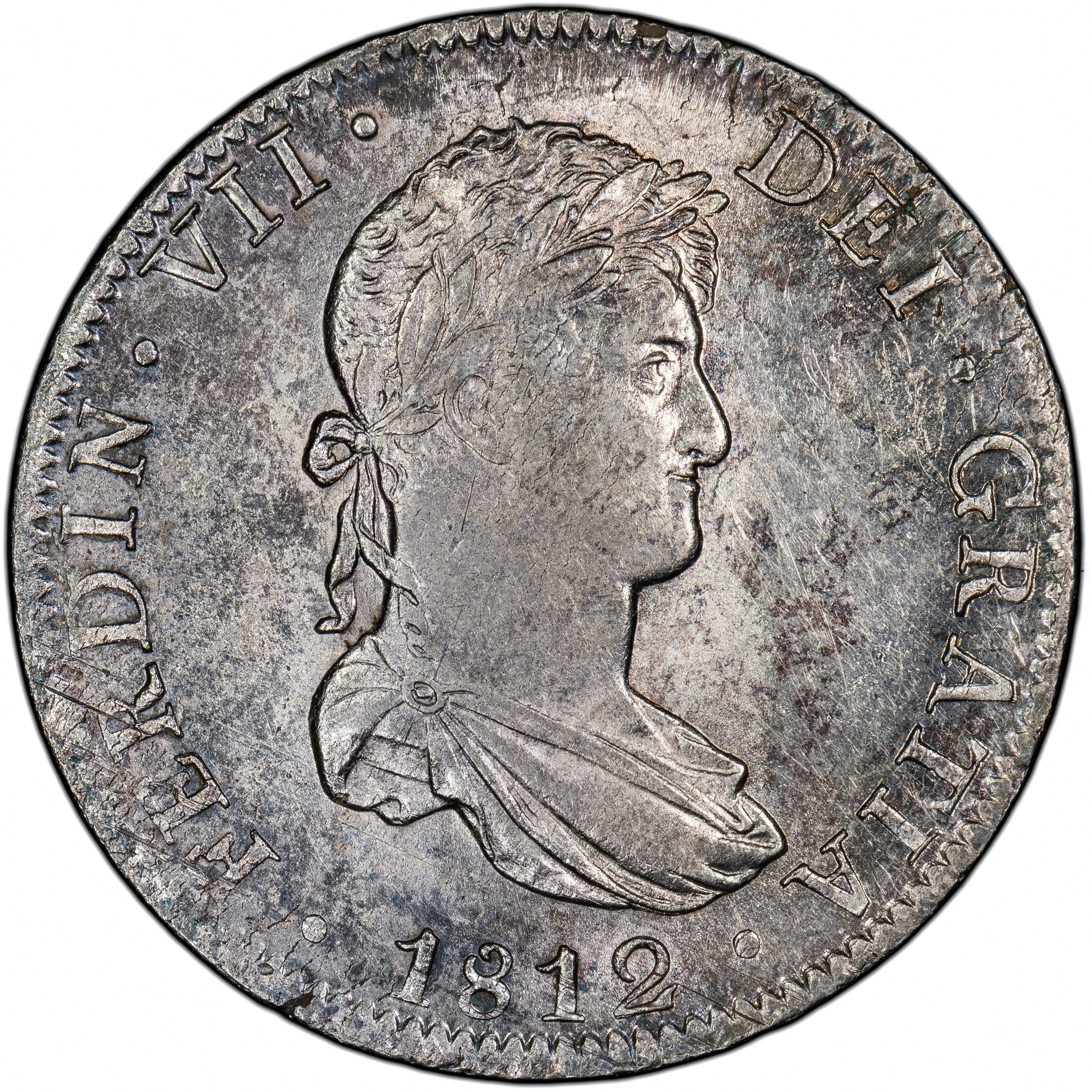
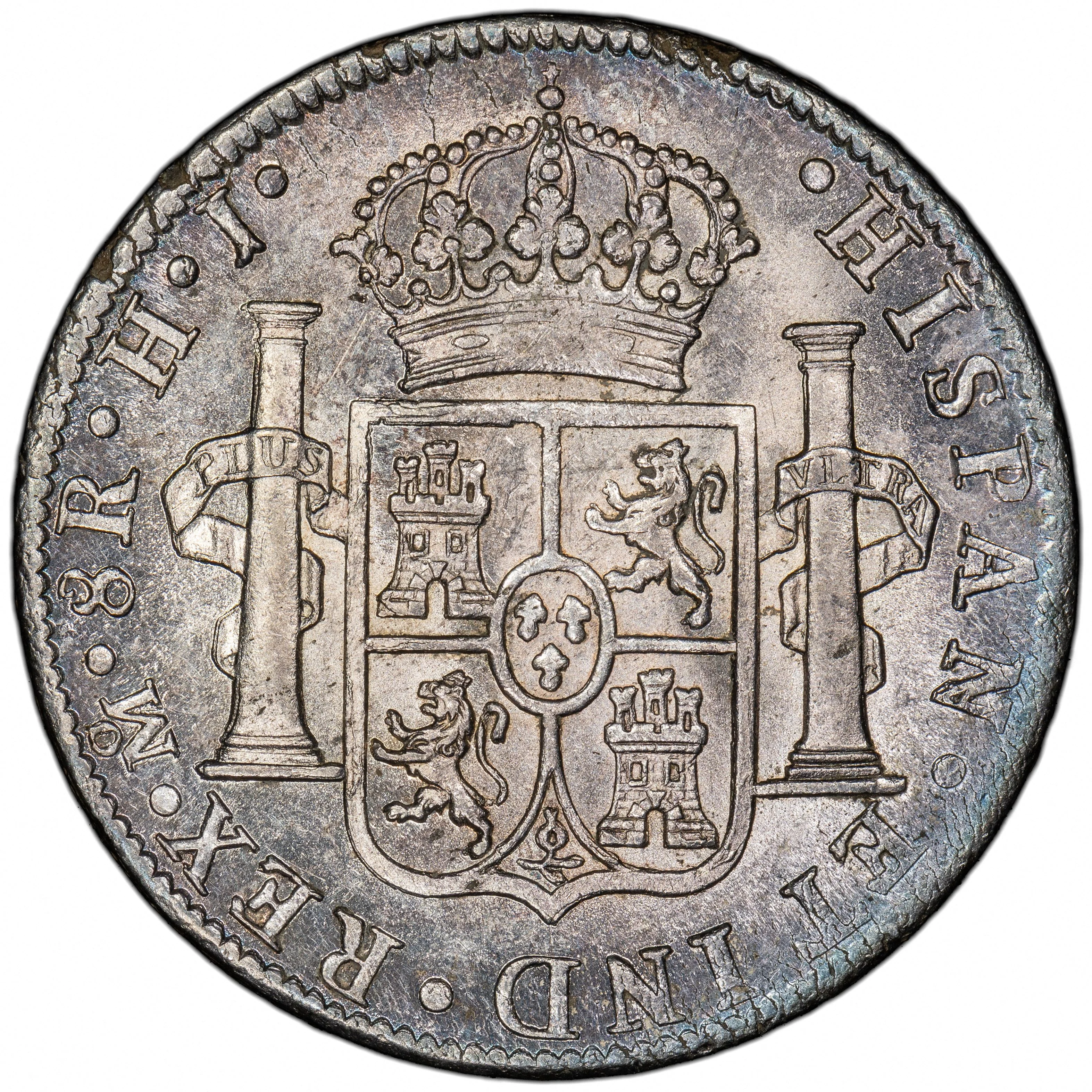
8 reales – New Spain
Add to wishlist
Mexico
Context
Years: 1811–1821
Country: Mexico
Issuer: New Spain
Ruler: Ferdinand VII
Currency:
(1535—1897)
Demonetized: Yes
Material
References
KM: #
Numista: #3767
Value
Bullion value: $59.96
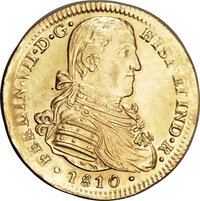
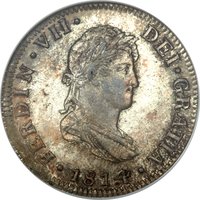
Obverse
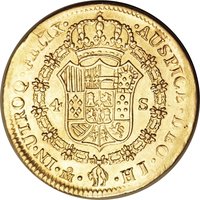
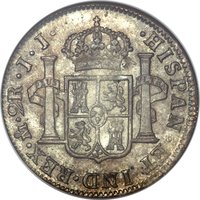
Reverse
Edge
Intaglio drawing alternating circle and rectangle
Mints
| Name | Mark |
|---|---|
| Mexican Mint | Mo |
| Casa de Moneda de Zacatecas | Zs |
Mintings
| Year | Mint Mark | Mintage | Quality | Collection |
|---|---|---|---|---|
| 1811 | HJ | — | ||
| 1812 | HJ | — | ||
| 1812 | JJ | — | ||
| 1813 | HJ | — | ||
| 1813 | JJ | — | ||
| 1814 | JJ | — | ||
| 1814 | HJ | — | ||
| 1815 | JJ | — | ||
| 1816 | JJ | — | ||
| 1817 | JJ | — | ||
| 1818 | JJ | — | ||
| 1819 | JJ | — | ||
| 1820 | JJ | — | ||
| 1821 | JJ | — |
Historical background
By 1811, the currency situation in the New Spain (colonial Mexico) was one of profound crisis and fragmentation, directly fueled by the ongoing War of Independence that had begun the previous year. The royalist government, loyal to the Spanish Crown and controlling Mexico City and major urban centers, faced severe financial strain. To fund its military campaigns against the insurgent forces of Miguel Hidalgo and Ignacio Allende, the viceregal authorities resorted to desperate measures, including confiscating property, demanding forced loans from the elite, and, most consequentially, dramatically increasing the minting of debased copper coins. These small-denomination tlacos and pilones flooded the market, but their metallic value was far below their face value, leading to rapid inflation and a loss of public trust.
Simultaneously, the insurgent movement, now led by José María Morelos after the defeats of Hidalgo’s main army, established its own mints in the territories it controlled, such as in Oaxaca and Taxco. They struck silver and copper coins bearing revolutionary symbols (like the bow and arrow) and legends declaring "AMERICA" or "SUD," explicitly rejecting the authority of Ferdinand VII. This created a dual monetary system where the legitimacy of a coin was a political statement. In everyday commerce, however, this proliferation of currencies of varying intrinsic worth and credibility caused widespread confusion, hoarding of full-weight silver, and a breakdown in regional trade.
The result was a catastrophic loss of monetary stability. Prices soared as the value of the copper-heavy currency plummeted, causing severe hardship for the common people and soldiers on both sides who were paid in nearly worthless coin. The economic chaos mirrored the political disintegration of the viceroyalty, as control over the currency—a fundamental attribute of sovereignty—was now violently contested. The financial disarray of 1811 thus was not merely a background condition but an active and accelerating factor in the social upheaval and weakening of colonial structures.
Simultaneously, the insurgent movement, now led by José María Morelos after the defeats of Hidalgo’s main army, established its own mints in the territories it controlled, such as in Oaxaca and Taxco. They struck silver and copper coins bearing revolutionary symbols (like the bow and arrow) and legends declaring "AMERICA" or "SUD," explicitly rejecting the authority of Ferdinand VII. This created a dual monetary system where the legitimacy of a coin was a political statement. In everyday commerce, however, this proliferation of currencies of varying intrinsic worth and credibility caused widespread confusion, hoarding of full-weight silver, and a breakdown in regional trade.
The result was a catastrophic loss of monetary stability. Prices soared as the value of the copper-heavy currency plummeted, causing severe hardship for the common people and soldiers on both sides who were paid in nearly worthless coin. The economic chaos mirrored the political disintegration of the viceroyalty, as control over the currency—a fundamental attribute of sovereignty—was now violently contested. The financial disarray of 1811 thus was not merely a background condition but an active and accelerating factor in the social upheaval and weakening of colonial structures.
🌱 Fairly Common