

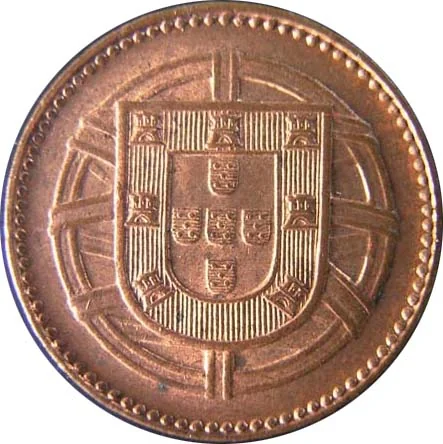
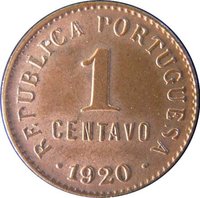
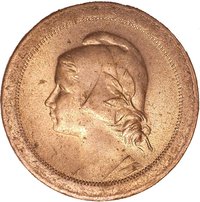
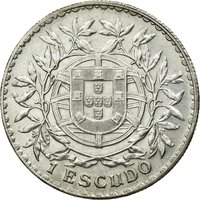
Obverse
Description:
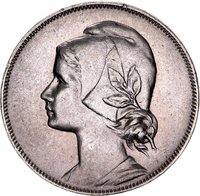
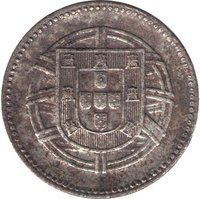
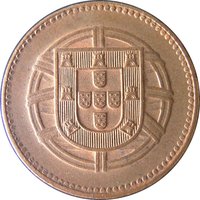
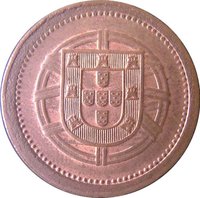
Armillary sphere under Portuguese shield, encircled by beaded border.
Engraver: Domingos Alves do Rego
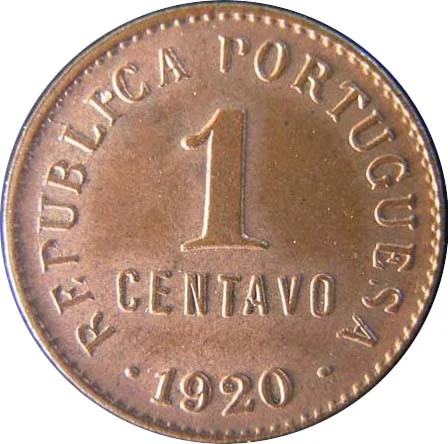
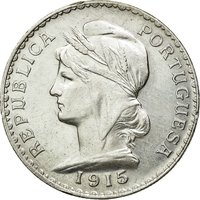
Reverse
Description:
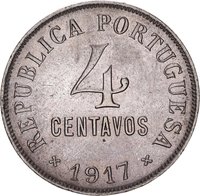
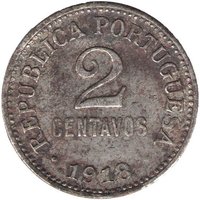
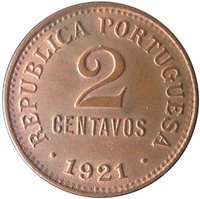
Center lettering, outer inscription, date beneath. Beaded edge.
Inscription:
REPUBLICA PORTUGUESA
1
CENTAVO
·1920·
1
CENTAVO
·1920·
Translation:
PORTUGUESE REPUBLIC
1
CENT
·1920·
1
CENT
·1920·
Script: Latin
Language: Portuguese
Edge
Plain
Categories
| Symbols> Coat of Arms |
Mints
| Name | Mark |
|---|---|
| Imprensa Nacional - Casa da Moeda | — |
Mintings
| Year | Mint Mark | Mintage | Quality | Collection |
|---|---|---|---|---|
| 1917 | — | 2,250,000 | ||
| 1918 | — | 22,996,000 | ||
| 1920 | — | 12,535,000 | ||
| 1921 | — | 4,492,000 | ||
| 1922 | — | — |
Historical background
In 1917, Portugal’s currency situation was defined by severe strain and inflationary pressures stemming from its costly involvement in the First World War. The country had entered the conflict in 1916 on the side of the Allies, a decision that placed an enormous financial burden on its fragile economy. To fund the war effort, the government, led by the Democratic Party under Afonso Costa, resorted heavily to borrowing from the Bank of Portugal, which essentially meant printing money. This led to a rapid expansion of the paper money supply, decoupling it from the nation's limited gold reserves and triggering a sharp decline in the external value of the Portuguese escudo.
Domestically, this monetary expansion fueled rampant inflation, severely eroding purchasing power and causing widespread social hardship. Prices for essential goods soared, while wages failed to keep pace, leading to food shortages, riots, and profound social unrest, particularly in urban centers like Lisbon. The currency crisis was both a cause and a symptom of the profound political instability that characterized the year, which culminated in the authoritarian coup of Sidónio Pais in December. His regime would later attempt to address the monetary chaos through stricter control of public finances and negotiations for foreign loans.
Internationally, the escudo's value plummeted on exchange markets, complicating the vital importation of food, raw materials, and war matériel. Portugal's financial weakness increased its dependence on its ally, Great Britain, which provided crucial loans but also demanded gold shipments as collateral, further depleting the nation's metallic reserves. Thus, the currency situation of 1917 was not merely a technical economic issue but a central factor in a national crisis, intertwining with political upheaval, social suffering, and the precariousness of Portugal's wartime footing.
Domestically, this monetary expansion fueled rampant inflation, severely eroding purchasing power and causing widespread social hardship. Prices for essential goods soared, while wages failed to keep pace, leading to food shortages, riots, and profound social unrest, particularly in urban centers like Lisbon. The currency crisis was both a cause and a symptom of the profound political instability that characterized the year, which culminated in the authoritarian coup of Sidónio Pais in December. His regime would later attempt to address the monetary chaos through stricter control of public finances and negotiations for foreign loans.
Internationally, the escudo's value plummeted on exchange markets, complicating the vital importation of food, raw materials, and war matériel. Portugal's financial weakness increased its dependence on its ally, Great Britain, which provided crucial loans but also demanded gold shipments as collateral, further depleting the nation's metallic reserves. Thus, the currency situation of 1917 was not merely a technical economic issue but a central factor in a national crisis, intertwining with political upheaval, social suffering, and the precariousness of Portugal's wartime footing.
Series: System 1917-1922
🌱 Very Common