

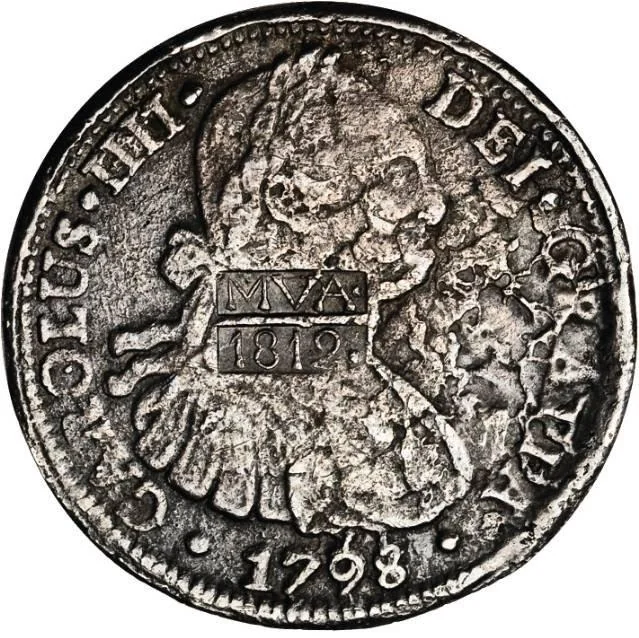
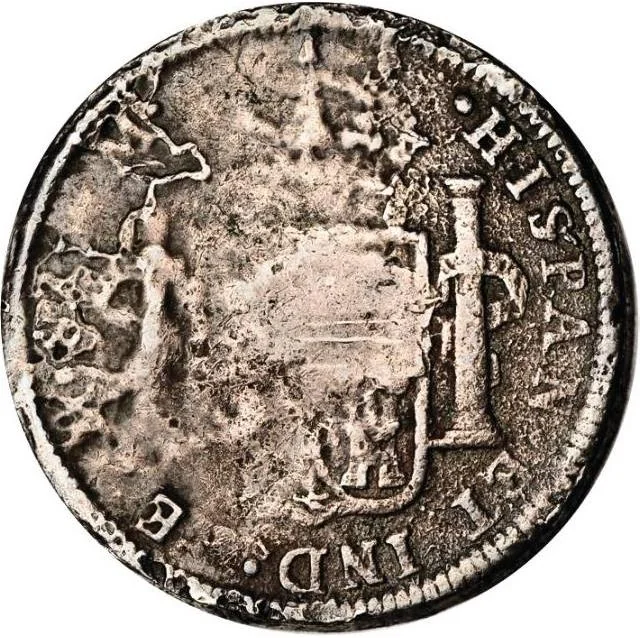
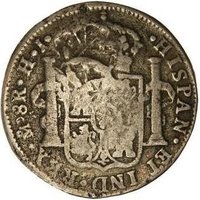
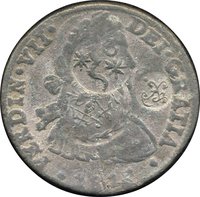
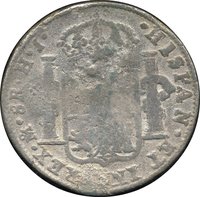
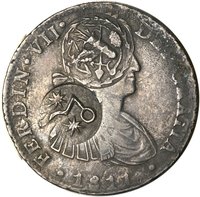
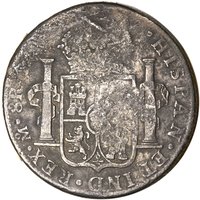
8 Reales – Mexico
Mexico
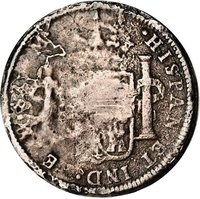
Mintings
| Year | Mint Mark | Mintage | Quality | Collection |
|---|---|---|---|---|
| — | HJ | — | ||
| — | TH | — | ||
| — | — | — | ||
| — | FM | — | ||
| — | FT | — |
Historical background
In 1809, the currency situation in the Viceroyalty of New Spain (Mexico) was one of profound instability and scarcity, a direct reflection of the collapsing colonial order. The primary circulating coins were silver reales and gold escudos, minted at the renowned Mexico City Mint. However, the Napoleonic invasion of Spain in 1808 had severed vital transatlantic ties, choking the supply of official coinage and creating a severe liquidity crisis. This was exacerbated by the outbreak of the Hidalgo rebellion in 1810, the tensions of which were already simmering, leading to hoarding of precious metals by a panicked populace and institutions.
The royal response to the cash shortage was the introduction of paper money, a novel and deeply unpopular concept. In late 1808, Viceroy Pedro de Garibay authorized the issuance of vales reales (royal vouchers), essentially government bonds intended to circulate as currency to pay soldiers and officials. By 1809, these notes were rapidly depreciating due to a lack of public confidence and insufficient silver backing, leading to widespread refusal by merchants. The colonial government resorted to forced loans from the Church and private citizens, further draining hard currency from circulation and distorting the economy.
Thus, the monetary landscape of 1809 was marked by a tense duality: a shrinking supply of trusted, intrinsic-value silver coinage and an expanding pool of distrusted paper substitutes. This financial disarray mirrored the political fragmentation of the Spanish Empire, undermining economic activity and fueling the discontent that would soon erupt into full-scale war for independence. The currency crisis was both a symptom and an accelerator of the colonial system's final collapse.
The royal response to the cash shortage was the introduction of paper money, a novel and deeply unpopular concept. In late 1808, Viceroy Pedro de Garibay authorized the issuance of vales reales (royal vouchers), essentially government bonds intended to circulate as currency to pay soldiers and officials. By 1809, these notes were rapidly depreciating due to a lack of public confidence and insufficient silver backing, leading to widespread refusal by merchants. The colonial government resorted to forced loans from the Church and private citizens, further draining hard currency from circulation and distorting the economy.
Thus, the monetary landscape of 1809 was marked by a tense duality: a shrinking supply of trusted, intrinsic-value silver coinage and an expanding pool of distrusted paper substitutes. This financial disarray mirrored the political fragmentation of the Spanish Empire, undermining economic activity and fueling the discontent that would soon erupt into full-scale war for independence. The currency crisis was both a symptom and an accelerator of the colonial system's final collapse.
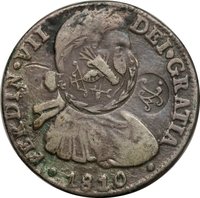
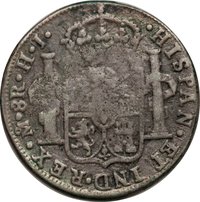
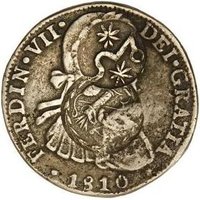
Series: 1809 Mexico circulation coins
✨ Legendary