

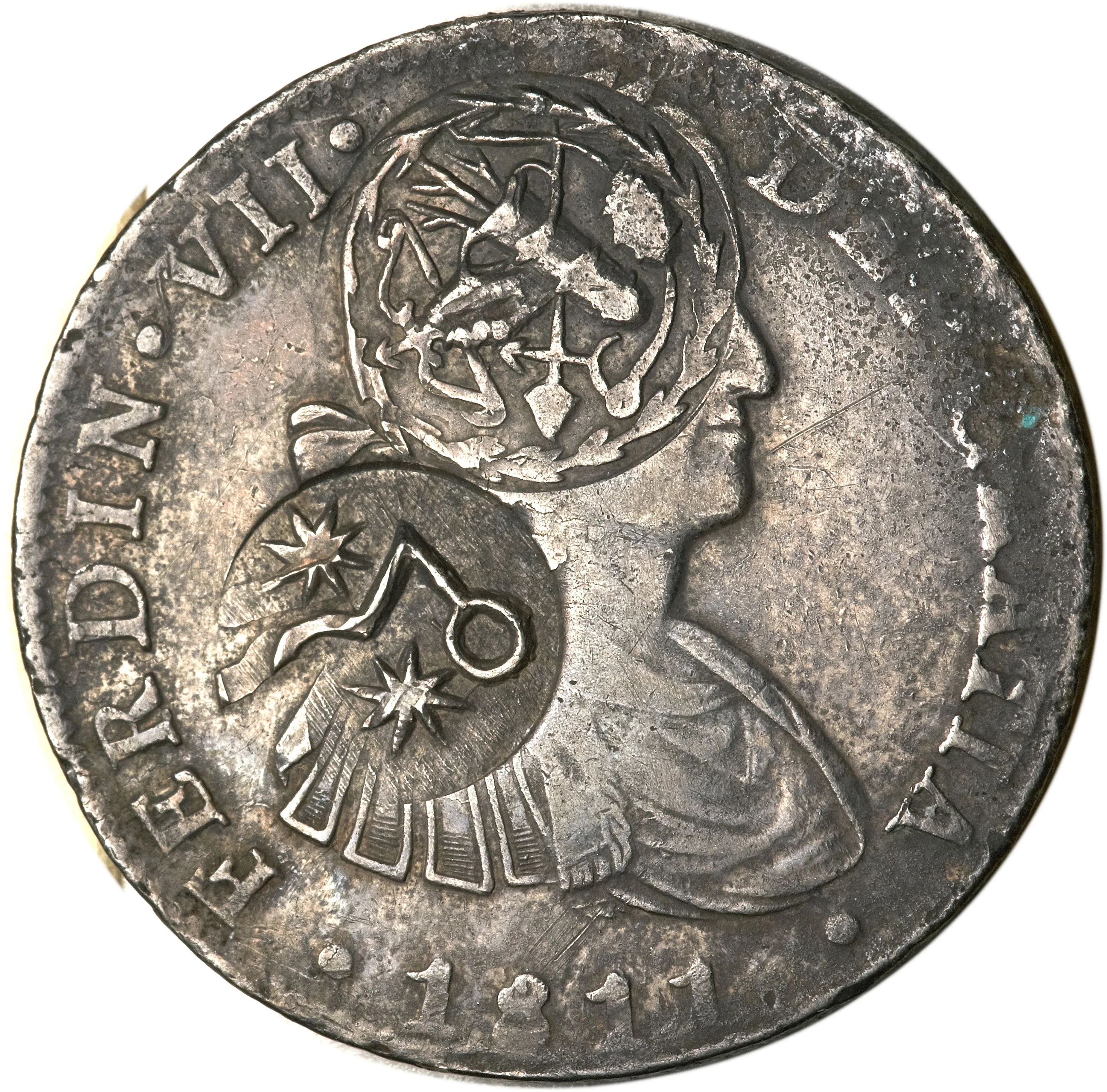
Obverse
Description:
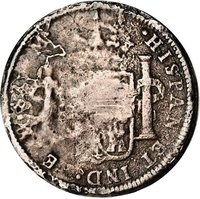
Chilpanzingo (bow and arrow) and Morelos (monogram in oval with stars) stamps.
Script: Latin
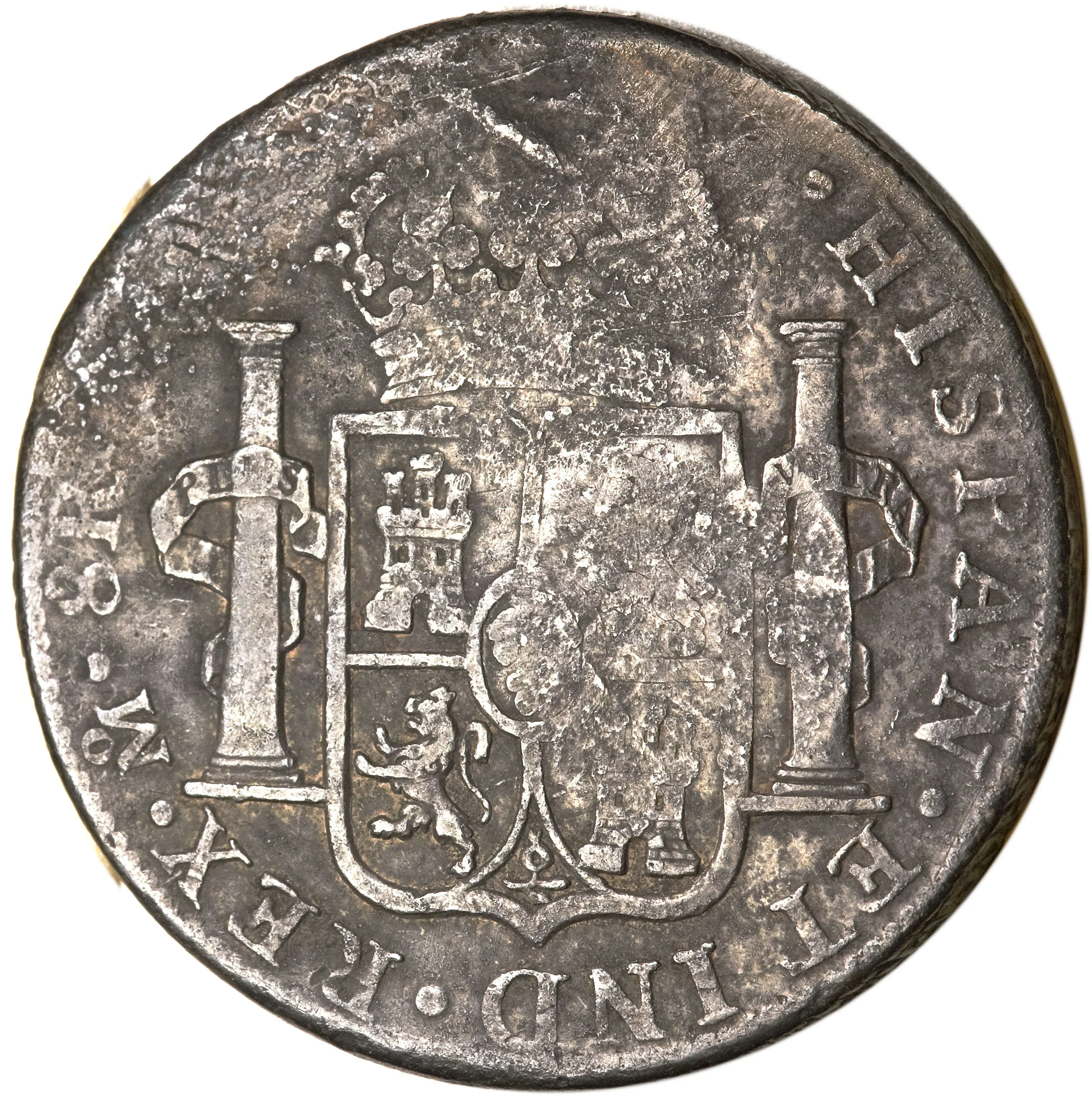
Reverse
Description:
Host coin remnants.
Script: Latin
Edge
Mintings
| Year | Mint Mark | Mintage | Quality | Collection |
|---|---|---|---|---|
| — | TH | — |
Historical background
In 1806, the currency situation in the Viceroyalty of New Spain (Mexico) was complex and increasingly strained, operating under the monetary system of the Spanish Empire. The primary circulating coins were silver reales and gold escudos, minted at the renowned Mexico City Mint, the oldest in the Americas. The most iconic coin was the silver "piece of eight" (8 reales), which was a globally trusted currency and the precursor to the U.S. dollar. However, the system suffered from a chronic shortage of small-denomination coinage for daily transactions, leading to the widespread practice of physically cutting coins into fractional pieces, like pesos and tlacos.
This physical fragmentation was symptomatic of deeper economic pressures. As a wealthy colony, New Spain was a vital source of silver for the Spanish Crown, which siphoned off vast quantities to finance its European wars and imperial administration. This drain of specie, combined with restrictive mercantilist policies that limited trade to Spanish ports, created liquidity problems within the local economy. Furthermore, the Crown's increasing fiscal demands to support its war against Britain (part of the Napoleonic conflicts) placed additional strain on colonial finances, leading to ad-hoc measures like forced loans and the issuance of debt instruments.
Beneath these immediate issues, the monetary landscape was on the cusp of profound change. The political instability in Europe, with Napoleon's invasion of Spain imminent in 1808, would soon trigger the wars of independence. The decade following 1806 would see revolutionary and royalist forces alike resorting to emergency paper money and debased coinage to fund their efforts, leading to inflation and monetary chaos. Thus, in 1806, the system, while still functioning under the familiar Spanish standard, was under growing stress, presaging the complete monetary transformation that would accompany Mexico's struggle for independence in the years to come.
This physical fragmentation was symptomatic of deeper economic pressures. As a wealthy colony, New Spain was a vital source of silver for the Spanish Crown, which siphoned off vast quantities to finance its European wars and imperial administration. This drain of specie, combined with restrictive mercantilist policies that limited trade to Spanish ports, created liquidity problems within the local economy. Furthermore, the Crown's increasing fiscal demands to support its war against Britain (part of the Napoleonic conflicts) placed additional strain on colonial finances, leading to ad-hoc measures like forced loans and the issuance of debt instruments.
Beneath these immediate issues, the monetary landscape was on the cusp of profound change. The political instability in Europe, with Napoleon's invasion of Spain imminent in 1808, would soon trigger the wars of independence. The decade following 1806 would see revolutionary and royalist forces alike resorting to emergency paper money and debased coinage to fund their efforts, leading to inflation and monetary chaos. Thus, in 1806, the system, while still functioning under the familiar Spanish standard, was under growing stress, presaging the complete monetary transformation that would accompany Mexico's struggle for independence in the years to come.

✨ Legendary