

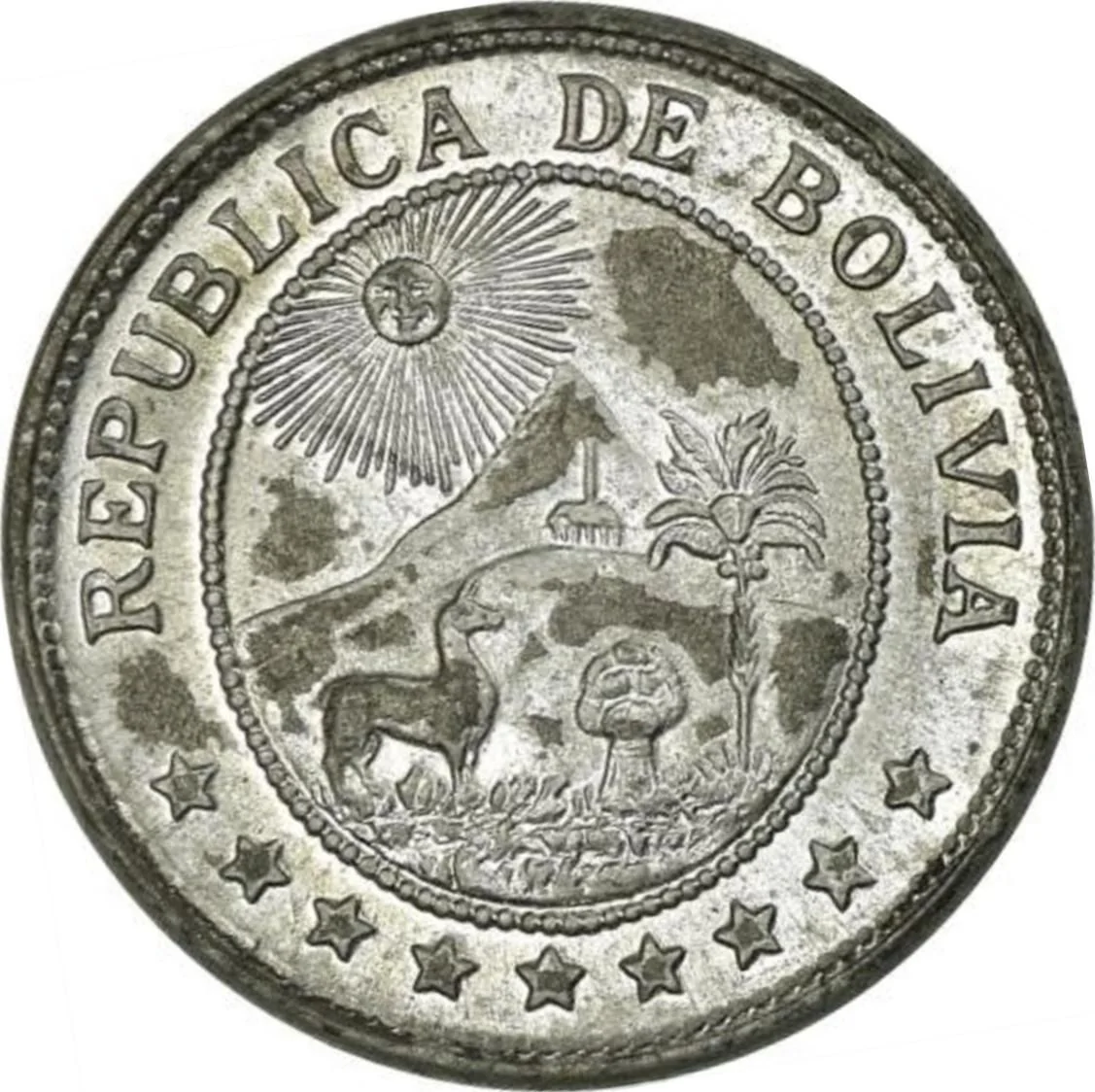
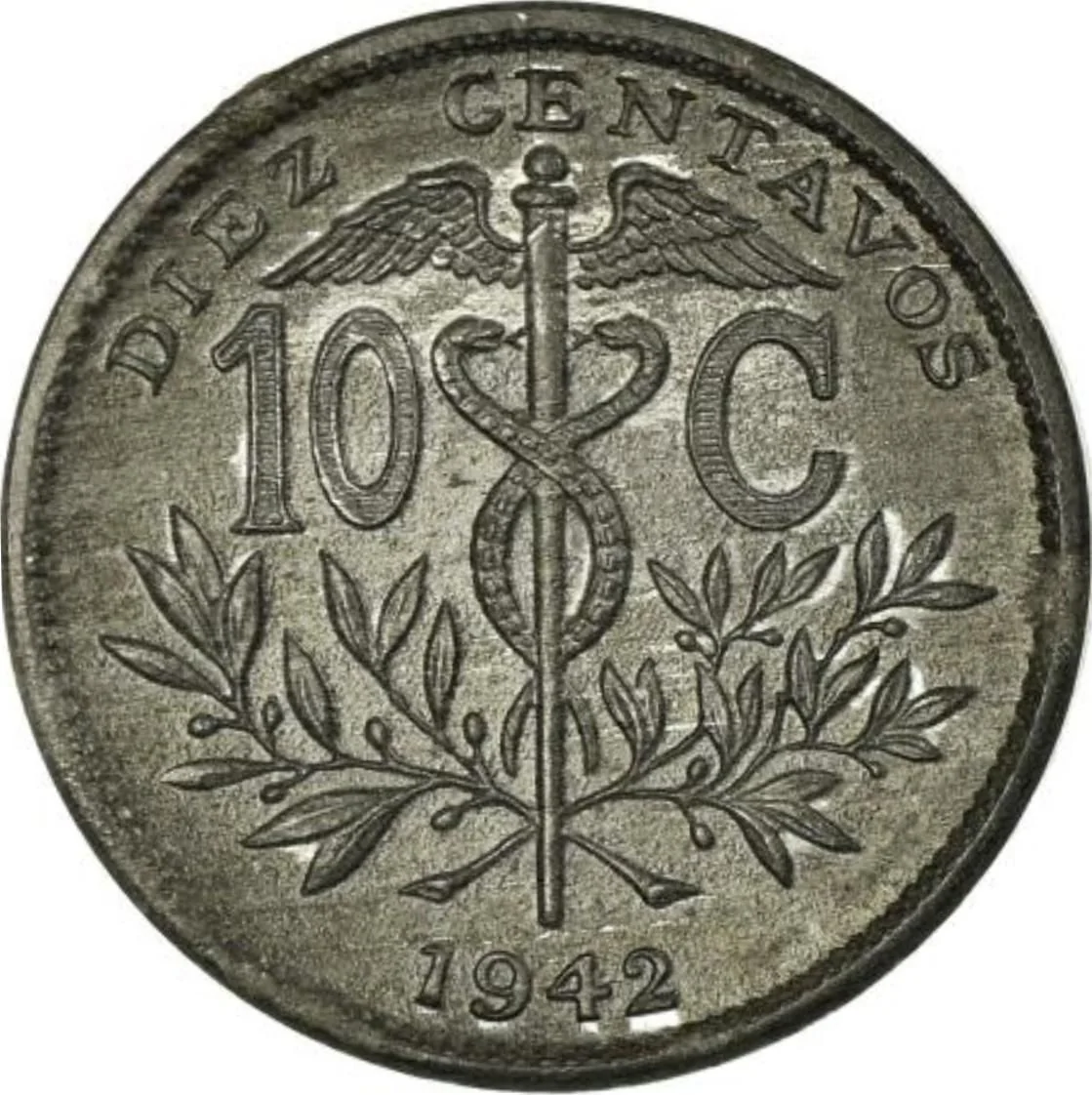
10 centavos – Bolivia
Add to wishlist
Bolivia
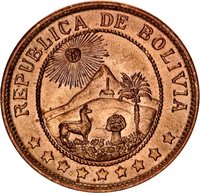
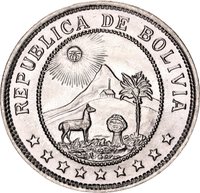
Obverse
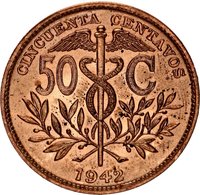
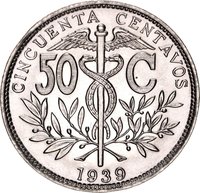
Reverse
Edge
Plain
Categories
| Animal> Camel |
| Geography> Mountain |
| Plant> Tree |
| Symbol> Caduceus |
| Symbols> Coat of Arms |
| Symbol> Sun |
Mints
| Name | Mark |
|---|---|
| United States Mint of Philadelphia | — |
Mintings
| Year | Mint Mark | Mintage | Quality | Collection |
|---|---|---|---|---|
| 1942 | — | 10,000,000 |
Historical background
In 1942, Bolivia's currency situation was characterized by the dominance of the Boliviano, which had experienced significant depreciation and instability since the 1930s. The country's economy was heavily dependent on tin exports, and the volatility of global tin prices, coupled with the fiscal pressures of the Chaco War (1932–1935), had led to persistent inflation and a loss of confidence in the national currency. While not in a state of hyperinflation, the period was marked by a steady erosion of purchasing power, and the government struggled with budget deficits often financed by the central bank, further exacerbating monetary instability.
The international context of World War II played a crucial role in shaping Bolivia's monetary policy in 1942. As a key supplier of strategic tin to the Allied forces, Bolivia experienced an increase in export revenues and U.S. dollar inflows. This provided some relief to the foreign exchange reserves and helped stabilize the currency to a degree. Furthermore, the pro-Allied government of Enrique Peñaranda, under significant U.S. political and economic influence, was encouraged to implement more orthodox fiscal and monetary policies as a condition for financial support and favorable tin purchase agreements.
Despite these external supports, the underlying structural weaknesses of the Bolivian economy limited the effectiveness of any currency stabilization. The nation's reliance on a single commodity, a narrow tax base, and profound social inequalities meant that monetary policy was largely reactive. Consequently, while 1942 did not see a dramatic currency crisis, it was a year within a longer trajectory of economic fragility, setting the stage for the social upheaval and nationalization of the tin mines that would follow later in the decade.
The international context of World War II played a crucial role in shaping Bolivia's monetary policy in 1942. As a key supplier of strategic tin to the Allied forces, Bolivia experienced an increase in export revenues and U.S. dollar inflows. This provided some relief to the foreign exchange reserves and helped stabilize the currency to a degree. Furthermore, the pro-Allied government of Enrique Peñaranda, under significant U.S. political and economic influence, was encouraged to implement more orthodox fiscal and monetary policies as a condition for financial support and favorable tin purchase agreements.
Despite these external supports, the underlying structural weaknesses of the Bolivian economy limited the effectiveness of any currency stabilization. The nation's reliance on a single commodity, a narrow tax base, and profound social inequalities meant that monetary policy was largely reactive. Consequently, while 1942 did not see a dramatic currency crisis, it was a year within a longer trajectory of economic fragility, setting the stage for the social upheaval and nationalization of the tin mines that would follow later in the decade.
🌱 Common