

50 centavos – Bolivia
Add to wishlist
Bolivia
Context
Material
Diameter: 29 mm
Weight: 8.45 g
Thickness: 1.88 mm
Shape: Round
Composition: Copper-nickel
Technique: Milled
Alignment: Medal alignment
flip
References
KM: #
Numista: #4902
Obverse
Description:
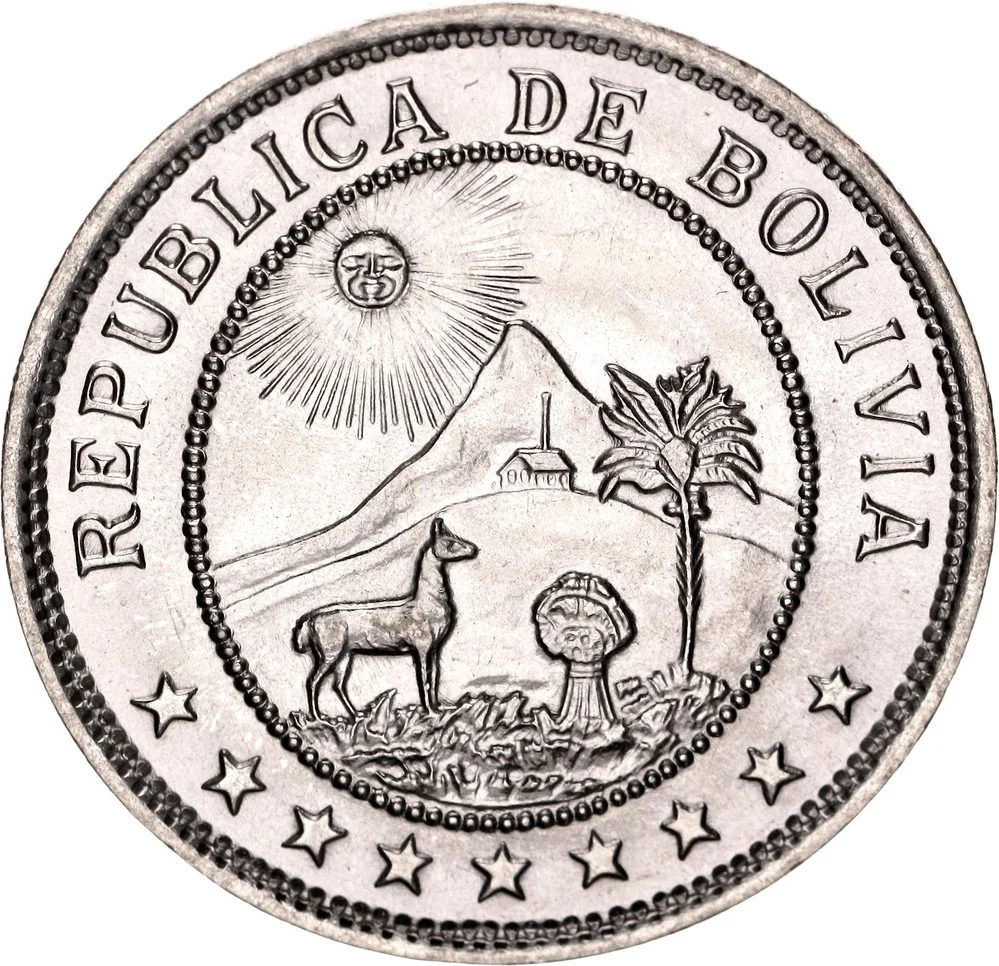
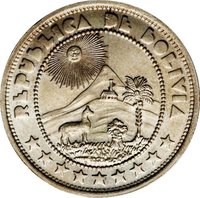
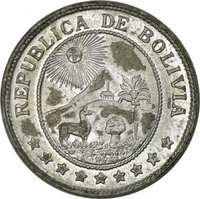
Bolivia's coat of arms features a beaded oval containing the sun over Potosí's Cerro Rico and Cerro Menor, a chapel, a palm tree, a wheat sheaf, and a llama, with nine stars below for its departments.
Inscription:
REPUBLICA DE BOLIVIA
Translation:
Republic of Bolivia
Script: Latin
Language: Spanish
Reverse
Edge
Plain
Categories
| Symbol> Sun |
| Animal> Camel |
| Geography> Mountain |
| Plant> Tree |
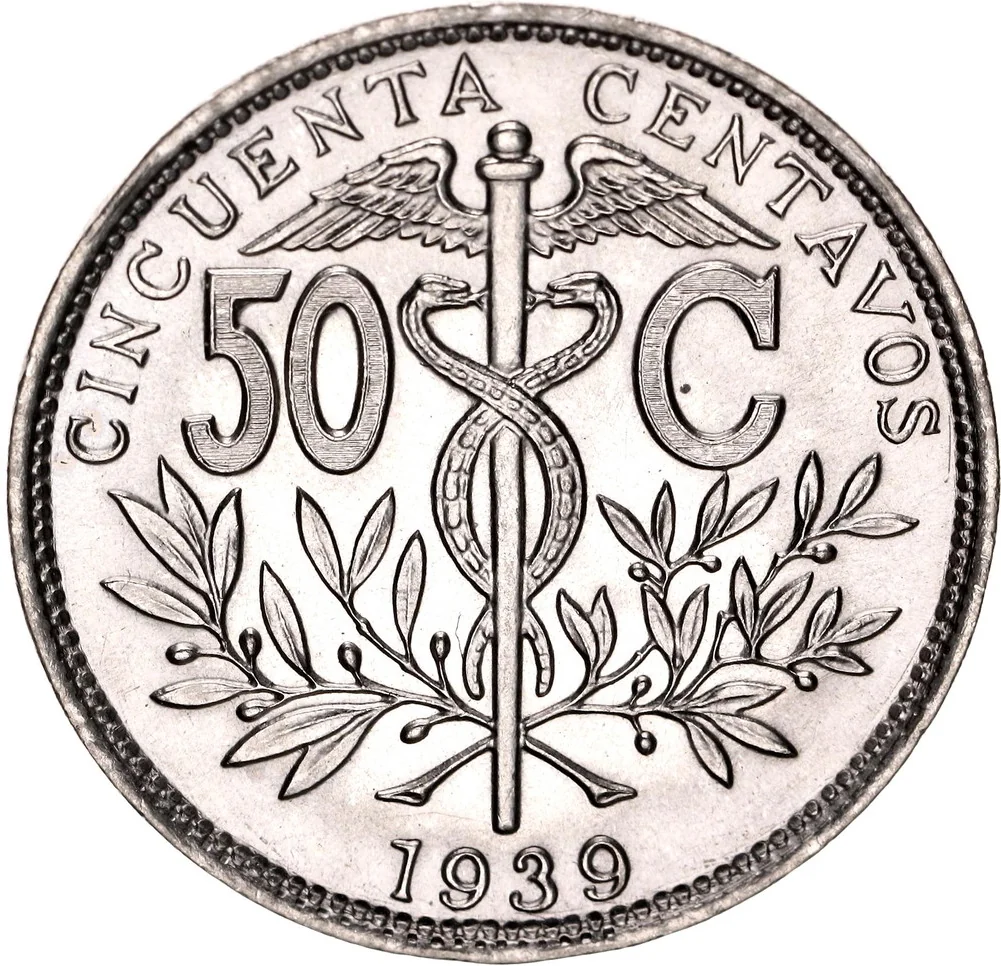
| Symbol> Caduceus |
| Symbols> Coat of Arms |
Mints
| Name | Mark |
|---|---|
| Huguenin | — |
Mintings
| Year | Mint Mark | Mintage | Quality | Collection |
|---|---|---|---|---|
| 1939 | — | — |
Historical background
In 1939, Bolivia's currency situation was characterized by the dominance of the Boliviano (BOB), a silver-backed currency that had been the nation's monetary unit since 1864. However, the currency's stability and value were profoundly strained by the economic and political fallout from the Chaco War (1932-1935). The costly and devastating conflict with Paraguay had drained Bolivia's treasury, leading to massive foreign debt, rampant inflation, and a severe depletion of foreign exchange reserves. The government, under President Germán Busch, was struggling to manage these fiscal pressures while the economy remained heavily dependent on a single volatile export: tin.
The immediate post-war period saw attempts at economic reform, culminating in 1939 with the administration of President Carlos Quintanilla (who took over after Busch's death). The government maintained an official fixed exchange rate, but a thriving black market for foreign currency, particularly US dollars, existed due to strict exchange controls and limited access to hard currency. This duality reflected the gap between government policy and market reality. The tin barons, who controlled the nation's primary source of export earnings, often circumvented controls, exacerbating the scarcity of dollars needed for essential imports and debt servicing.
Overall, the 1939 currency landscape was one of fragile stability masking deep underlying weaknesses. The Boliviano was under constant pressure from fiscal deficits, inflation, and a distorted exchange system. This precarious situation set the stage for more dramatic monetary changes in the 1940s, including a major devaluation and the eventual establishment of the Central Bank of Bolivia in 1945, which sought to impose greater order on the nation's finances after a decade of crisis.
The immediate post-war period saw attempts at economic reform, culminating in 1939 with the administration of President Carlos Quintanilla (who took over after Busch's death). The government maintained an official fixed exchange rate, but a thriving black market for foreign currency, particularly US dollars, existed due to strict exchange controls and limited access to hard currency. This duality reflected the gap between government policy and market reality. The tin barons, who controlled the nation's primary source of export earnings, often circumvented controls, exacerbating the scarcity of dollars needed for essential imports and debt servicing.
Overall, the 1939 currency landscape was one of fragile stability masking deep underlying weaknesses. The Boliviano was under constant pressure from fiscal deficits, inflation, and a distorted exchange system. This precarious situation set the stage for more dramatic monetary changes in the 1940s, including a major devaluation and the eventual establishment of the Central Bank of Bolivia in 1945, which sought to impose greater order on the nation's finances after a decade of crisis.
🌱 Common