

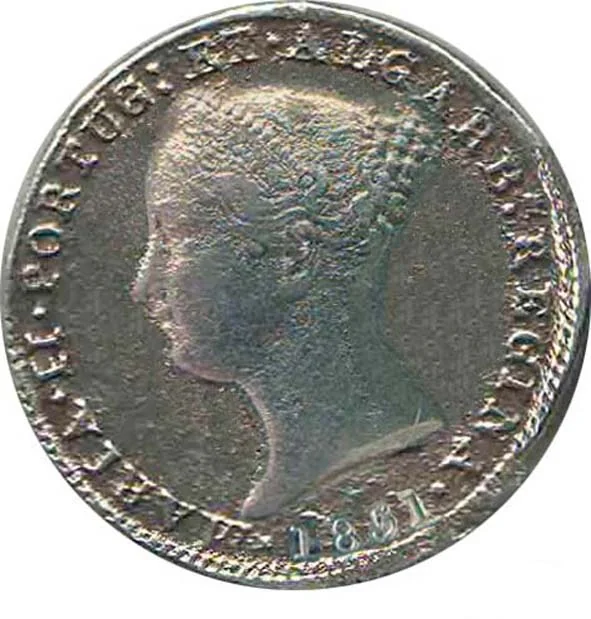
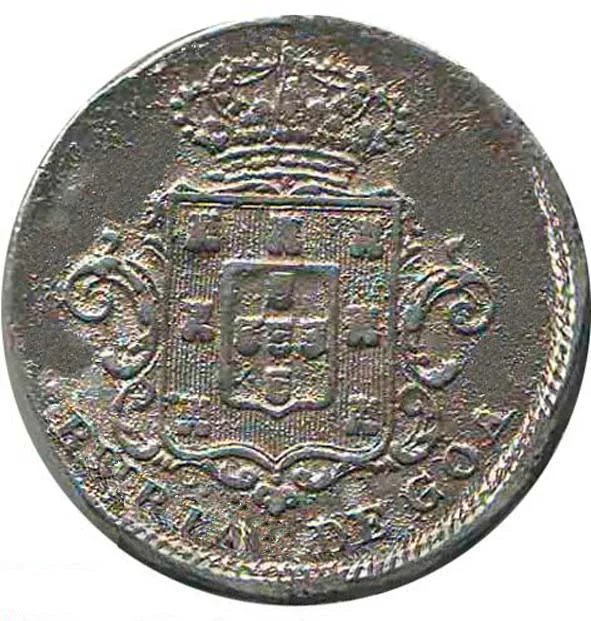
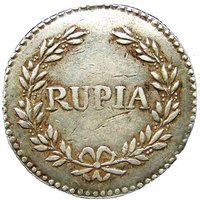
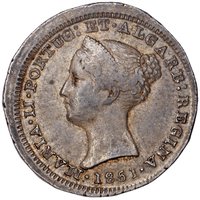
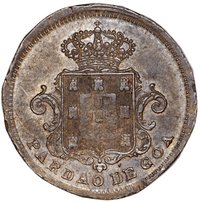
1 Rupia – Portuguese India
India
Context
Years: 1850–1852
Country: India 
Issuer: Portuguese India
Ruler: Mary II
Currency:
(1706—1880)
Demonetized: Yes
Material
References
KM: #Click to copy to clipboard275
Numista: #48810
Value
Bullion value: $30.86
Mints
| Name | Mark |
|---|---|
| Goa | — |
Mintings
| Year | Mint Mark | Mintage | Quality | Collection |
|---|---|---|---|---|
| 1850 | GOA | — | ||
| 1851 | GOA | — | ||
| 1852 | GOA | — |
Historical background
In 1850, the currency situation in Portuguese India (primarily Goa, Daman, and Diu) was characterized by a complex and fragmented monetary circulation, reflecting its dual role as a Portuguese overseas territory and a commercial hub integrated into the Indian Ocean economy. The official currency was the Portuguese Indian Rupia (divided into 16 tangas or 960 réis), which had been formally instituted in the late 18th century to replace a plethora of older systems. However, this official system coexisted, and often competed, with a multitude of other coins in daily use. Most prominent were various silver rupees from neighbouring British India, especially the Company Rupee, which held substantial commercial prestige and was widely accepted in trade.
This monetary pluralism created chronic problems of exchange and valuation. The value of different coins fluctuated based on their intrinsic silver content, leading to constant difficulties in setting fixed exchange rates between the Portuguese Indian Rupia, British Indian Rupees, and older local denominations like the xerafim. Furthermore, a persistent shortage of small change (copper bazarucos) for everyday transactions hampered local markets and led to the circulation of worn, clipped, or even counterfeit coins. The Portuguese administration struggled to enforce its monetary authority, as the population and merchants often preferred the more stable and internationally recognized British silver.
Ultimately, the currency situation of 1850 was one of transitional instability, caught between local tradition, colonial policy, and regional economic dominance. The persistent circulation of foreign coinage underscored Goa's economic integration with British India and highlighted Lisbon's limited capacity to impose a unified monetary system. This unresolved complexity would eventually lead to significant reforms, most notably the adoption of the British Indian rupee as the official currency of Portuguese India in 1859, a pragmatic surrender to the economic realities of the subcontinent.
This monetary pluralism created chronic problems of exchange and valuation. The value of different coins fluctuated based on their intrinsic silver content, leading to constant difficulties in setting fixed exchange rates between the Portuguese Indian Rupia, British Indian Rupees, and older local denominations like the xerafim. Furthermore, a persistent shortage of small change (copper bazarucos) for everyday transactions hampered local markets and led to the circulation of worn, clipped, or even counterfeit coins. The Portuguese administration struggled to enforce its monetary authority, as the population and merchants often preferred the more stable and internationally recognized British silver.
Ultimately, the currency situation of 1850 was one of transitional instability, caught between local tradition, colonial policy, and regional economic dominance. The persistent circulation of foreign coinage underscored Goa's economic integration with British India and highlighted Lisbon's limited capacity to impose a unified monetary system. This unresolved complexity would eventually lead to significant reforms, most notably the adoption of the British Indian rupee as the official currency of Portuguese India in 1859, a pragmatic surrender to the economic realities of the subcontinent.
✨ Legendary