

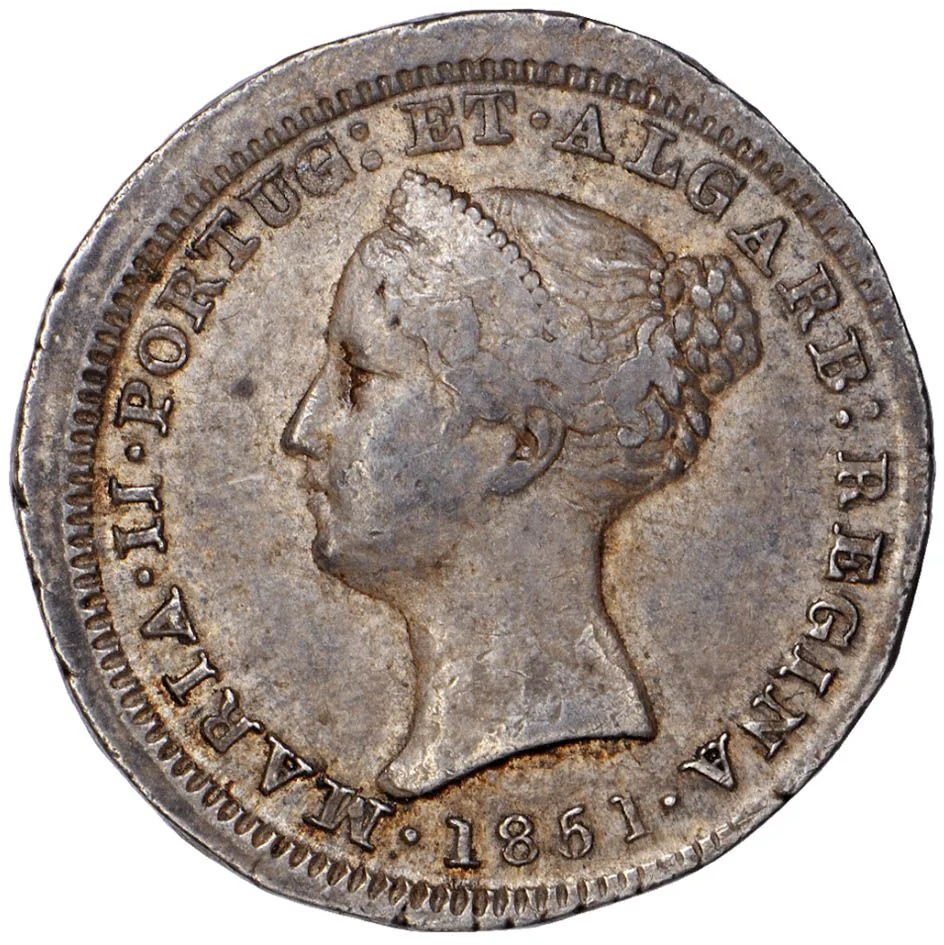
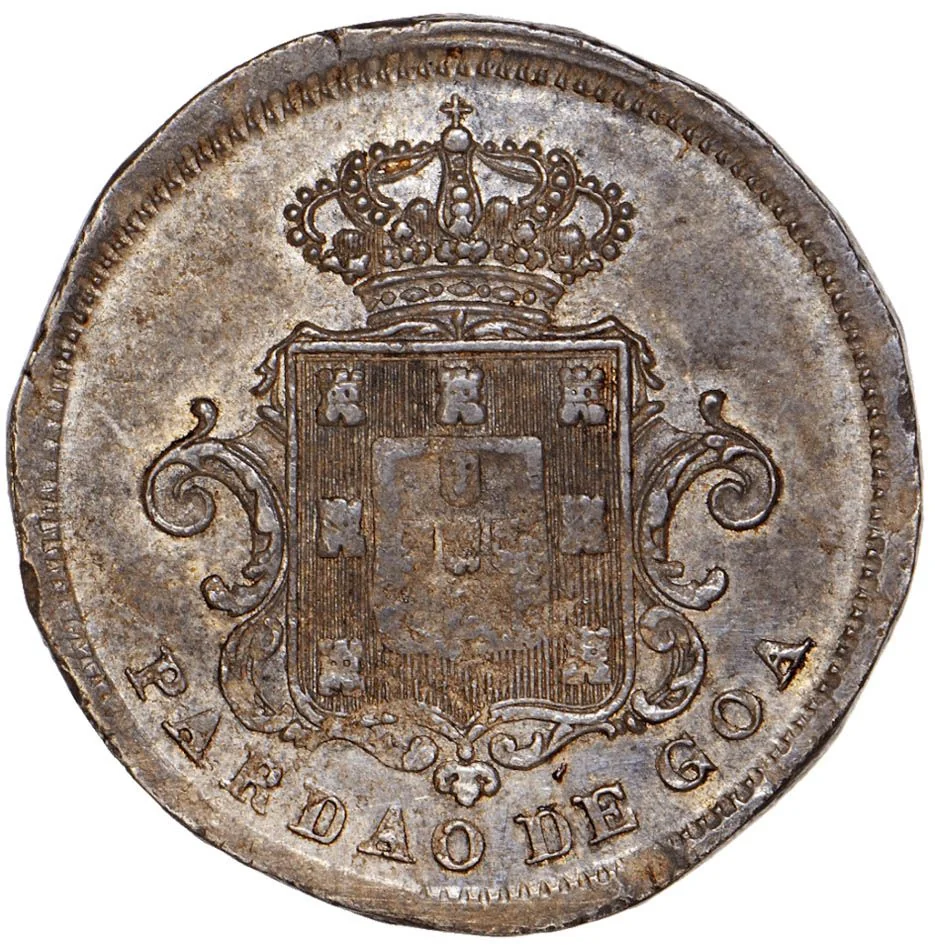
1 Pardau – Portuguese India
India
Context
Year: 1851
Country: India 
Issuer: Portuguese India
Ruler: Mary II
Currency:
(1706—1880)
Subdivision: 1 Pardau = ½ Rupia
Demonetized: Yes
Material
References
KM: #Click to copy to clipboard276
Numista: #48802
Value
Bullion value: $15.43
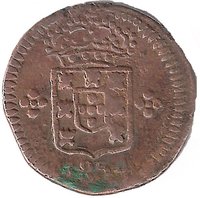
Obverse
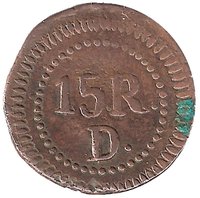
Reverse
Edge
Mints
| Name | Mark |
|---|---|
| Imprensa Nacional - Casa da Moeda | — |
Mintings
| Year | Mint Mark | Mintage | Quality | Collection |
|---|---|---|---|---|
| 1851 | GOA | — |
Historical background
In 1851, the currency situation in Portuguese India was a complex and fragmented system, reflecting both its colonial status and its deep integration into regional trade networks. The official currency was the Portuguese Indian Rupia (divided into 16 tangas or 960 réis), but its circulation was overshadowed by a multitude of foreign coins. Most prominent were silver coins from neighbouring British India, especially the British Indian Rupee and the Mohur, which circulated freely due to the overwhelming economic influence of the British Empire in the subcontinent. Furthermore, older Portuguese colonial coins, such as the cruzado, and even gold coins from other European empires and Arab states, were still in use, creating a chaotic monetary environment.
This multiplicity stemmed from centuries of trade and the lack of a strong, unified Portuguese minting authority in Goa. The local economy, heavily dependent on maritime commerce and remittances from emigrants, readily absorbed any currency of reliable intrinsic value. Consequently, transactions often required careful assessment of a coin's weight, purity, and origin, leading to inefficiency and confusion. The Portuguese administration struggled to impose its own currency as the sole legal tender, as the public and merchants continued to trust the more widely recognised and stable foreign silver.
The year 1851 falls within a period of gradual monetary reform. Portuguese authorities, recognising the disorder, were attempting to standardise the system around the Portuguese Indian Rupia and to regulate the exchange rates of the myriad foreign coins in circulation. However, these efforts met with limited success on the ground. The fundamental reality was that the economic gravity of British India made its currency indispensable, a situation that would persist until the end of Portuguese rule in 1961. Thus, the currency scenario remained a hybrid and impractical system, symbolising the diminished economic power of Portuguese India within the broader context of 19th-century imperialism.
This multiplicity stemmed from centuries of trade and the lack of a strong, unified Portuguese minting authority in Goa. The local economy, heavily dependent on maritime commerce and remittances from emigrants, readily absorbed any currency of reliable intrinsic value. Consequently, transactions often required careful assessment of a coin's weight, purity, and origin, leading to inefficiency and confusion. The Portuguese administration struggled to impose its own currency as the sole legal tender, as the public and merchants continued to trust the more widely recognised and stable foreign silver.
The year 1851 falls within a period of gradual monetary reform. Portuguese authorities, recognising the disorder, were attempting to standardise the system around the Portuguese Indian Rupia and to regulate the exchange rates of the myriad foreign coins in circulation. However, these efforts met with limited success on the ground. The fundamental reality was that the economic gravity of British India made its currency indispensable, a situation that would persist until the end of Portuguese rule in 1961. Thus, the currency scenario remained a hybrid and impractical system, symbolising the diminished economic power of Portuguese India within the broader context of 19th-century imperialism.
✨ Legendary