

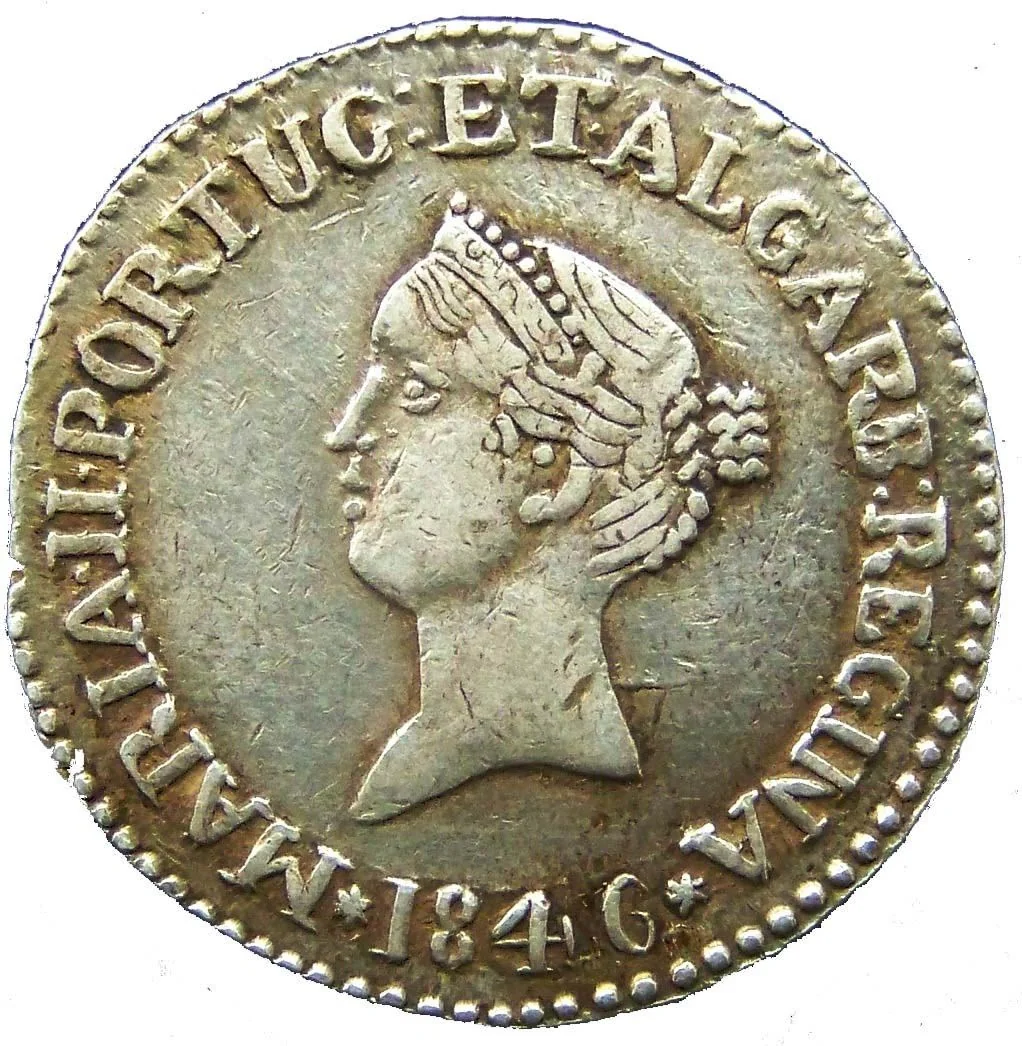
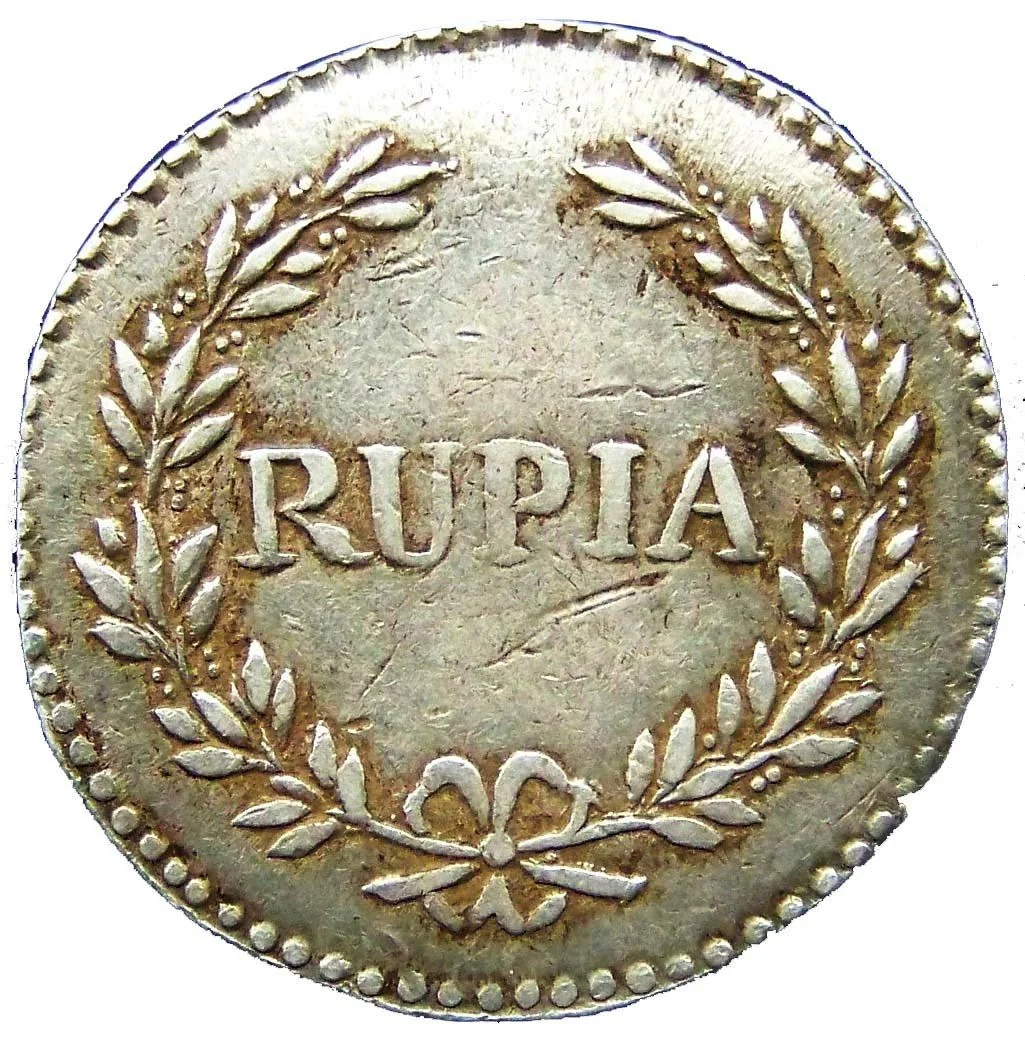
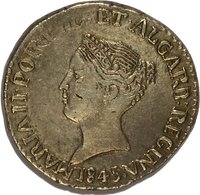
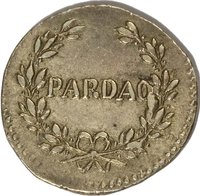
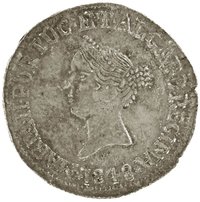
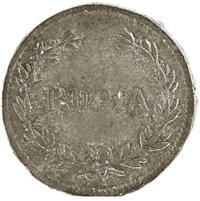
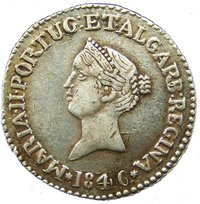
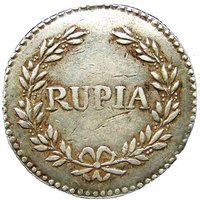
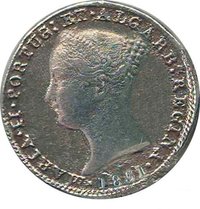
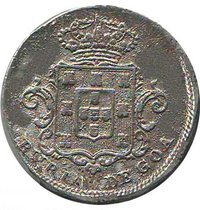
1 rupia – Portuguese India
Add to wishlist
India
Context
Years: 1845–1849
Country: India
Issuer: Portuguese India
Ruler: Mary II
Currency:
(1706—1880)
Demonetized: Yes
Material
Diameter: 25 mm
Weight: 11 g
Silver Weight:: 11.00 g
Shape: Irregular round
Composition: Silver
Magnetic: No
Technique: Hammered
References
KM: #
Numista: #48809
Value
Bullion value: $28.11
Mints
| Name | Mark |
|---|---|
| Goa | — |
Mintings
| Year | Mint Mark | Mintage | Quality | Collection |
|---|---|---|---|---|
| 1845 | — | — | ||
| 1846 | — | — | ||
| 1847 | — | — | ||
| 1848 | — | — | ||
| 1849 | — | — |
Historical background
In 1845, the currency situation in Portuguese India, centered on Goa, was a complex and fragmented system reflecting its dual role as a Portuguese colony and a commercial hub integrated into the wider Indian Ocean economy. The official currency was the Portuguese réis, but its practical use was limited largely to government accounts and transactions with the colonial administration. The real circulatory lifeblood of the territory consisted of a multitude of foreign silver coins, primarily the British Indian rupee and its fractions, but also older legacy coins like the Xerafim (a local unit of account) and even gold Mohurs. This created a chaotic marketplace where daily trade required constant calculation of exchange rates between different metallic contents and units of account.
This monetary pluralism was a source of chronic instability and administrative headache for the colonial government. The value of silver rupees fluctuated against the gold-based Portuguese réis, leading to revenue shortfalls when taxes collected in depreciating silver were converted to gold for remittance to Lisbon. Furthermore, a persistent problem of currency scarcity plagued the territory, as good silver rupees tended to be hoarded or exported for trade elsewhere in the region. This scarcity stifled local commerce and encouraged the circulation of worn, clipped, or counterfeit coins, further eroding trust in the already complicated system.
Recognizing these debilitating issues, the mid-1840s was a period of active reform. The government had already begun to assert more control, standardizing the exchange rate between the rupee and the réis at various points. The key development was the imminent move toward creating a distinct, local currency. This culminated in 1859 with the establishment of the Goa Mint and the issuance of the first official Portuguese-Indian rupee, which was pegged to and interchangeable with the British Indian rupee. Therefore, the situation in 1845 represents the final decade of a disorganized monetary past, with authorities actively laying the groundwork for a more unified and stable system that would formally arrive in the following decade.
This monetary pluralism was a source of chronic instability and administrative headache for the colonial government. The value of silver rupees fluctuated against the gold-based Portuguese réis, leading to revenue shortfalls when taxes collected in depreciating silver were converted to gold for remittance to Lisbon. Furthermore, a persistent problem of currency scarcity plagued the territory, as good silver rupees tended to be hoarded or exported for trade elsewhere in the region. This scarcity stifled local commerce and encouraged the circulation of worn, clipped, or counterfeit coins, further eroding trust in the already complicated system.
Recognizing these debilitating issues, the mid-1840s was a period of active reform. The government had already begun to assert more control, standardizing the exchange rate between the rupee and the réis at various points. The key development was the imminent move toward creating a distinct, local currency. This culminated in 1859 with the establishment of the Goa Mint and the issuance of the first official Portuguese-Indian rupee, which was pegged to and interchangeable with the British Indian rupee. Therefore, the situation in 1845 represents the final decade of a disorganized monetary past, with authorities actively laying the groundwork for a more unified and stable system that would formally arrive in the following decade.
💎 Extremely Rare