

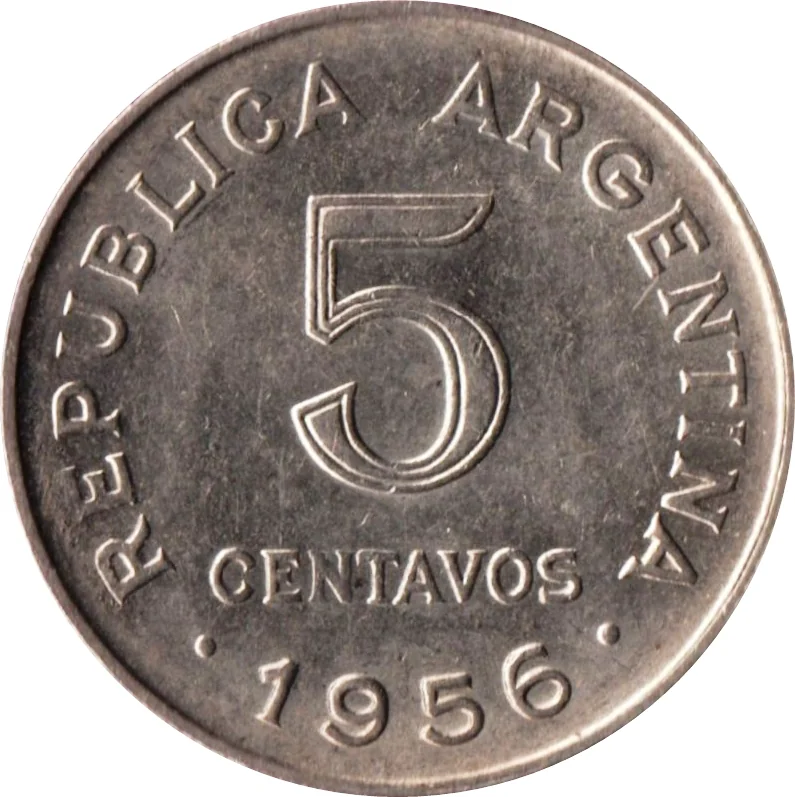
5 centavos – Argentina
Add to wishlist
Argentina
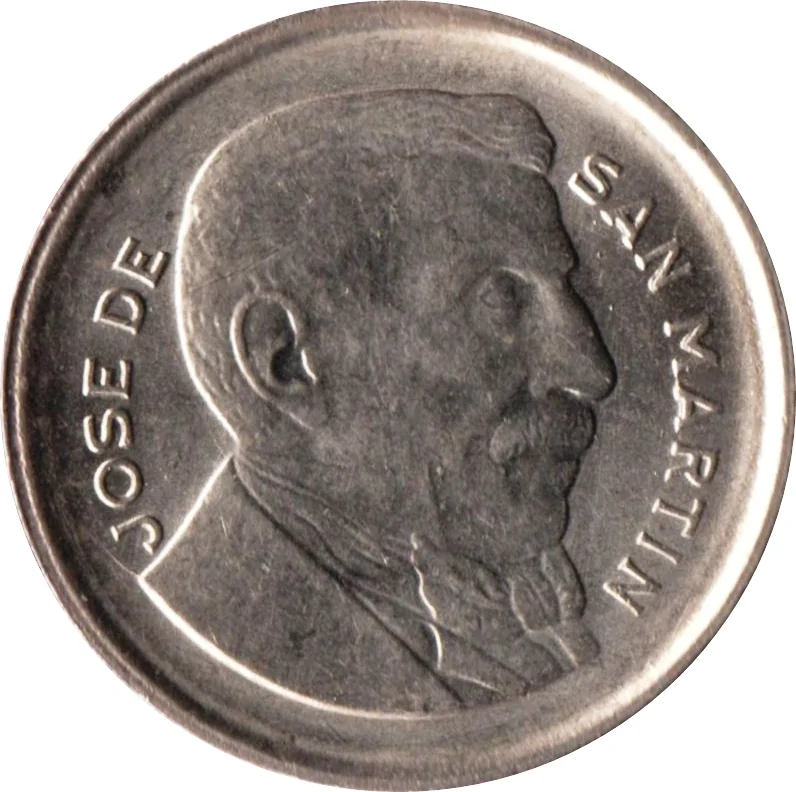
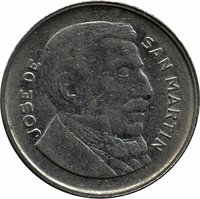
Obverse
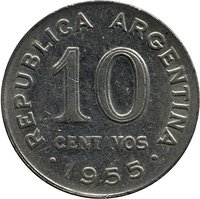
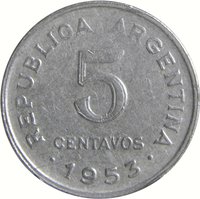
Reverse
Description:
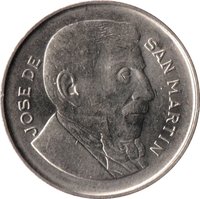
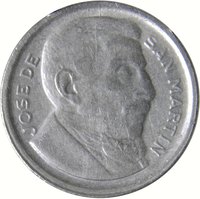
Portrait of José de San Martín facing right.
Inscription:
JOSE DE SAN MARTIN
Script: Latin
Engraver: Mario Baiardi
Edge
Plain
Categories
| Person> Military leader |
| Person> Politician |
Mints
| Name | Mark |
|---|---|
| Buenos Aires | — |
Mintings
| Year | Mint Mark | Mintage | Quality | Collection |
|---|---|---|---|---|
| 1954 | — | 50,640,000 | ||
| 1955 | — | 42,200,000 | ||
| 1956 | — | 36,870,000 |
Historical background
In 1954, Argentina's currency situation was characterized by the deepening structural weaknesses of the post-Peronist economy, though still under Juan Perón's presidency until his overthrow in 1955. The country operated with a heavily managed and multi-tiered exchange rate system, a legacy of Perón's economic nationalism and the need to control capital flows. The official peso was artificially overvalued to subsidize imports of industrial machinery and consumer goods for the growing urban working class, a key pillar of Perón's political support. However, this overvaluation stifled agricultural exports, the traditional source of Argentina's foreign exchange, creating persistent balance of payments pressures.
Beneath the surface of controlled official rates, a thriving black market for dollars revealed the peso's true depreciation. This parallel market, known as the "blue" market, existed due to strict currency controls, high inflation (estimated around 4% monthly), and a lack of confidence in economic policy. The gap between the official and black-market rates created significant distortions, encouraging capital flight and corruption, as those with access to cheap official dollars could reap enormous profits. The Central Bank's reserves were under constant strain, forcing the government to dip into reserves accumulated during the profitable World War II years.
The situation in 1954 was a precarious calm before the storm. While Perón's government maintained the facade of stability through controls and subsidies, the underlying imbalances were severe. The overvalued peso, declining export revenues, rampant inflation, and dwindling reserves created an unsustainable model. This currency crisis was a central symptom of the broader economic unraveling that contributed to political instability, culminating in the military coup that ousted Perón in September 1955 and ushered in a period of profound economic uncertainty.
Beneath the surface of controlled official rates, a thriving black market for dollars revealed the peso's true depreciation. This parallel market, known as the "blue" market, existed due to strict currency controls, high inflation (estimated around 4% monthly), and a lack of confidence in economic policy. The gap between the official and black-market rates created significant distortions, encouraging capital flight and corruption, as those with access to cheap official dollars could reap enormous profits. The Central Bank's reserves were under constant strain, forcing the government to dip into reserves accumulated during the profitable World War II years.
The situation in 1954 was a precarious calm before the storm. While Perón's government maintained the facade of stability through controls and subsidies, the underlying imbalances were severe. The overvalued peso, declining export revenues, rampant inflation, and dwindling reserves created an unsustainable model. This currency crisis was a central symptom of the broader economic unraveling that contributed to political instability, culminating in the military coup that ousted Perón in September 1955 and ushered in a period of profound economic uncertainty.
Series: 1954 Argentina circulation coins
🌱 Very Common