

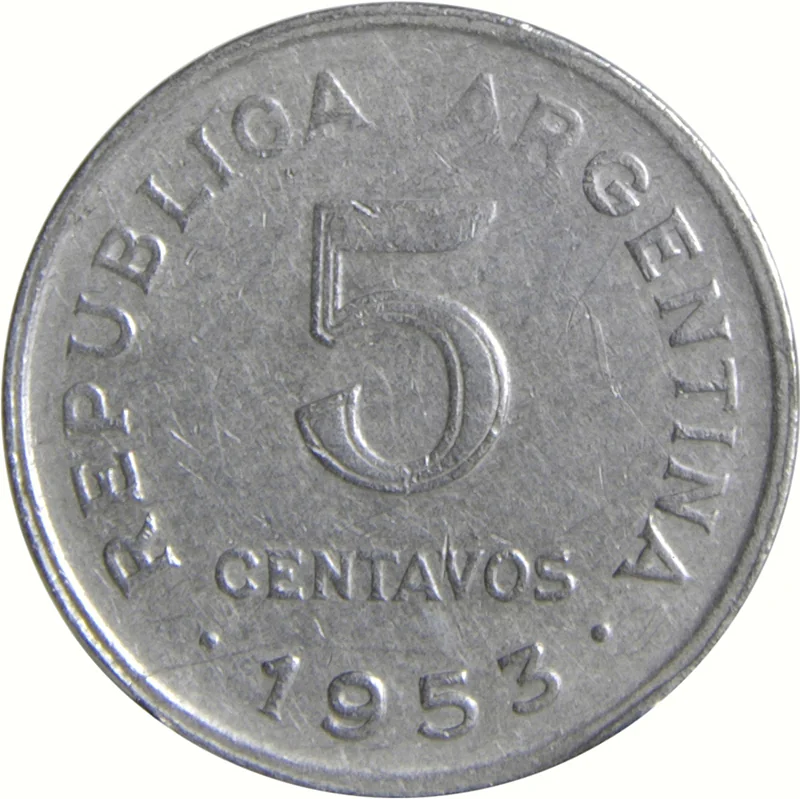
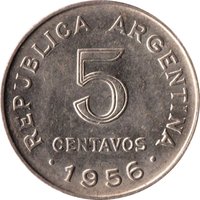
5 centavos – Argentina
Add to wishlist
Argentina
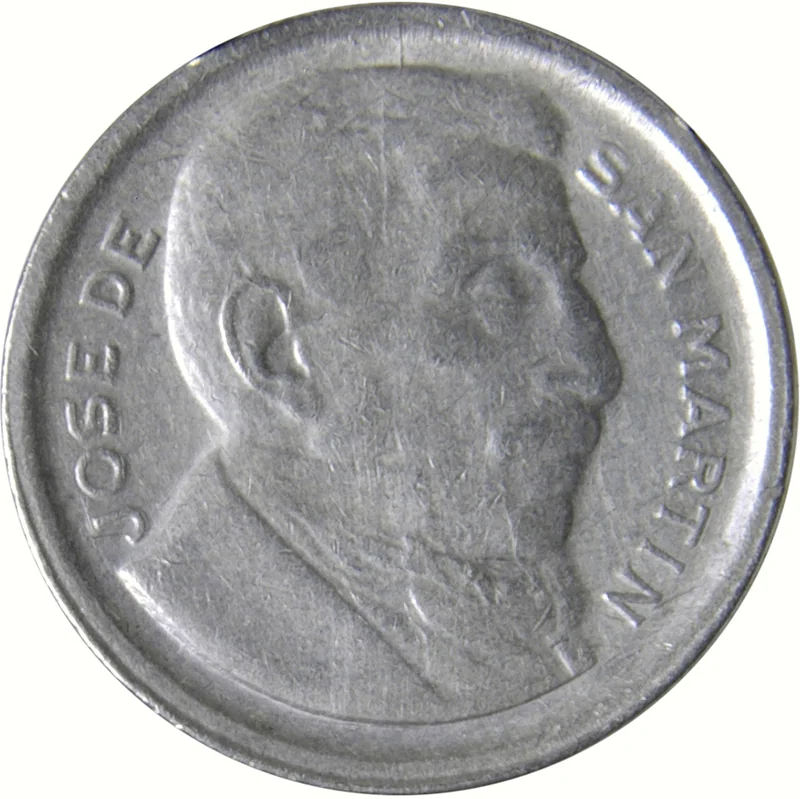
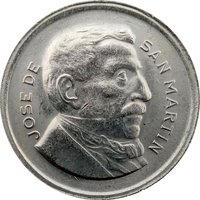
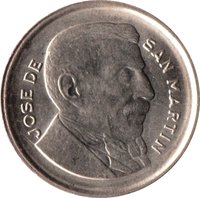
Obverse
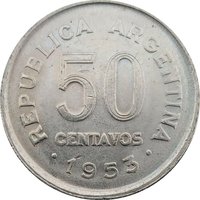
Reverse
Description:
Portrait of José de San Martín facing right.
Inscription:
JOSE DE SAN MARTIN
Script: Latin
Engraver: Mario Baiardi
Edge
Plain
Categories
| Person> Military leader |
| Person> Politician |
Mintings
| Year | Mint Mark | Mintage | Quality | Collection |
|---|---|---|---|---|
| 1953 | — | 36,300,000 |
Historical background
By 1953, Argentina's currency situation was deeply strained under the second presidential term of Juan Domingo Perón, reflecting the broader crisis of his import-substitution industrialization model. The state's expansive spending on social programs, nationalized industries, and infrastructure, coupled with a decline in agricultural export revenues, led to persistent fiscal deficits. These were primarily financed by the Central Bank, resulting in rampant money supply growth and significant inflationary pressure. While the official exchange rate for the peso was fixed by government decree, a thriving black market for dollars revealed the currency's severe overvaluation and the growing lack of confidence in economic management.
The government responded with stringent exchange and price controls to defend the peso's artificial value and conserve dwindling foreign reserves. These controls, however, created severe economic distortions. Exporters were disadvantaged by receiving non-competitive official rates for their goods, discouraging production, while importers faced strict quotas and licensing, creating shortages of essential inputs and consumer goods. This complex system of regulations fostered corruption, as access to cheap official dollars became a prized commodity, and a large illicit market flourished to meet the unmet demand for foreign currency.
Ultimately, the 1953 currency scenario was one of mounting disequilibrium. Inflation eroded purchasing power, controls stifled legitimate economic activity, and the gap between the official and black-market exchange rates widened. These pressures contributed to growing social unrest and economic stagnation. While Perón's government would be overthrown in 1955 for broader political reasons, the currency imbalances of this period laid bare the unsustainable nature of the controlled economic model, setting the stage for the chronic cycles of inflation, devaluation, and monetary crisis that would plague Argentina for decades to come.
The government responded with stringent exchange and price controls to defend the peso's artificial value and conserve dwindling foreign reserves. These controls, however, created severe economic distortions. Exporters were disadvantaged by receiving non-competitive official rates for their goods, discouraging production, while importers faced strict quotas and licensing, creating shortages of essential inputs and consumer goods. This complex system of regulations fostered corruption, as access to cheap official dollars became a prized commodity, and a large illicit market flourished to meet the unmet demand for foreign currency.
Ultimately, the 1953 currency scenario was one of mounting disequilibrium. Inflation eroded purchasing power, controls stifled legitimate economic activity, and the gap between the official and black-market exchange rates widened. These pressures contributed to growing social unrest and economic stagnation. While Perón's government would be overthrown in 1955 for broader political reasons, the currency imbalances of this period laid bare the unsustainable nature of the controlled economic model, setting the stage for the chronic cycles of inflation, devaluation, and monetary crisis that would plague Argentina for decades to come.
🌱 Common