

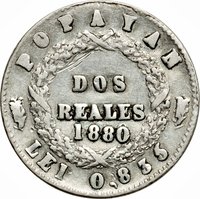
Mintings
| Year | Mint Mark | Mintage | Quality | Collection |
|---|---|---|---|---|
| 1880 | — | — |
Historical background
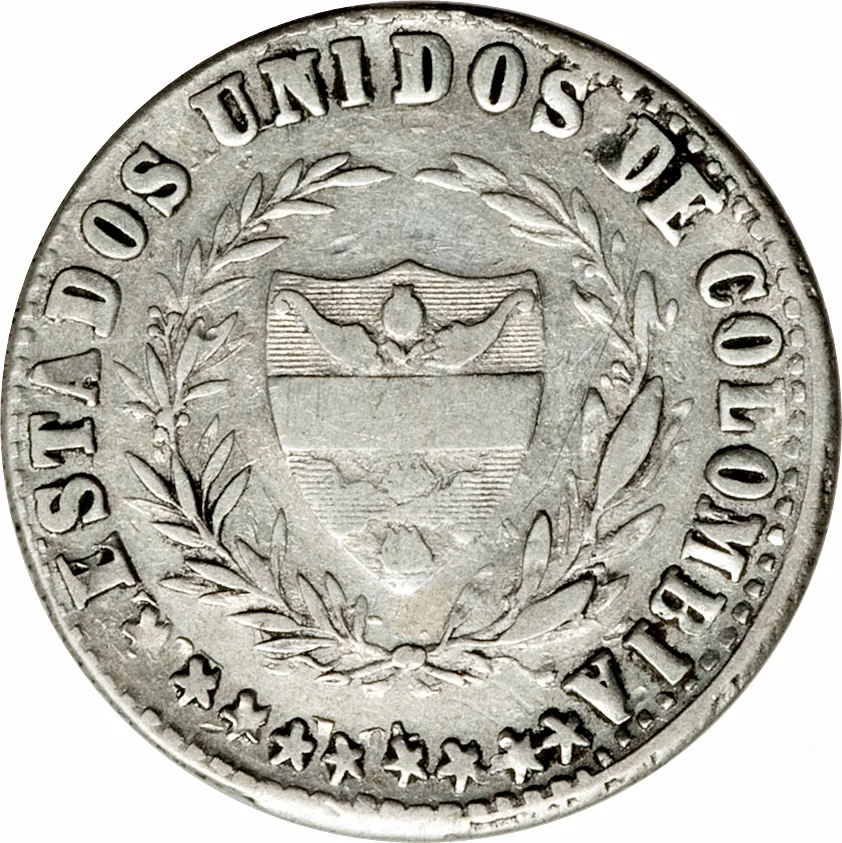
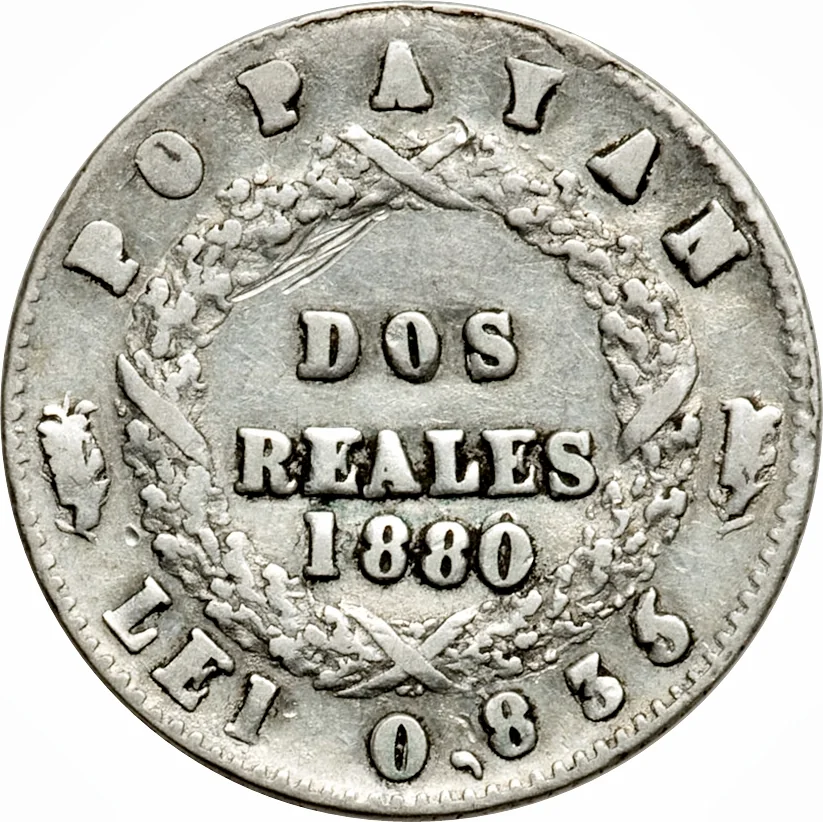
In 1880, Colombia was navigating a complex and fragmented monetary landscape, a direct legacy of its post-independence political instability and regionalism. Following the dissolution of Gran Colombia, the nation had experienced decades of civil war and federalist experiments, which hindered the establishment of a unified national currency. Consequently, a multitude of coins circulated simultaneously, including those from the colonial era (Spanish and Republican reales), various issues from independent Colombian mints (often debased), and significant quantities of foreign currency, particularly British sovereigns, French francs, and U.S. dollars. This created a chaotic system where exchange rates fluctuated locally, complicating trade and economic planning.
The period was marked by the government's struggle to impose a standard, a challenge under the federalist constitution of the United States of Colombia (1863-1886). The official currency was the peso, theoretically divided into 10 reales, but its value and metal content were inconsistent. Crucially, the country operated on a de facto silver standard, though the most trusted and stable medium for large transactions was often gold, especially foreign gold coins. This bimetallic confusion, combined with frequent minting of low-quality fractional coinage to fund regional budgets, led to chronic inflation, a loss of public confidence in the currency, and Gresham's Law in action, where "bad money drove out the good."
This monetary disarray was increasingly seen as a major obstacle to modernization and foreign investment. By 1880, a growing consensus among economic elites called for radical reform to stabilize the currency, promote coffee exports (which were becoming the economic lifeline), and integrate Colombia into the global gold standard. These pressures would culminate in the pivotal monetary reforms of the early 1880s, spearheaded by Treasury Minister Miguel Antonio Caro, which established the gold standard by law in 1881 and led to the introduction of the condor gold coin, a definitive but challenging shift toward a unified and stable monetary system.
The period was marked by the government's struggle to impose a standard, a challenge under the federalist constitution of the United States of Colombia (1863-1886). The official currency was the peso, theoretically divided into 10 reales, but its value and metal content were inconsistent. Crucially, the country operated on a de facto silver standard, though the most trusted and stable medium for large transactions was often gold, especially foreign gold coins. This bimetallic confusion, combined with frequent minting of low-quality fractional coinage to fund regional budgets, led to chronic inflation, a loss of public confidence in the currency, and Gresham's Law in action, where "bad money drove out the good."
This monetary disarray was increasingly seen as a major obstacle to modernization and foreign investment. By 1880, a growing consensus among economic elites called for radical reform to stabilize the currency, promote coffee exports (which were becoming the economic lifeline), and integrate Colombia into the global gold standard. These pressures would culminate in the pivotal monetary reforms of the early 1880s, spearheaded by Treasury Minister Miguel Antonio Caro, which established the gold standard by law in 1881 and led to the introduction of the condor gold coin, a definitive but challenging shift toward a unified and stable monetary system.
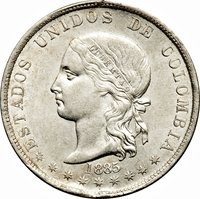
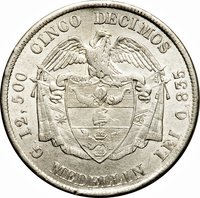
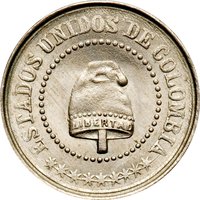
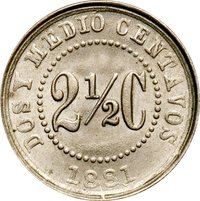
✨ Legendary