

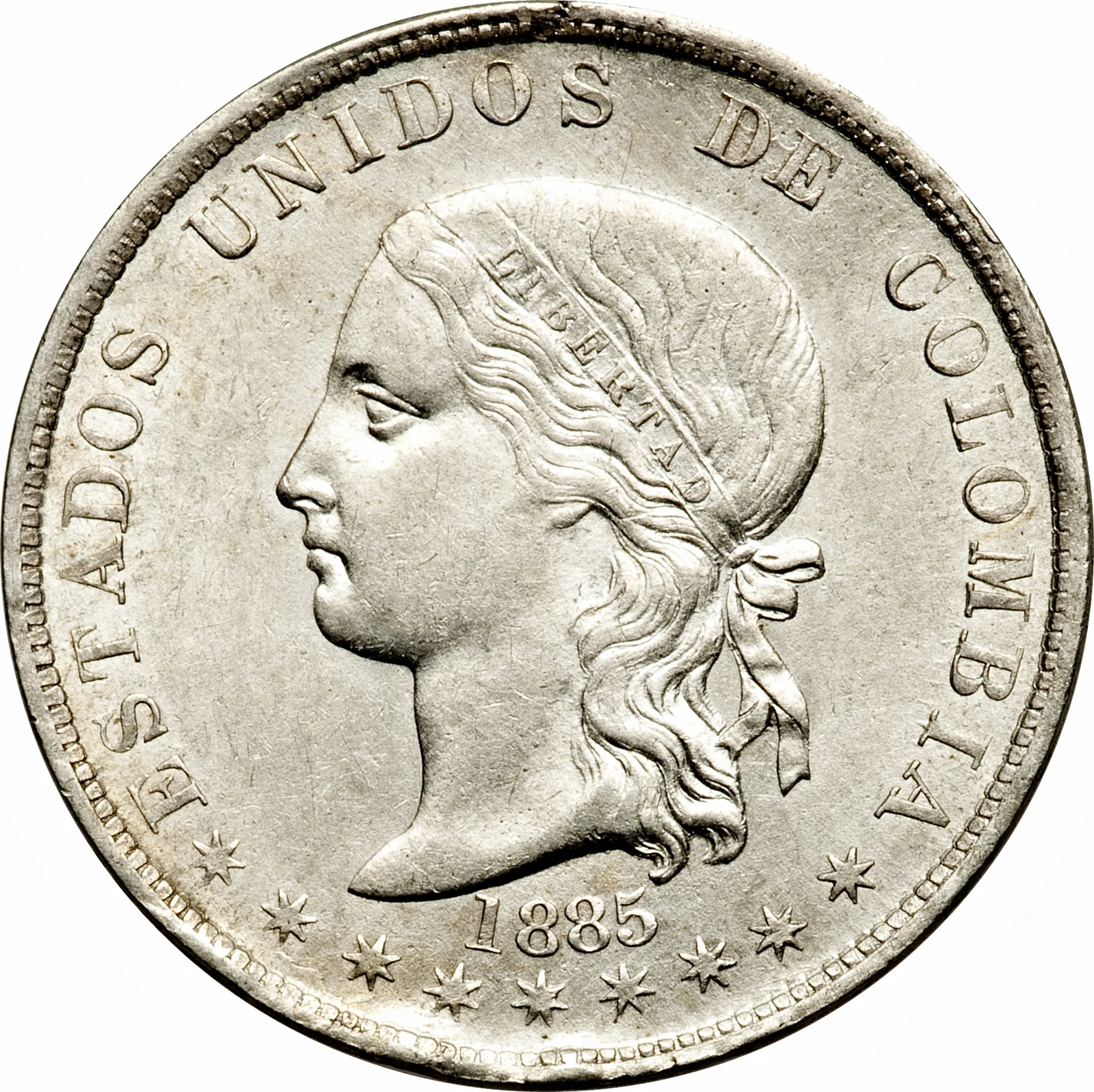
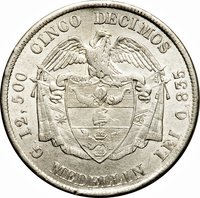
Obverse
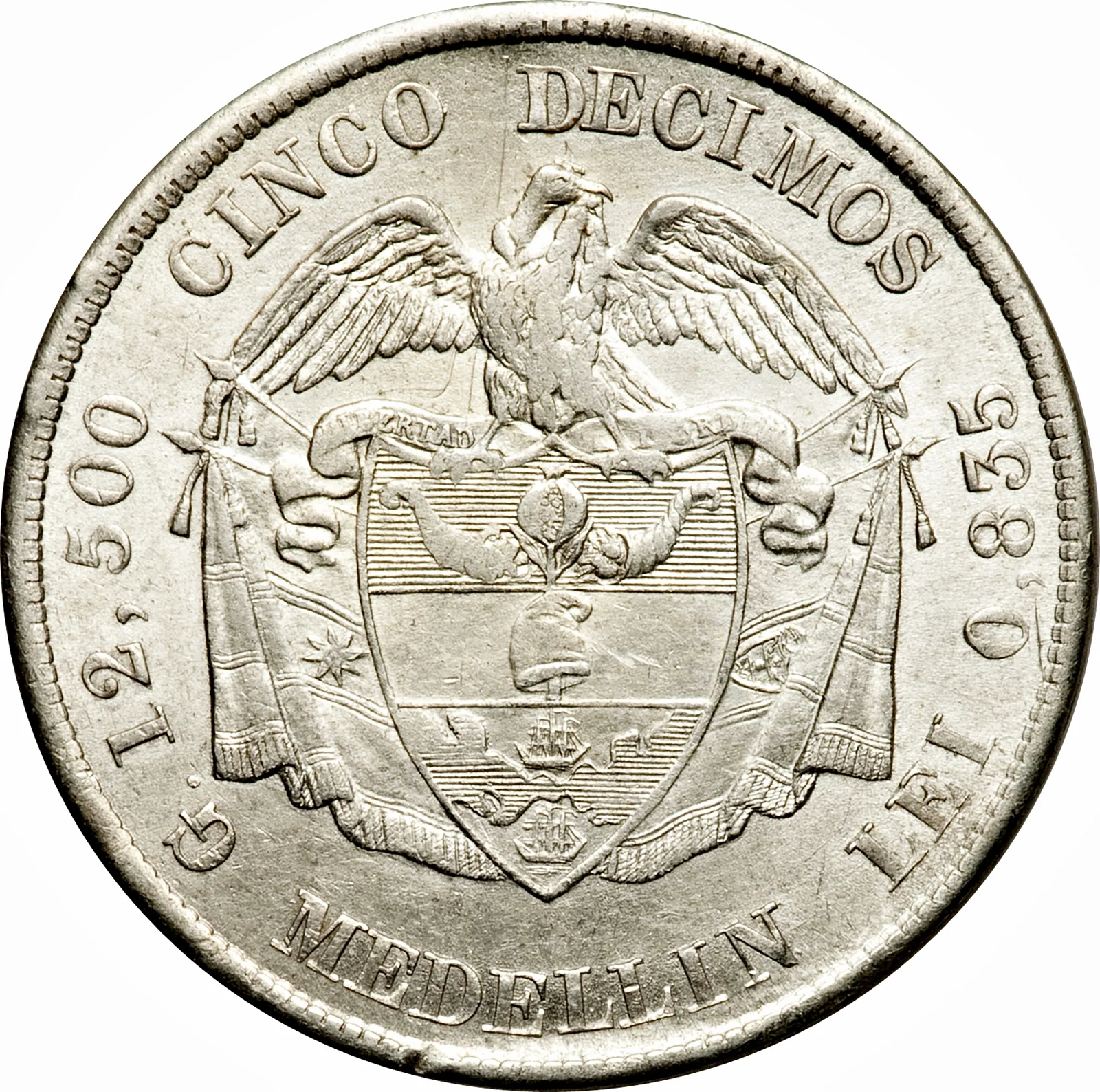
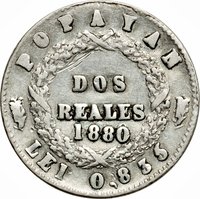
Reverse
Edge
Categories
| Symbol> Allegory |
| Symbols> Coat of Arms |
Mintings
| Year | Mint Mark | Mintage | Quality | Collection |
|---|---|---|---|---|
| 1877 | — | 168,000 | ||
| 1878 | — | 318,000 | ||
| 1879 | — | 379,000 | ||
| 1880 | — | 2 | ||
| 1881 | — | — | ||
| 1882 | — | — | ||
| 1883 | — | — | ||
| 1884 | — | 1,429,000 | ||
| 1885 | — | — |
Historical background
In 1877, Colombia’s currency situation was characterized by profound instability and fragmentation, a direct legacy of the country's political and regional divisions. Following the dissolution of Gran Colombia, the nation had struggled to establish a unified monetary system. The period was marked by the concurrent circulation of a bewildering array of coins, including those from the colonial era, foreign currencies (like British sovereigns and French francs), and various issues from private banks and even some states. The federalist constitution of the 1860s (the United States of Colombia) had delegated significant monetary authority to the individual states, leading to a proliferation of paper money of wildly varying credibility and value.
The primary official currency was the peso, but its value was not anchored to a reliable standard. While a bimetallic system (gold and silver) was legally in place, in practice, the scarcity of precious metals and fiscal deficits led to a heavy reliance on inconvertible paper money. The federal government and numerous private banks issued billetes (banknotes) with insufficient metallic backing, leading to frequent depreciation and wide fluctuations in exchange rates between different regions and note issuers. This created a climate of commercial uncertainty, where the value of money could differ significantly between, for instance, Bogotá, Medellín, or Cartagena.
This monetary chaos was both a cause and a symptom of broader economic challenges. It hampered internal trade, complicated government finance, and discouraged foreign investment. The situation in 1877 existed within a context of ongoing political tension that would culminate in the civil war of 1885. The subsequent Constitution of 1886, which recentralized political power, would also pave the way for monetary reform, ultimately leading to the creation of the Banco Nacional in 1880 (which failed) and later the definitive establishment of a unified, centralized monetary system under the Banco de la República in 1923. Thus, 1877 represents a point of deep monetary disorder in the long and difficult transition from a fragmented, post-colonial currency regime to a modern national one.
The primary official currency was the peso, but its value was not anchored to a reliable standard. While a bimetallic system (gold and silver) was legally in place, in practice, the scarcity of precious metals and fiscal deficits led to a heavy reliance on inconvertible paper money. The federal government and numerous private banks issued billetes (banknotes) with insufficient metallic backing, leading to frequent depreciation and wide fluctuations in exchange rates between different regions and note issuers. This created a climate of commercial uncertainty, where the value of money could differ significantly between, for instance, Bogotá, Medellín, or Cartagena.
This monetary chaos was both a cause and a symptom of broader economic challenges. It hampered internal trade, complicated government finance, and discouraged foreign investment. The situation in 1877 existed within a context of ongoing political tension that would culminate in the civil war of 1885. The subsequent Constitution of 1886, which recentralized political power, would also pave the way for monetary reform, ultimately leading to the creation of the Banco Nacional in 1880 (which failed) and later the definitive establishment of a unified, centralized monetary system under the Banco de la República in 1923. Thus, 1877 represents a point of deep monetary disorder in the long and difficult transition from a fragmented, post-colonial currency regime to a modern national one.
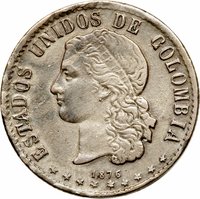
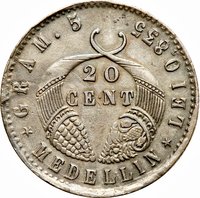
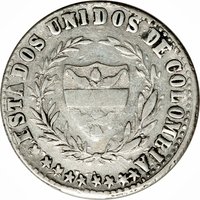
⭐ Somewhat Rare