

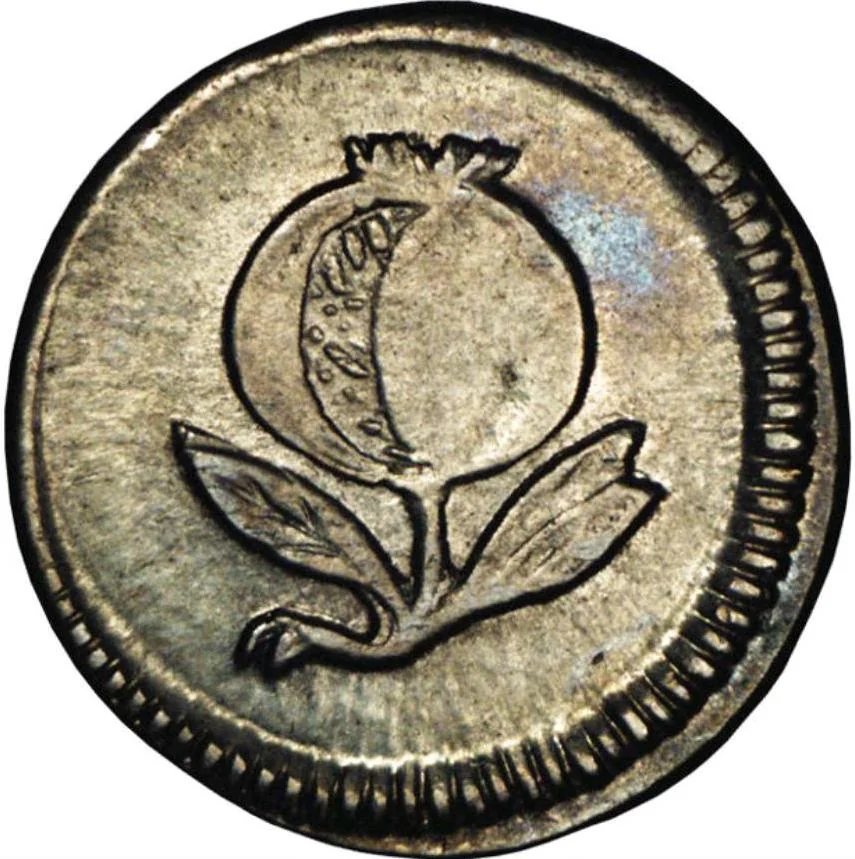
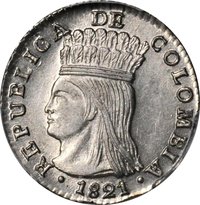
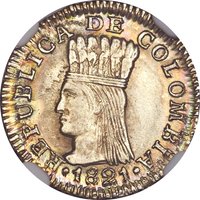
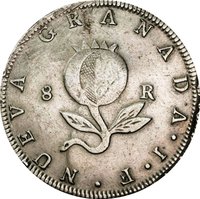
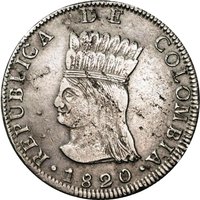
Obverse
Description:
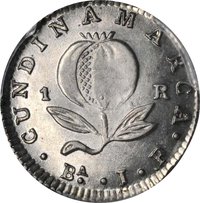
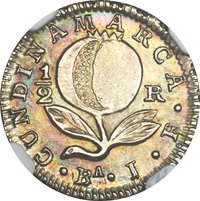
Pomegranate: A jewel-toned fruit with sweet-tart seeds.
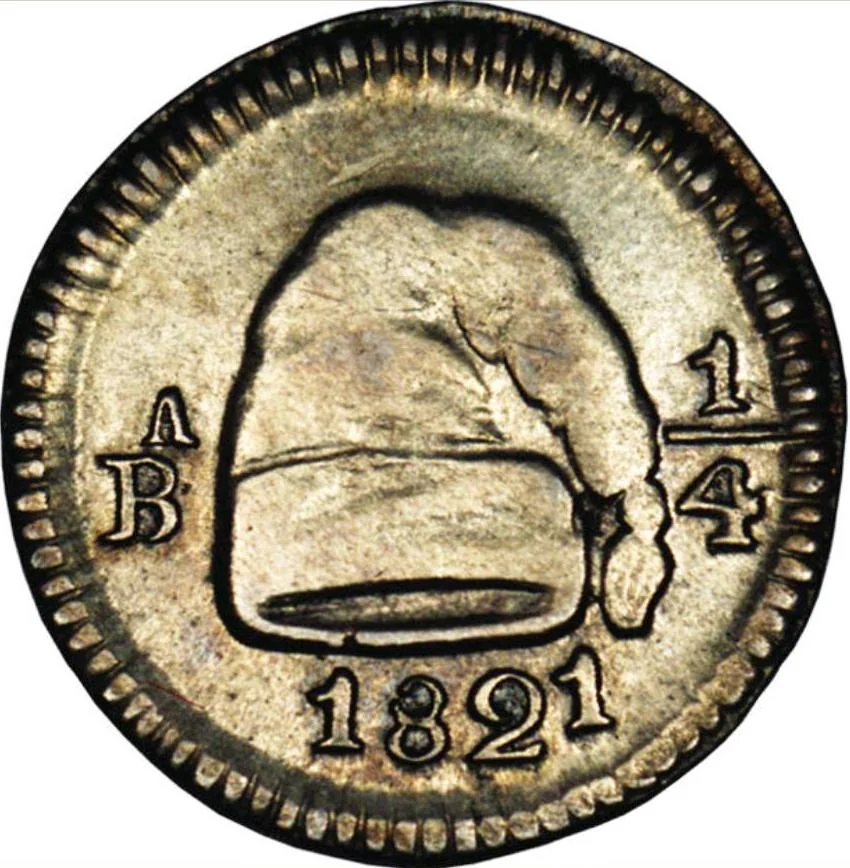
Reverse
Edge
Categories
| Plant> Fruit |
| Symbol> Phrygian cap |
Mints
| Name | Mark |
|---|---|
| Bogota Mint | (BA) |
Mintings
| Year | Mint Mark | Mintage | Quality | Collection |
|---|---|---|---|---|
| 1821 | — | — | ||
| 1821 | BA | — | ||
| 1822 | Pn | — |
Historical background
In 1821, Colombia was not yet the nation we know today but rather Gran Colombia, a vast republic freshly forged in the crucible of independence. Following the decisive victory at the Battle of Carabobo in June of that year, the newly established Congress of Cúcuta faced the monumental task of unifying a war-ravaged territory encompassing present-day Colombia, Venezuela, Ecuador, and Panama. A critical pillar of this unification project was the creation of a single, stable monetary system to replace the chaotic patchwork of coins left by the collapsed Spanish colonial administration.
The currency situation was one of profound disorder and scarcity. The economy was saturated with a confusing mix of Spanish coins (like pesos, reales, and maravedís), crude locally minted "macuquinas," and even foreign currencies from other trades. Years of war had disrupted mining and trade, leading to a severe shortage of circulating specie, particularly low-denomination coins needed for everyday transactions. This monetary fragmentation stifled commerce, hindered tax collection, and symbolized the lack of central authority, posing a direct threat to the economic viability and political unity of the young republic.
In direct response, the Cúcuta Congress enacted fundamental monetary reforms. It officially adopted a bimetallic system based on the peso, divisible into 8 reales and 100 centavos, and pegged its value to the widely trusted Spanish colonial peso. Most significantly, it centralized minting authority, ordering the establishment of a national mint in Bogotá (the Casa de la Moneda) and prohibiting regional mints to ensure uniformity. While these 1821 laws laid the essential legal framework, the practical challenges of producing enough standardized coinage and suppressing old currencies would define Colombia's economic struggles for the next decade, marking the difficult birth of a national monetary identity.
The currency situation was one of profound disorder and scarcity. The economy was saturated with a confusing mix of Spanish coins (like pesos, reales, and maravedís), crude locally minted "macuquinas," and even foreign currencies from other trades. Years of war had disrupted mining and trade, leading to a severe shortage of circulating specie, particularly low-denomination coins needed for everyday transactions. This monetary fragmentation stifled commerce, hindered tax collection, and symbolized the lack of central authority, posing a direct threat to the economic viability and political unity of the young republic.
In direct response, the Cúcuta Congress enacted fundamental monetary reforms. It officially adopted a bimetallic system based on the peso, divisible into 8 reales and 100 centavos, and pegged its value to the widely trusted Spanish colonial peso. Most significantly, it centralized minting authority, ordering the establishment of a national mint in Bogotá (the Casa de la Moneda) and prohibiting regional mints to ensure uniformity. While these 1821 laws laid the essential legal framework, the practical challenges of producing enough standardized coinage and suppressing old currencies would define Colombia's economic struggles for the next decade, marking the difficult birth of a national monetary identity.
✨ Legendary