

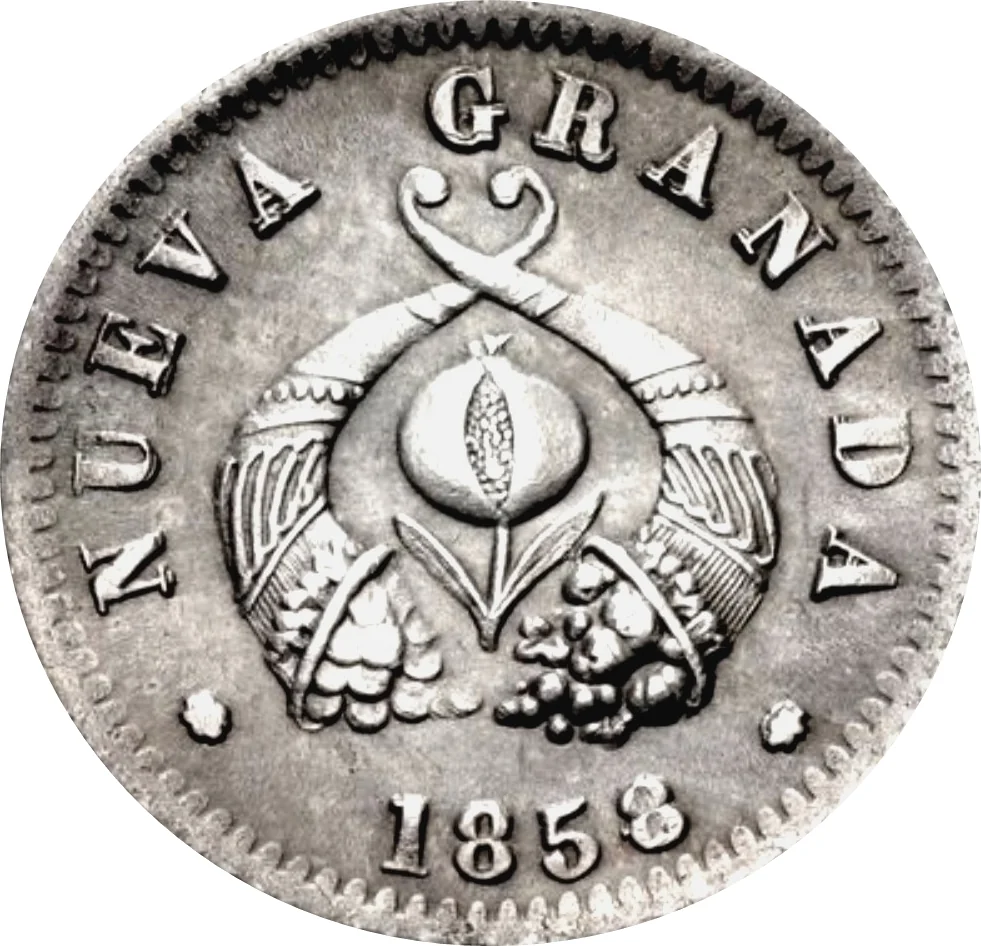
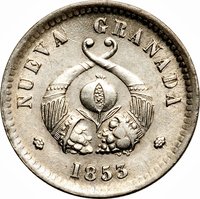
Obverse
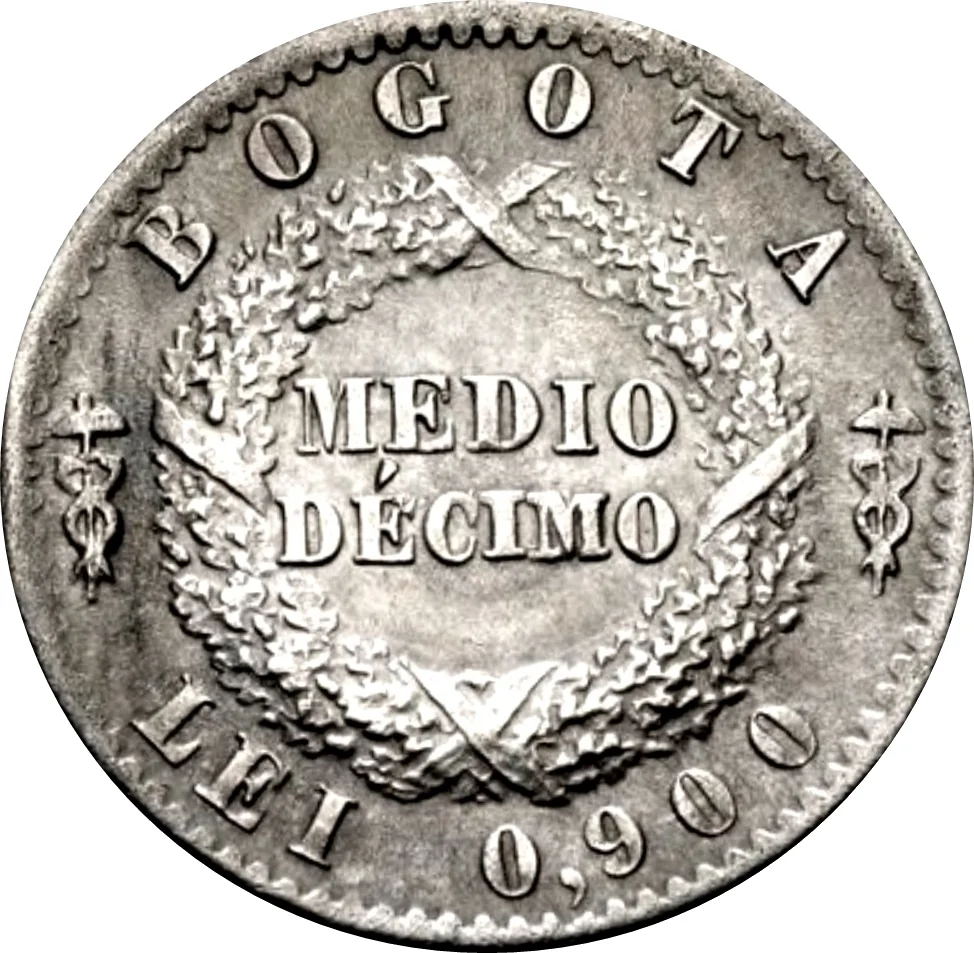
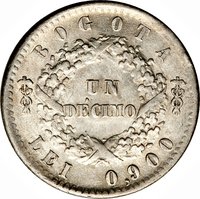
Reverse
Edge
Mints
| Name | Mark |
|---|---|
| Bogota Mint | — |
Mintings
| Year | Mint Mark | Mintage | Quality | Collection |
|---|---|---|---|---|
| 1853 | — | — | ||
| 1854 | — | — | ||
| 1855 | — | — | ||
| 1856 | — | — | ||
| 1857 | — | — | ||
| 1858 | — | — |
Historical background
In 1853, Colombia, then known as the Republic of New Granada, was in a state of profound monetary disarray following the dissolution of Gran Colombia. The nation lacked a unified, state-controlled currency. Instead, the economy operated on a chaotic system of multiple, competing mediums of exchange. These included a limited supply of worn and clipped Spanish colonial coins, a variety of foreign coins (primarily British sovereigns, French francs, and U.S. dollars), and a flood of debased and counterfeit coins that eroded public trust in any metallic tender.
This fragmentation was a direct consequence of political decentralization and fiscal weakness. The federalist constitution of 1853 granted significant autonomy to the provinces, including the power to mint their own coinage, which further complicated the national picture. The central government in Bogotá, lacking robust minting facilities and bullion reserves, struggled to impose a standard. Consequently, everyday transactions were cumbersome, requiring constant reference to exchange manuals to assess the weight, purity, and origin of each coin, which stifled commerce and economic planning.
The situation created intense pressure for reform, which would culminate in the decimalization of the currency. In 1853, the political will was building to replace the old Spanish system of reales and pesos fuertes with a decimal system based on a new peso. This reform was finally enacted in 1857, but the background of 1853 is defined by the acute problems—counterfeiting, multiplicity of coins, and provincial fragmentation—that made such a fundamental overhaul of the monetary system an urgent national necessity.
This fragmentation was a direct consequence of political decentralization and fiscal weakness. The federalist constitution of 1853 granted significant autonomy to the provinces, including the power to mint their own coinage, which further complicated the national picture. The central government in Bogotá, lacking robust minting facilities and bullion reserves, struggled to impose a standard. Consequently, everyday transactions were cumbersome, requiring constant reference to exchange manuals to assess the weight, purity, and origin of each coin, which stifled commerce and economic planning.
The situation created intense pressure for reform, which would culminate in the decimalization of the currency. In 1853, the political will was building to replace the old Spanish system of reales and pesos fuertes with a decimal system based on a new peso. This reform was finally enacted in 1857, but the background of 1853 is defined by the acute problems—counterfeiting, multiplicity of coins, and provincial fragmentation—that made such a fundamental overhaul of the monetary system an urgent national necessity.
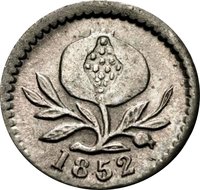
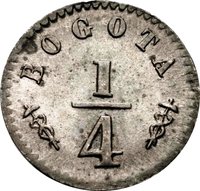
💎 Extremely Rare