

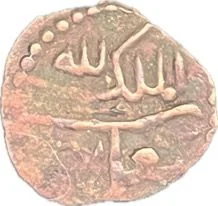
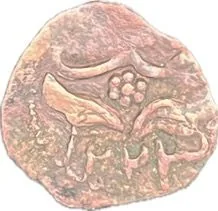
1 buqsha – Sheikhdom of Abu ʽArish
Add to wishlist
Yemen
Context
Year: 1808
Islamic (Hijri) Year:: 1223
Country: Yemen
Issuer: Sheikhdom of Abu ʽArish
Currency:
(1802—1818)
Demonetized: Yes
Material
References
Numista: #477603
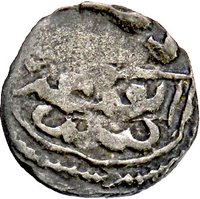
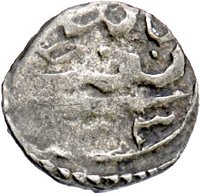
Obverse
Edge
Mintings
| Year | Mint Mark | Mintage | Quality | Collection |
|---|---|---|---|---|
| 1808 | — | — |
Historical background
In 1808, the currency situation in the Sheikhdom of Abu ʽArish, a small but strategically significant polity on the southern Red Sea coast (in modern-day southwestern Saudi Arabia), was defined by its role as a regional trade hub. The sheikhdom's economy was sustained by caravans moving coffee, incense, and goods between the Yemeni highlands and the wider Islamic world. Consequently, its monetary system was not insular but a reflection of this commercial crossroads, characterized by the circulation of a multitude of foreign silver coins. The most important of these was the Austrian Maria Theresa thaler (MTT), a large, high-quality silver coin prized throughout the Red Sea region and the Arabian Peninsula for its consistent weight and silver content.
Alongside the ubiquitous MTT, other currencies in circulation included older Ottoman qirsh pieces, various Indian rupees (especially from Bombay and Madras), and a limited amount of local Yemeni coinage. The absence of a standardized, state-issued currency of Abu ʽArish itself meant that transactions relied on the weight and assessed purity of these foreign coins, often leading to careful scrutiny and haggling. Money changers (sarrafs) held a position of critical importance in the market, facilitating trade by evaluating, exchanging, and often clipping these diverse coins.
This fragmented monetary environment was ultimately a symptom of the sheikhdom's political reality. While locally autonomous, Abu ʽArish existed within the sphere of influence of the larger powers contending for control over 'Asir and Yemen, notably the Ottoman Empire and the Wahhabi First Saudi State. In 1808, the sheikhdom was likely paying tribute to the Saudis, further integrating it into networks where the Riyal (a Spanish or Spanish-colonial dollar, often synonymous with the MTT in local parlance) was dominant. Thus, the currency situation was one of practical adaptation—a bazaar economy relying on trusted foreign silver to grease the wheels of commerce, underpinned by the political currents of regional hegemony.
Alongside the ubiquitous MTT, other currencies in circulation included older Ottoman qirsh pieces, various Indian rupees (especially from Bombay and Madras), and a limited amount of local Yemeni coinage. The absence of a standardized, state-issued currency of Abu ʽArish itself meant that transactions relied on the weight and assessed purity of these foreign coins, often leading to careful scrutiny and haggling. Money changers (sarrafs) held a position of critical importance in the market, facilitating trade by evaluating, exchanging, and often clipping these diverse coins.
This fragmented monetary environment was ultimately a symptom of the sheikhdom's political reality. While locally autonomous, Abu ʽArish existed within the sphere of influence of the larger powers contending for control over 'Asir and Yemen, notably the Ottoman Empire and the Wahhabi First Saudi State. In 1808, the sheikhdom was likely paying tribute to the Saudis, further integrating it into networks where the Riyal (a Spanish or Spanish-colonial dollar, often synonymous with the MTT in local parlance) was dominant. Thus, the currency situation was one of practical adaptation—a bazaar economy relying on trusted foreign silver to grease the wheels of commerce, underpinned by the political currents of regional hegemony.
✨ Legendary