

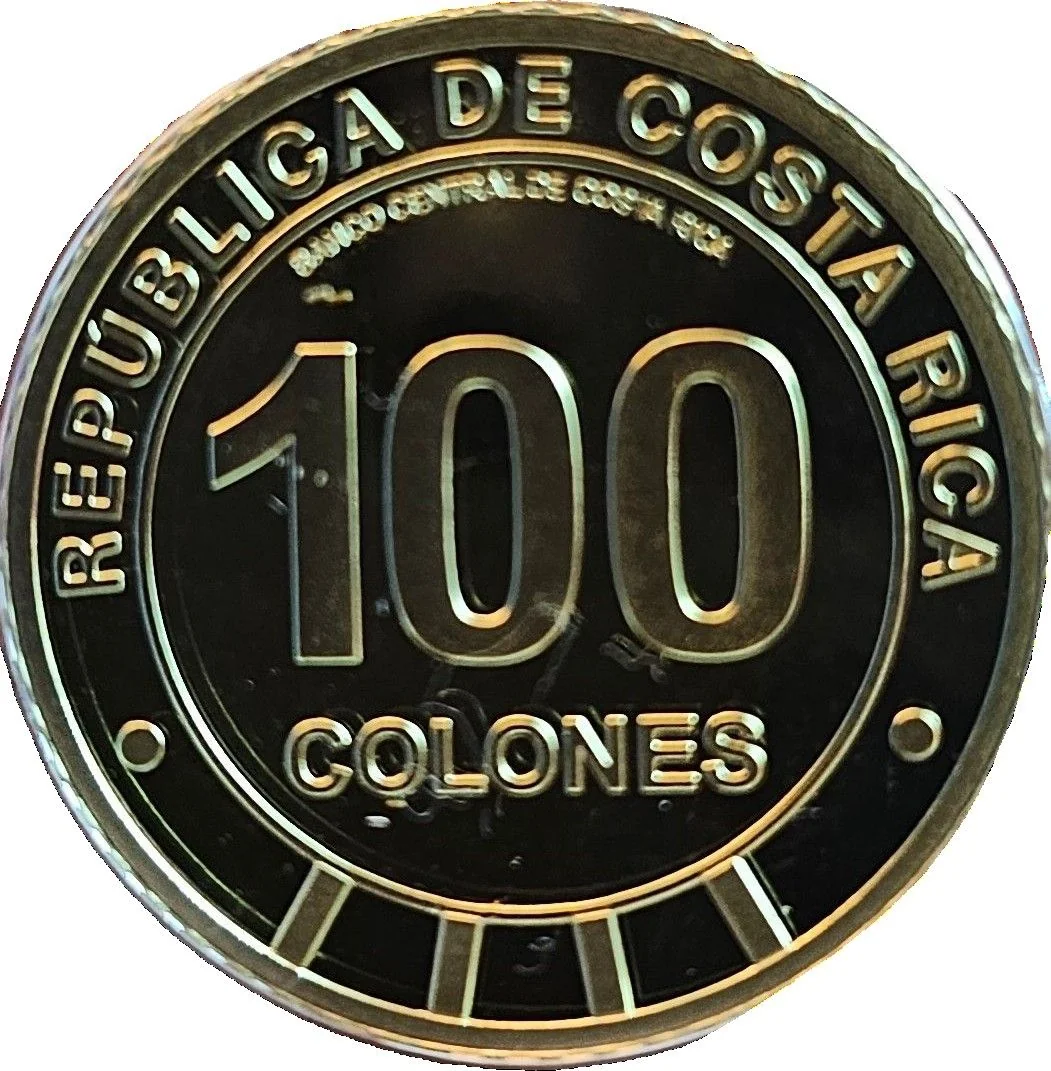

100 colones – Costa Rica
Add to wishlist
Costa Rica
Context
Year: 2025
Issuer: Costa Rica
Issuing organization: Central Bank of Costa Rica
Period:
(since 1948)
Currency:
(since 1896)
References
Numista: #476568
Value
Exchange value: 100 CRC
Obverse
Reverse
Description:
Colourized dancing couple with music notes below.
Inscription:
SWING CRIOLLO · 2025
Script: Latin
Edge
Mints
| Name | Mark |
|---|---|
| Mint of Poland | — |
Mintings
| Year | Mint Mark | Mintage | Quality | Collection |
|---|---|---|---|---|
| 2025 | — | — |
Historical background
In 2025, Costa Rica continues to operate under a dual-currency system, with the Costa Rican colón (CRC) and the United States dollar (USD) circulating widely for everyday transactions. The Central Bank of Costa Rica (BCCR) maintains a managed float exchange rate regime for the colón, but the dollar remains deeply embedded in the economy, particularly for major purchases like real estate, vehicles, and tourism services. This dollarization is largely a legacy of historical inflation and a preference for stability, though it limits the central bank's control over monetary policy and exposes sectors of the economy to exchange rate volatility.
The key economic focus for 2025 revolves around managing persistent, though moderating, inflationary pressures and a high public debt burden. After the global inflationary spike, the BCCR has cautiously used interest rate policy to steer inflation back toward its target range, seeking to avoid stifling economic growth. The government's ongoing fiscal consolidation efforts, including a 2023 agreement with the International Monetary Fund (IMF), aim to reduce the deficit and stabilize the debt-to-GDP ratio. These measures are critical for maintaining international investor confidence and preventing excessive depreciation pressure on the colón.
Looking ahead, the long-term debate about deeper formal dollarization versus strengthening the colón's primacy remains unresolved. Proponents of dedollarization argue for greater monetary sovereignty and reduced vulnerability to external shocks, while practical realities favor the status quo due to entrenched public and business habits. For 2025, the primary objective is stability: ensuring a predictable exchange rate to attract investment and control import costs, while using fiscal discipline to build resilience against global financial uncertainty. The success of these efforts will be pivotal for the colón's strength and Costa Rica's overall economic health.
The key economic focus for 2025 revolves around managing persistent, though moderating, inflationary pressures and a high public debt burden. After the global inflationary spike, the BCCR has cautiously used interest rate policy to steer inflation back toward its target range, seeking to avoid stifling economic growth. The government's ongoing fiscal consolidation efforts, including a 2023 agreement with the International Monetary Fund (IMF), aim to reduce the deficit and stabilize the debt-to-GDP ratio. These measures are critical for maintaining international investor confidence and preventing excessive depreciation pressure on the colón.
Looking ahead, the long-term debate about deeper formal dollarization versus strengthening the colón's primacy remains unresolved. Proponents of dedollarization argue for greater monetary sovereignty and reduced vulnerability to external shocks, while practical realities favor the status quo due to entrenched public and business habits. For 2025, the primary objective is stability: ensuring a predictable exchange rate to attract investment and control import costs, while using fiscal discipline to build resilience against global financial uncertainty. The success of these efforts will be pivotal for the colón's strength and Costa Rica's overall economic health.


✨ Legendary