

500 colones (annexation of Partido de Nicoya to Costa Rica) – Costa Rica
Add to wishlist
Non-circulating coins
Commemoration: 200th anniversary of the annexation of Partido de Nicoya to Costa Rica
Costa Rica
Context
Year: 2024
Issuer: Costa Rica
Issuing organization: Central Bank of Costa Rica
Period:
(since 1948)
Currency:
(since 1896)
Total mintage: 20,000
Material
Diameter: 28 mm
Weight: 10.5 g
Thickness: 2.25 mm
Shape: Round
Alignment: Coin alignment
flip
References
Numista: #428588
Value
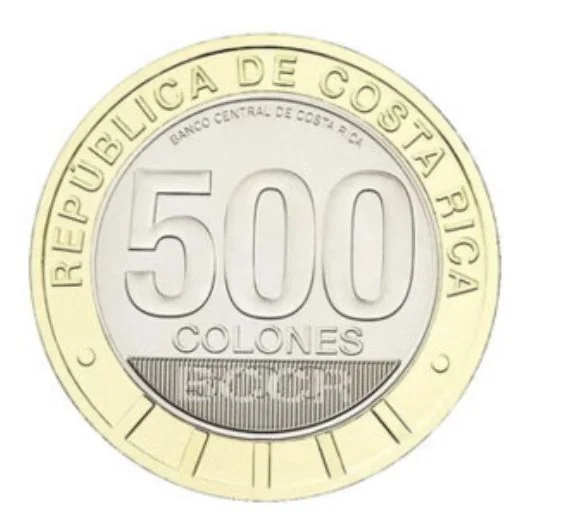
Exchange value: 500 CRC
Obverse
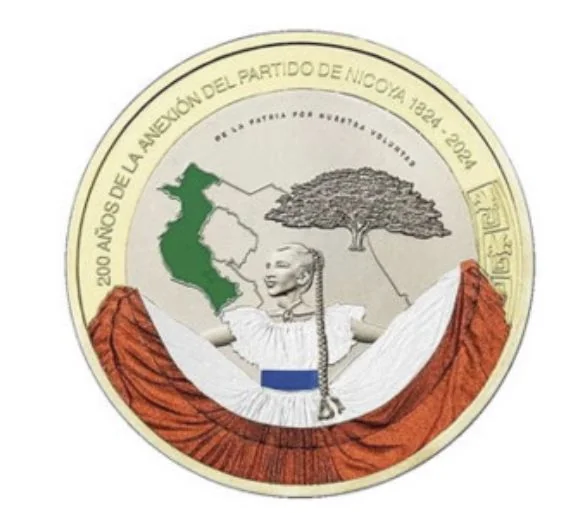
Reverse
Description:
Woman in a flowing dress before a Nicoya map and tree.
Inscription:
200 AÑOS DE LA ANEXIÓN DEL PARTIDO DE NICOYA 1824-2024
DE LA PARTIA POR NUESTRA VOLUNTAD
DE LA PARTIA POR NUESTRA VOLUNTAD
Translation:
200 Years of the Annexation of the Partido of Nicoya 1824-2024
OF THE HOMELAND BY OUR OWN WILL
OF THE HOMELAND BY OUR OWN WILL
Script: Latin
Language: Spanish
Edge
Smooth with five reeded sections
Mints
| Name | Mark |
|---|---|
| Monnaie de Paris | — |
Mintings
| Year | Mint Mark | Mintage | Quality | Collection |
|---|---|---|---|---|
| 2024 | — | 20,000 |
Historical background
Costa Rica's currency situation in 2024 is defined by a managed float of the colón (CRC) against the US dollar, within a band set by the Central Bank of Costa Rica (BCCR). The primary focus remains on controlling inflation, which saw significant global and domestic pressure in 2022-2023. While inflation has moderated, returning to the target range of 3% ± 1 percentage point, the BCCR maintains a cautious monetary policy. Its key interest rate has been held at 6.5% for an extended period to anchor expectations and ensure stability, contributing to a relatively stable exchange rate with moderate volatility throughout the year.
A persistent and structural feature is the high level of dollarization within the financial system. A significant portion of loans (over 40%) and deposits are denominated in US dollars, creating vulnerability for households and businesses to exchange rate fluctuations. This duality means that while the colón is the official currency, the US dollar operates as a parallel, de facto currency for many large transactions, real estate, and long-term savings. The BCCR continues to discourage further dollarization but recognizes it as an entrenched reality requiring careful management.
Looking forward, the key challenges and discussions for 2024 center on the sustainability of public debt and its impact on currency stability. While the fiscal deficit has been reduced following 2022's landmark agreement with the International Monetary Fund (IMF), the debt burden remains high. Market confidence, foreign direct investment, and the colón's stability are closely tied to the government's continued commitment to fiscal discipline. External factors, such as the monetary policy of the U.S. Federal Reserve and global commodity prices, also pose ongoing risks to the exchange rate and inflation outlook for the remainder of the year.
A persistent and structural feature is the high level of dollarization within the financial system. A significant portion of loans (over 40%) and deposits are denominated in US dollars, creating vulnerability for households and businesses to exchange rate fluctuations. This duality means that while the colón is the official currency, the US dollar operates as a parallel, de facto currency for many large transactions, real estate, and long-term savings. The BCCR continues to discourage further dollarization but recognizes it as an entrenched reality requiring careful management.
Looking forward, the key challenges and discussions for 2024 center on the sustainability of public debt and its impact on currency stability. While the fiscal deficit has been reduced following 2022's landmark agreement with the International Monetary Fund (IMF), the debt burden remains high. Market confidence, foreign direct investment, and the colón's stability are closely tied to the government's continued commitment to fiscal discipline. External factors, such as the monetary policy of the U.S. Federal Reserve and global commodity prices, also pose ongoing risks to the exchange rate and inflation outlook for the remainder of the year.

💎 Extremely Rare