

1000 lire – San Marino
Add to wishlist
Circulating commemorative coins
Commemoration: Geology
San Marino
Context
Year: 1998
Issuer: San Marino
Period:
(since 301)
Currency:
(1864—2001)
Demonetized: Yes
Total mintage: 2,036,275
Material
References
KM: #
Numista: #14916
Value
Exchange value: 1000 SML
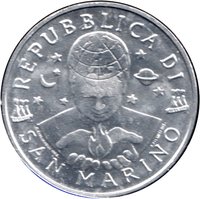
Obverse
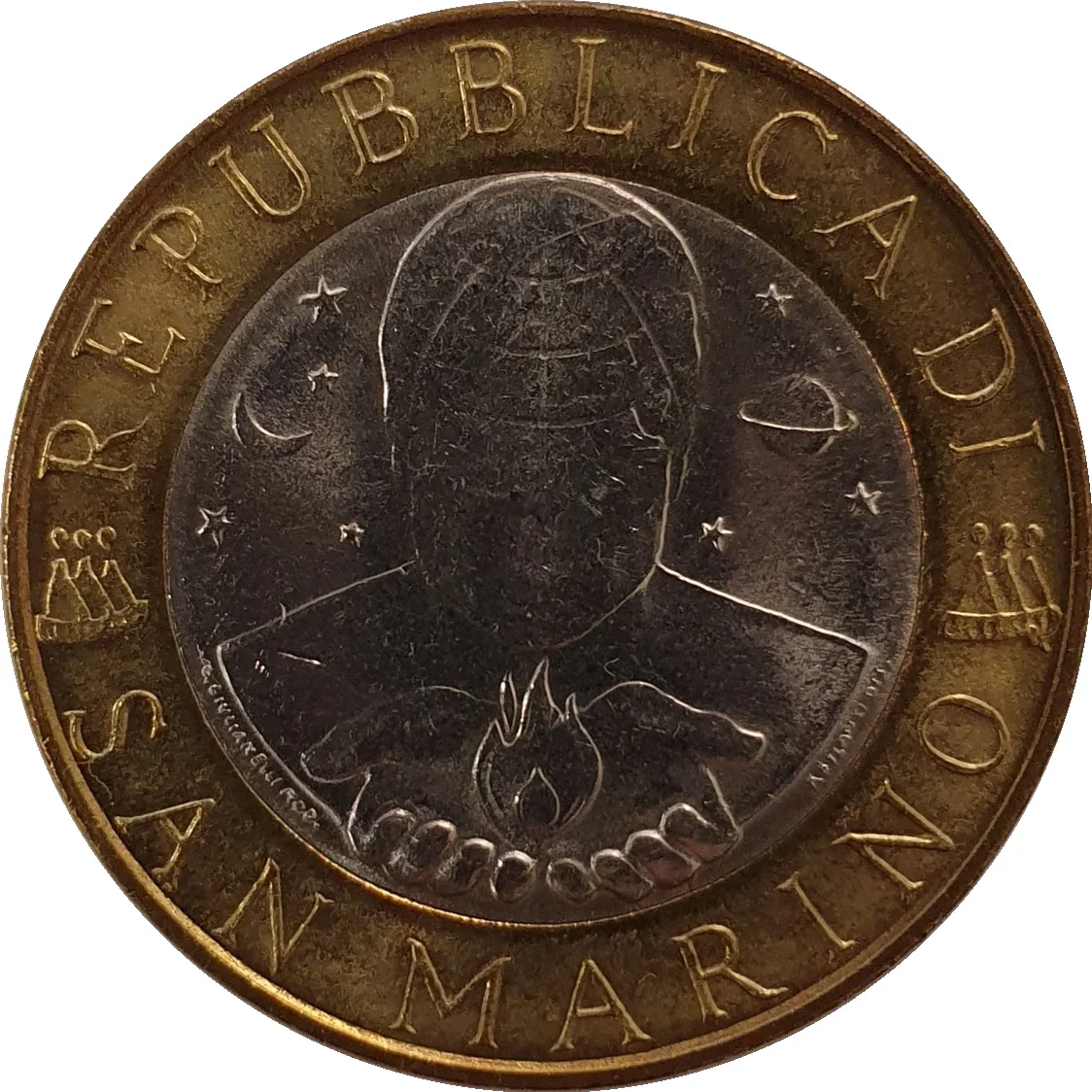
Description:
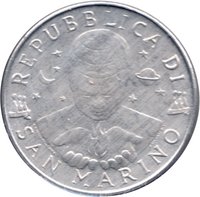
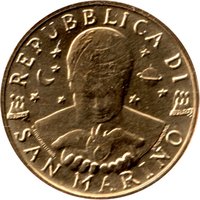
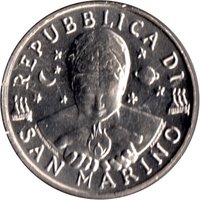
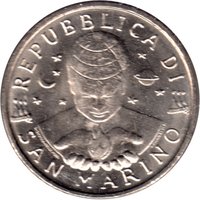
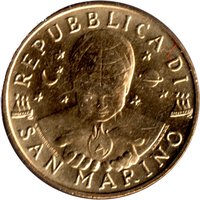
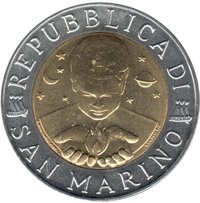
Forward-facing bust holding a celestial flame.
Inscription:
REPUBBLICA DI
SAN MARINO
G.GIULIANELLI MOD. F.FILANCI
SAN MARINO
G.GIULIANELLI MOD. F.FILANCI
Script: Latin
Engraver: Ettore Lorenzo Frapiccini
Designers: Franco Filanci, Giovanni Giulianelli
Reverse
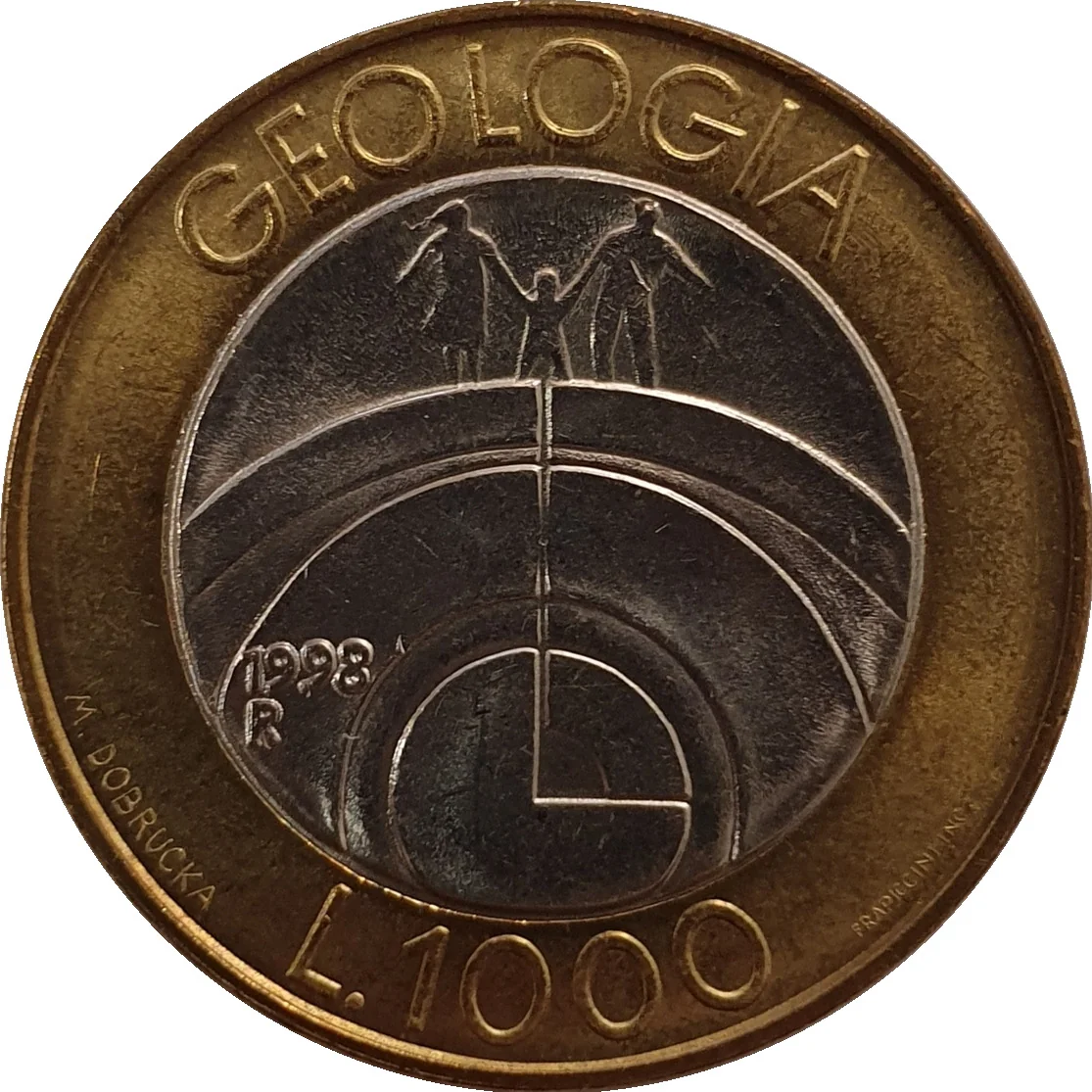
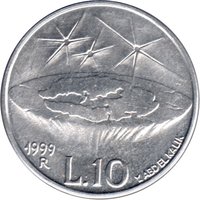
Description:
Three figures on a cutaway Earth model.
Inscription:
GEOLOGIA
1998
R
M.DOBRUCKA L.1000 FRAPICCINI INC.
1998
R
M.DOBRUCKA L.1000 FRAPICCINI INC.
Translation:
Geology
1998
R
M. Dobrucka L.1000 Frapiccini Inc.
1998
R
M. Dobrucka L.1000 Frapiccini Inc.
Script: Latin
Engraver: Ettore Lorenzo Frapiccini
Designer: Magdalena Dodrucka
Edge
Segmented reeding
Mints
| Name | Mark |
|---|---|
| Rome | R |
Mintings
| Year | Mint Mark | Mintage | Quality | Collection |
|---|---|---|---|---|
| 1998 | R | 2,036,275 |
Historical background
In 1998, the currency situation in San Marino was intrinsically linked to its unique political and economic relationship with Italy, formalized by a monetary convention. The Republic, while fully sovereign, had used the Italian lira as its domestic currency since 1897, and this arrangement was still firmly in place. A 1991 treaty with Italy had further solidified this, granting San Marino the right to mint its own limited quantities of coinage (the San Marino lira, which was equal in value and circulated alongside Italian coins) but not to issue banknotes. Consequently, the Italian lira was the de facto and de jure legal tender for all daily transactions, with Sammarinese coins representing a small fraction of the money in circulation.
Economically, this arrangement provided significant stability for San Marino's small, open economy, which was heavily dependent on tourism, banking, and commerce with Italy. By pegging itself to the lira, San Marino imported Italy's monetary policy, effectively outsourcing its central banking functions to the Banca d'Italia. This meant that in 1998, San Marino was directly exposed to the pressures facing the lira as Italy prepared for the imminent launch of the Euro. The country was actively engaged in negotiations with Italy and the European Union to secure its place within the new European Monetary Union (EMU) as a user of the single currency, seeking to preserve its traditional minting rights.
Therefore, 1998 was a year of transition and anticipation. While the lira remained the tangible currency in people's pockets, the focus for authorities was on the future. The key challenge was to successfully negotiate a new monetary agreement that would allow San Marino to adopt the Euro without being an EU member state, ensuring financial stability and continuity for its vital banking sector. The outcome of these talks would determine whether the republic could continue its historic monetary union in the new European currency era.
Economically, this arrangement provided significant stability for San Marino's small, open economy, which was heavily dependent on tourism, banking, and commerce with Italy. By pegging itself to the lira, San Marino imported Italy's monetary policy, effectively outsourcing its central banking functions to the Banca d'Italia. This meant that in 1998, San Marino was directly exposed to the pressures facing the lira as Italy prepared for the imminent launch of the Euro. The country was actively engaged in negotiations with Italy and the European Union to secure its place within the new European Monetary Union (EMU) as a user of the single currency, seeking to preserve its traditional minting rights.
Therefore, 1998 was a year of transition and anticipation. While the lira remained the tangible currency in people's pockets, the focus for authorities was on the future. The key challenge was to successfully negotiate a new monetary agreement that would allow San Marino to adopt the Euro without being an EU member state, ensuring financial stability and continuity for its vital banking sector. The outcome of these talks would determine whether the republic could continue its historic monetary union in the new European currency era.
🌱 Common