

Obverse
Description:
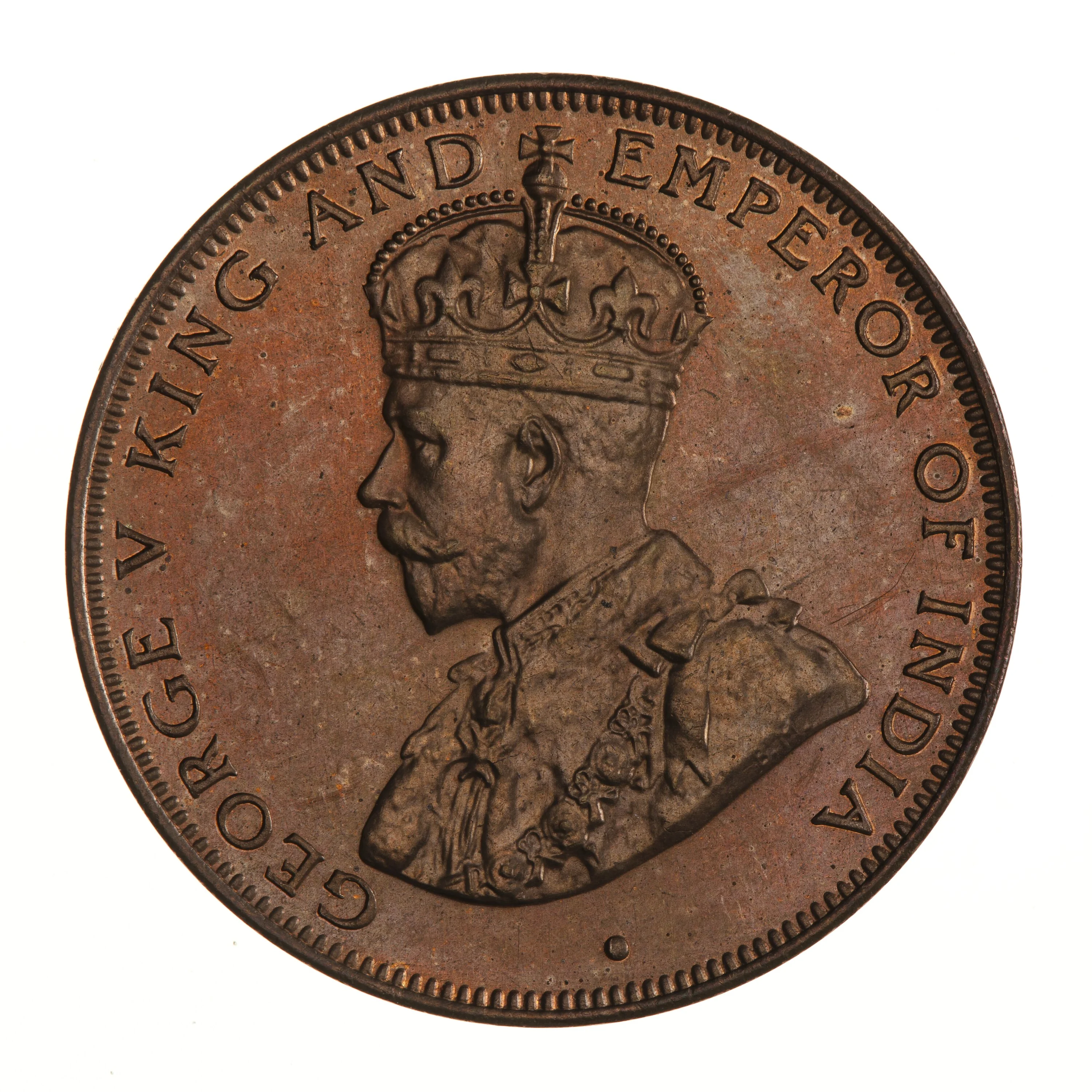
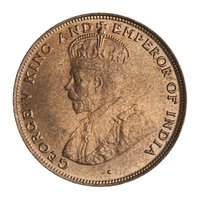
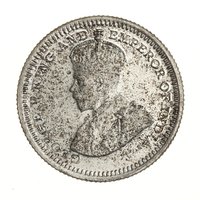
Crowned left-facing bust.
Inscription:
GEORGE V KING AND EMPEROR OF INDIA
.
.
Script: Latin
Engraver: Edgar Bertram MacKennal
Reverse
Edge
Plain
Mints
| Name | Mark |
|---|---|
| Royal Mint (Tower Hill) | — |
Mintings
| Year | Mint Mark | Mintage | Quality | Collection |
|---|---|---|---|---|
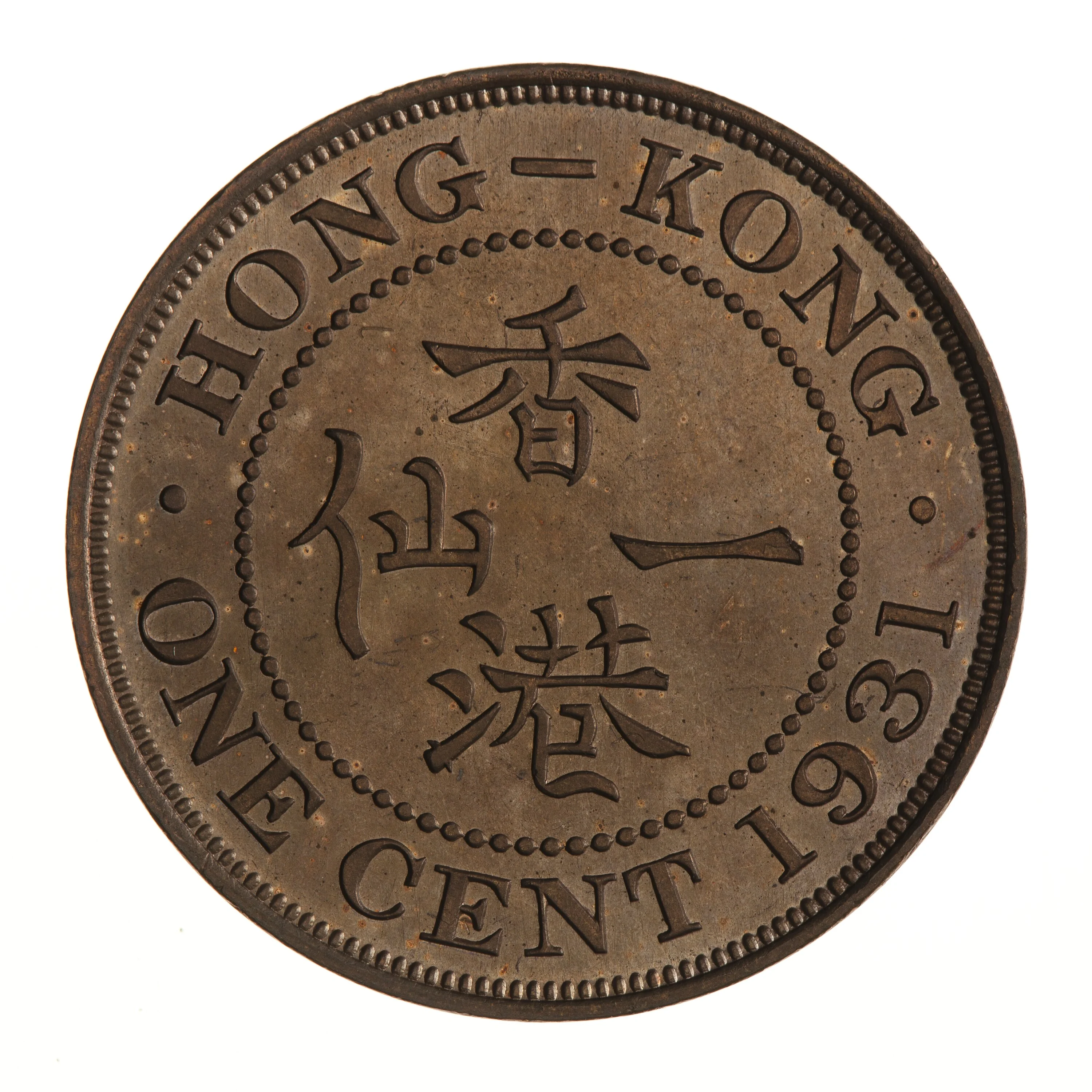
| 1931 | — | 5,000,000 | ||
| 1931 | — | — | Proof | |
| 1933 | — | — | Proof | |
| 1933 | — | 6,500,000 | ||
| 1934 | — | 5,000,000 | ||
| 1934 | — | — | Proof |
Historical background
In 1931, Hong Kong's currency situation was defined by its adherence to the silver standard, a system increasingly at odds with a world shifting towards gold. The colony's legal tender was the Hong Kong dollar, issued by three commercial banks—the Hongkong and Shanghai Banking Corporation (HSBC), the Chartered Bank of India, Australia and China, and the Mercantile Bank of India—under a government-regulated note-issuing system. These banknotes were fully backed by silver dollars or bullion held in reserve, tethering the currency's value directly to the volatile international price of silver.
This system faced a severe external shock in 1931 when Britain, the colonial power, abandoned the gold standard in September, causing the Pound Sterling to depreciate significantly. As Hong Kong's currency remained pegged to silver, which did not depreciate at the same rate, the Hong Kong dollar suddenly appreciated against the Sterling. This created immediate economic strain, making Hong Kong's exports more expensive and harming its re-export trade with China and other regions. The situation was further complicated by global deflation and a steep fall in the price of silver in the preceding years, which had already created economic pressure.
The crisis prompted an official review, leading to the Currency Ordinance of 1931. This legislation severed the direct silver link and formally pegged the Hong Kong dollar to the Pound Sterling at a fixed rate of 1 shilling and 3 pence (HK$16 = £1). This decisive move aligned Hong Kong's monetary policy with Britain's, stabilising trade and financial links with the Sterling Bloc. Thus, 1931 marked a pivotal transition from a commodity-based currency to a managed sterling exchange standard, a framework that would shape Hong Kong's financial system for decades.
This system faced a severe external shock in 1931 when Britain, the colonial power, abandoned the gold standard in September, causing the Pound Sterling to depreciate significantly. As Hong Kong's currency remained pegged to silver, which did not depreciate at the same rate, the Hong Kong dollar suddenly appreciated against the Sterling. This created immediate economic strain, making Hong Kong's exports more expensive and harming its re-export trade with China and other regions. The situation was further complicated by global deflation and a steep fall in the price of silver in the preceding years, which had already created economic pressure.
The crisis prompted an official review, leading to the Currency Ordinance of 1931. This legislation severed the direct silver link and formally pegged the Hong Kong dollar to the Pound Sterling at a fixed rate of 1 shilling and 3 pence (HK$16 = £1). This decisive move aligned Hong Kong's monetary policy with Britain's, stabilising trade and financial links with the Sterling Bloc. Thus, 1931 marked a pivotal transition from a commodity-based currency to a managed sterling exchange standard, a framework that would shape Hong Kong's financial system for decades.
🌱 Common