

½ escudo – Republic of North Peru
Add to wishlist
Peru
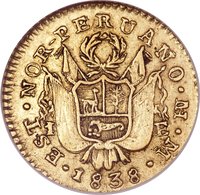
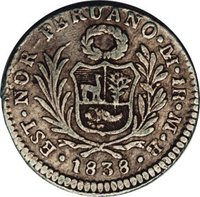
Obverse
Description:
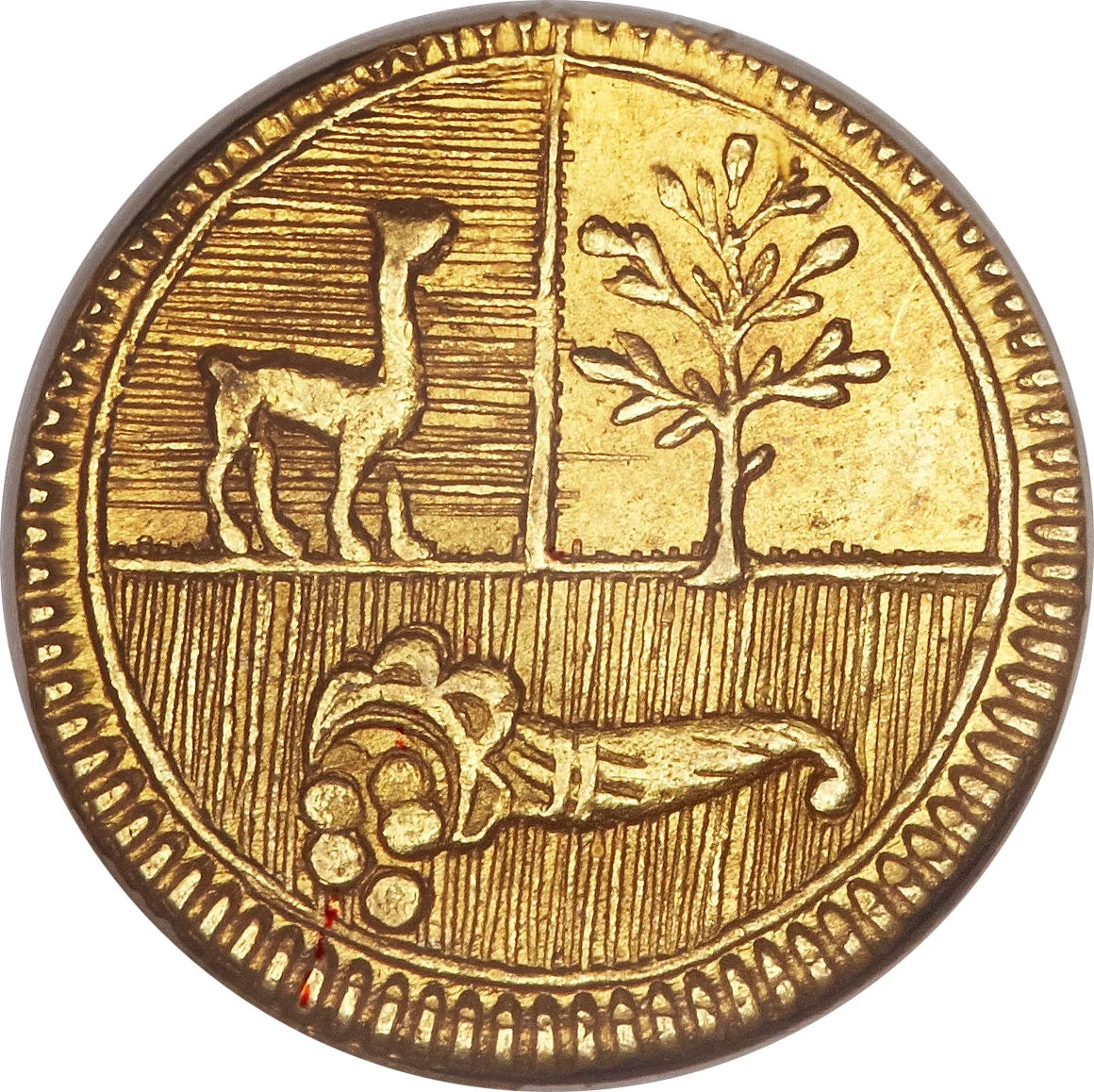
North Peruvian Arms
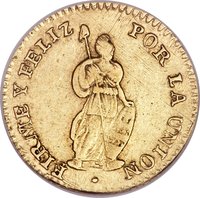
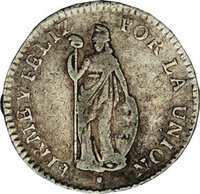
Reverse
Edge
Mints
| Name | Mark |
|---|---|
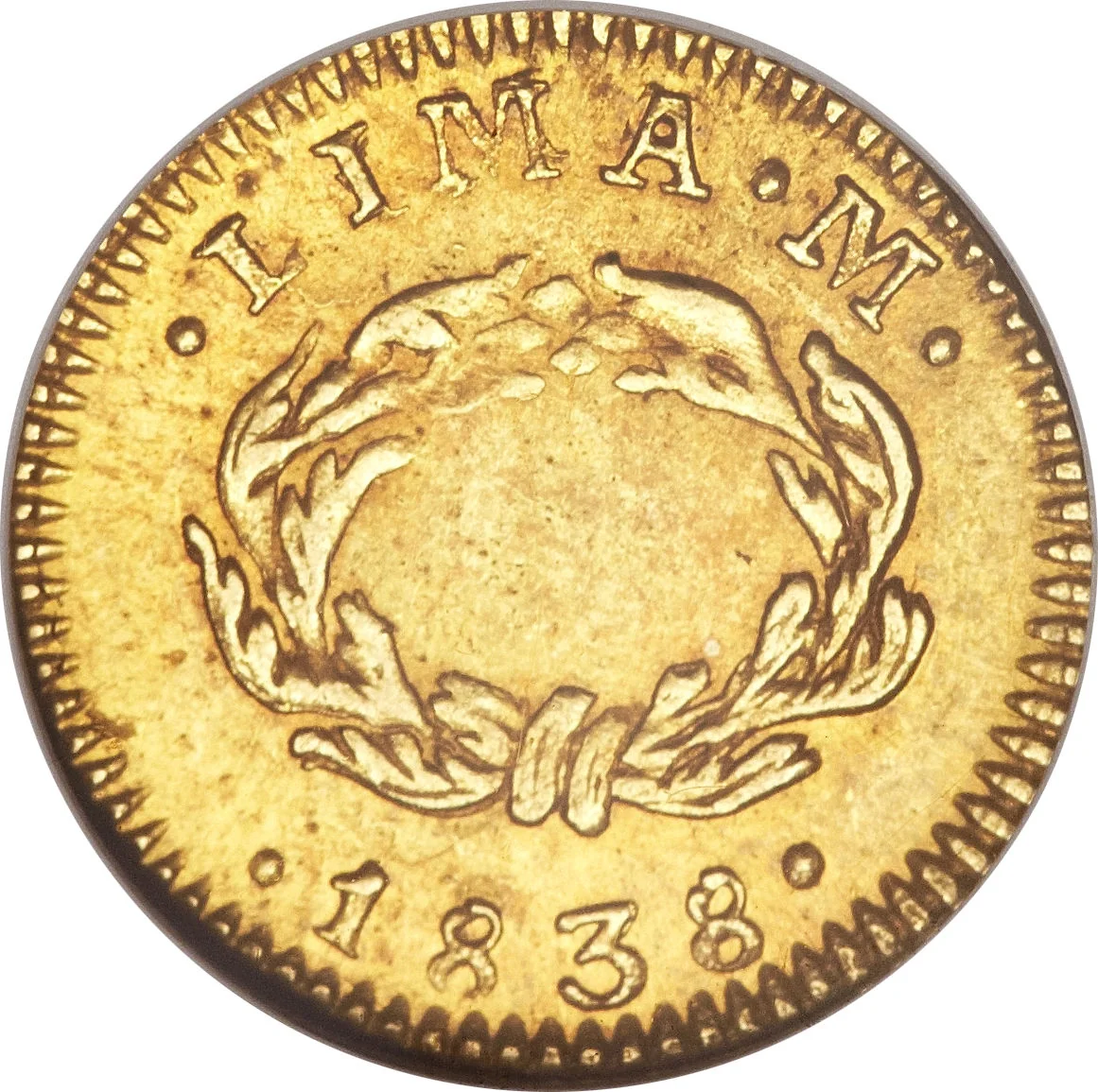
| Lima | — |
Mintings
| Year | Mint Mark | Mintage | Quality | Collection |
|---|---|---|---|---|
| 1838 | M | — |
Historical background
In 1838, the Republic of North Peru, a constituent state of the short-lived Peru-Bolivian Confederation, faced a currency situation defined by profound instability and transition. The nation was emerging from the economic devastation of the Wars of Independence and subsequent internal conflicts, which had severely disrupted mining production—the traditional source of silver for coinage. Consequently, the monetary supply was a chaotic mix of worn and clipped colonial-era coins, counterstamped foreign coins (especially Bolivian pesos), and a limited issuance of its own provisional coinage, leading to widespread confusion in commerce and a lack of uniform value.
The political context was paramount. Under the protection of Confederation President Marshal Andrés de Santa Cruz, efforts were made to impose monetary order as a tool of political consolidation. In 1838, the North Peruvian state officially adopted the peso or real system, with plans to standardize coinage minted at the Lima mint. However, these efforts were undermined by the ongoing War of the Confederation against a Chilean-led alliance, which drained the treasury and diverted resources. The state resorted to issuing low-value copper and billon (debased silver) coins to facilitate small-scale trade, while high-value transactions relied on unstable silver.
Ultimately, the currency situation of 1838 was a reflection of a state in crisis. The lack of strong, centralized fiscal authority and the pressing costs of war prevented any successful monetary reform. The instability would prove terminal; the Confederation's defeat at the Battle of Yungay in early 1839 led to the dissolution of both the Confederation and the Republic of North Peru itself, rendering its fledgling currency obsolete and ushering in another period of monetary reorganization for the region.
The political context was paramount. Under the protection of Confederation President Marshal Andrés de Santa Cruz, efforts were made to impose monetary order as a tool of political consolidation. In 1838, the North Peruvian state officially adopted the peso or real system, with plans to standardize coinage minted at the Lima mint. However, these efforts were undermined by the ongoing War of the Confederation against a Chilean-led alliance, which drained the treasury and diverted resources. The state resorted to issuing low-value copper and billon (debased silver) coins to facilitate small-scale trade, while high-value transactions relied on unstable silver.
Ultimately, the currency situation of 1838 was a reflection of a state in crisis. The lack of strong, centralized fiscal authority and the pressing costs of war prevented any successful monetary reform. The instability would prove terminal; the Confederation's defeat at the Battle of Yungay in early 1839 led to the dissolution of both the Confederation and the Republic of North Peru itself, rendering its fledgling currency obsolete and ushering in another period of monetary reorganization for the region.

✨ Legendary