

Peru
Material
References
KM: #Click to copy to clipboard189a
Numista: #46432
Value
Exchange value: 0.05 PEH
Bullion value: $3.20
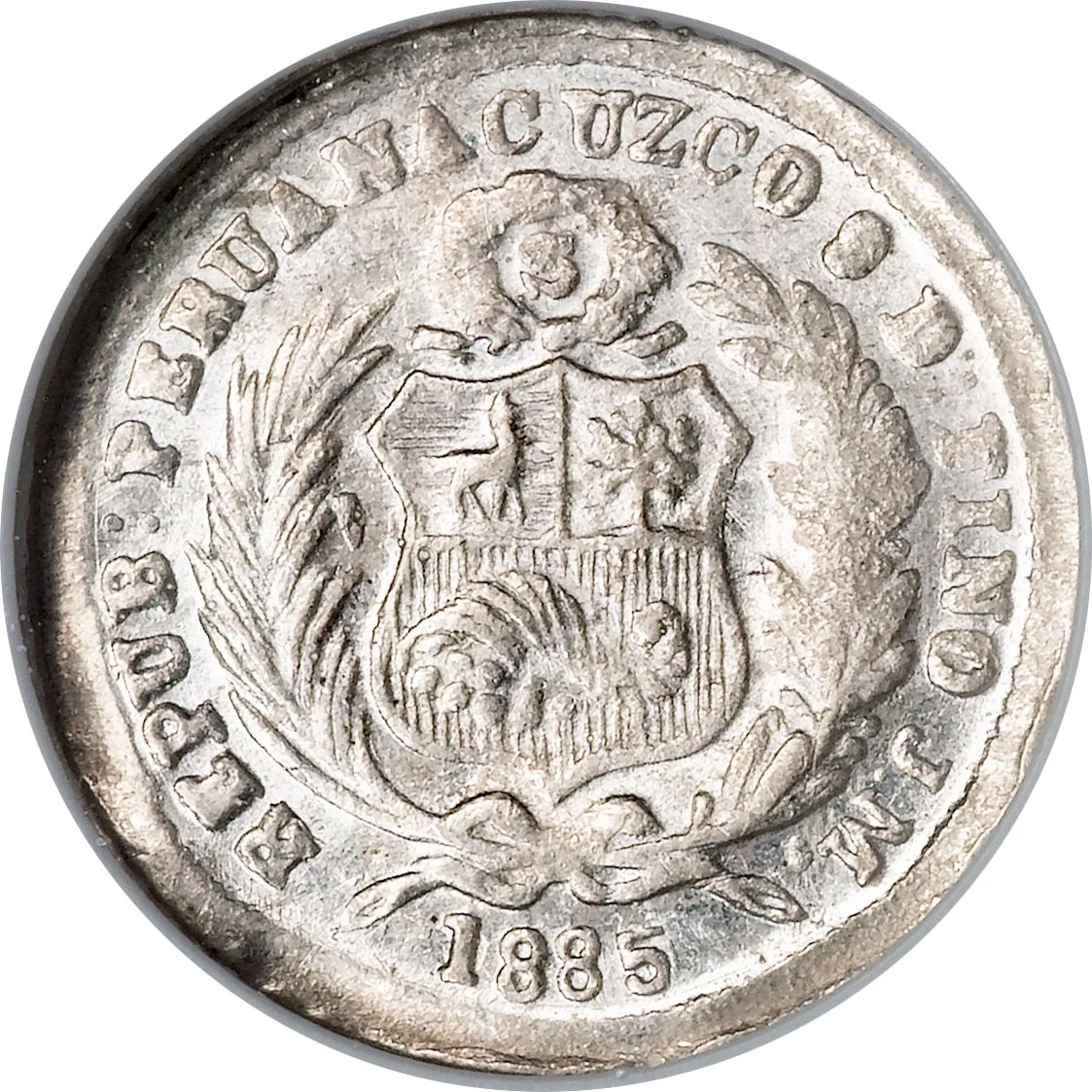
Obverse
Description:
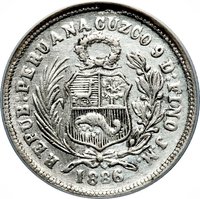
S above coat of arms within wreath.
Inscription:
REPUB: PERUANA CUZCO 9 D: FINO J.M.
Script: Latin
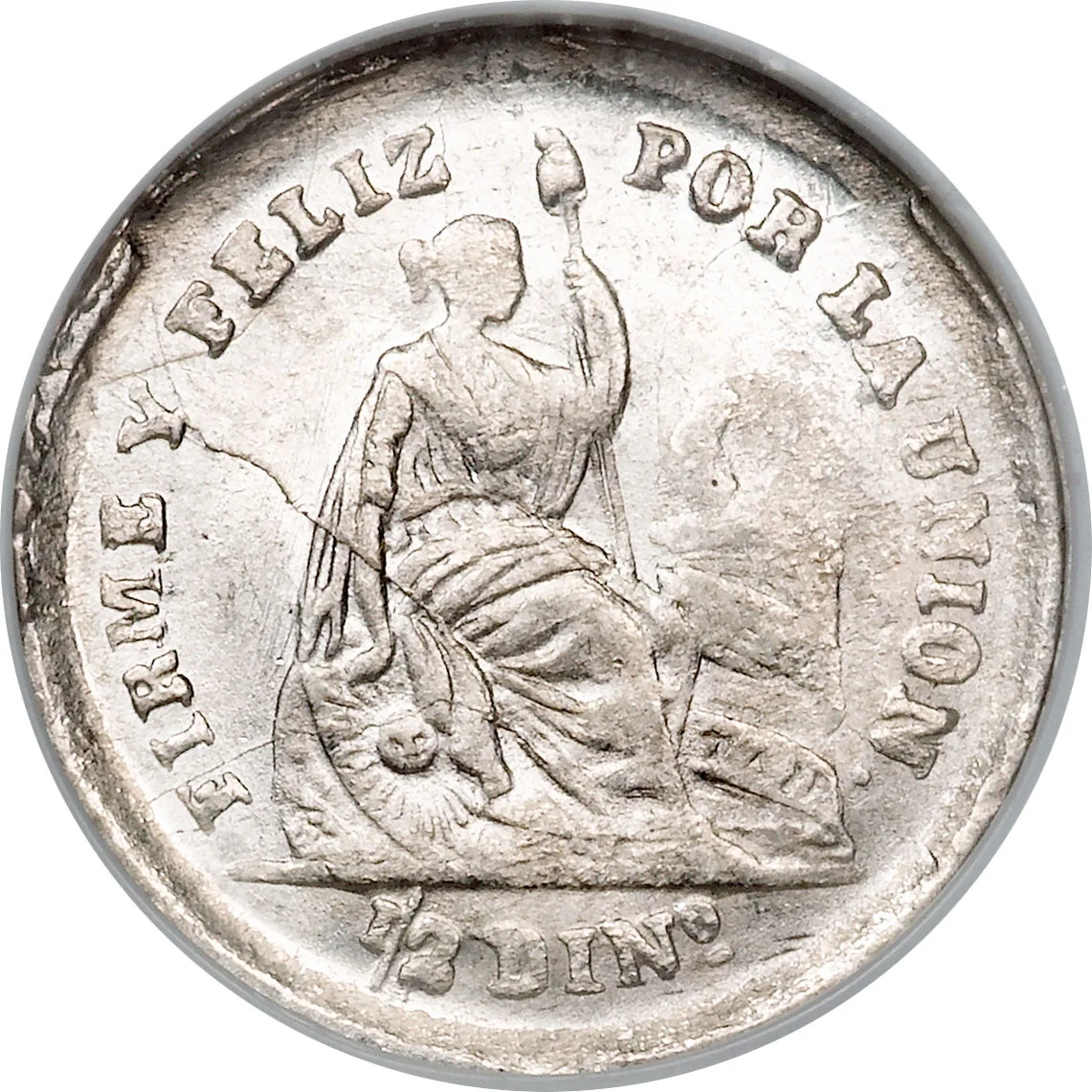
Reverse
Description:
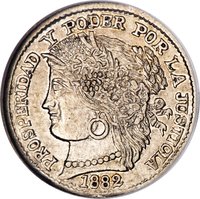
Figure with wreath, shield, and column.
Inscription:
FIRME Y FELIZ POR LA UNION
1/2 DINo
1/2 DINo
Script: Latin
Edge
Mintings
| Year | Mint Mark | Mintage | Quality | Collection |
|---|---|---|---|---|
| 1885 | JM | — |
Historical background
In 1885, Peru was emerging from the devastating War of the Pacific (1879-1884), a conflict that left its economy shattered and its national currency in a state of profound crisis. The Peruvian government, having exhausted its resources to finance the war, had suspended the convertibility of its paper money, the sol, leading to rampant inflation and a collapse in public confidence. By the war's end, the paper sol had become virtually worthless, trading at a fraction of its pre-war value, and the country saw a widespread reversion to barter and the use of foreign coins, particularly Chilean and Bolivian silver, for everyday transactions.
The monetary chaos was compounded by the loss of the nitrate-rich Tarapacá province to Chile, which stripped Peru of its primary source of export revenue. Furthermore, the Chilean occupation of Lima until 1884 and the subsequent internal political instability under President Miguel Iglesias hindered any coherent economic policy. The government's printing of unbacked paper money to cover fiscal deficits only deepened the hyperinflation, creating a dual system where worthless paper notes coexisted with scarce but trusted silver coinage, severely disrupting commerce and reconstruction efforts.
Against this backdrop, 1885 was a pivotal year of transition. The rise of General Andrés A. Cáceres, who would seize the presidency later that year, began a period of relative political stabilization necessary for economic recovery. While comprehensive monetary reform would not be fully realized until the Ley de la Consolidación in 1887, which created the sol de oro, the urgent need to restore a stable, metallic currency and attract foreign investment for reconstruction was the dominant financial preoccupation of the Peruvian state in 1885, setting the stage for the drastic measures that would follow.
The monetary chaos was compounded by the loss of the nitrate-rich Tarapacá province to Chile, which stripped Peru of its primary source of export revenue. Furthermore, the Chilean occupation of Lima until 1884 and the subsequent internal political instability under President Miguel Iglesias hindered any coherent economic policy. The government's printing of unbacked paper money to cover fiscal deficits only deepened the hyperinflation, creating a dual system where worthless paper notes coexisted with scarce but trusted silver coinage, severely disrupting commerce and reconstruction efforts.
Against this backdrop, 1885 was a pivotal year of transition. The rise of General Andrés A. Cáceres, who would seize the presidency later that year, began a period of relative political stabilization necessary for economic recovery. While comprehensive monetary reform would not be fully realized until the Ley de la Consolidación in 1887, which created the sol de oro, the urgent need to restore a stable, metallic currency and attract foreign investment for reconstruction was the dominant financial preoccupation of the Peruvian state in 1885, setting the stage for the drastic measures that would follow.

💎 Extremely Rare