

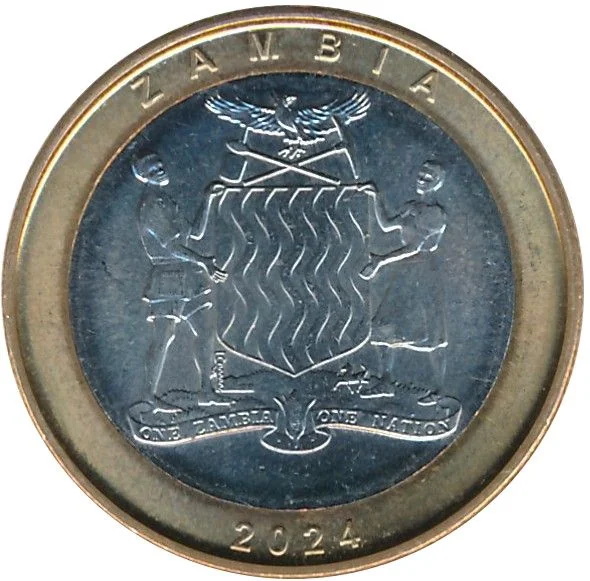
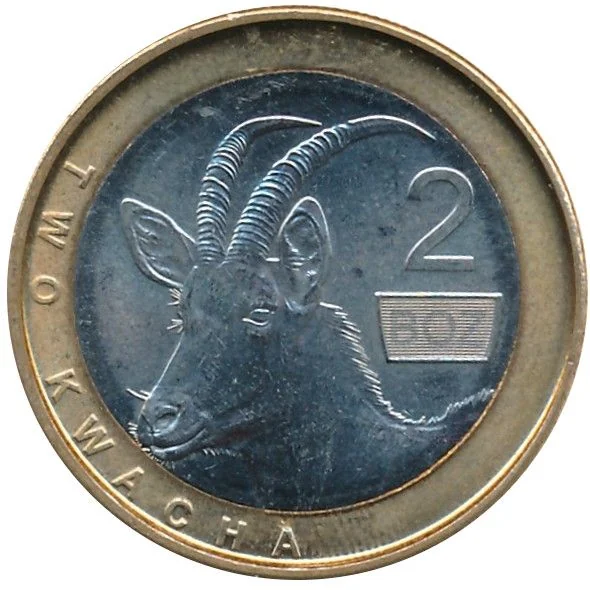
2 kwacha – Zambia
Add to wishlist
Zambia
Context
Year: 2024
Issuer: Zambia
Issuing organization: Bank of Zambia
Period:
(since 1964)
Currency:
(since 2013)
Material
Diameter: 24.5 mm
Weight: 7.5 g
Thickness: 2.53 mm
Shape: Round
Techniques: Latent image, Milled
Alignment: Medal alignment
flip
References
Numista: #463973
Value
Exchange value: 2 ZMW
Obverse
Description:
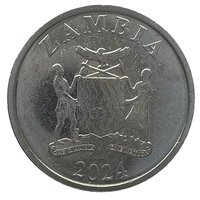
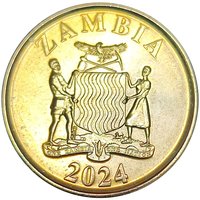
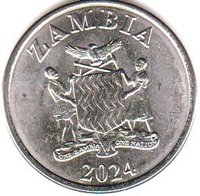
National arms with supporters and date.
Inscription:
ZAMBIA
ONE ZAMBIA ONE NATION
2024
ONE ZAMBIA ONE NATION
2024
Script: Latin
Reverse
Description:
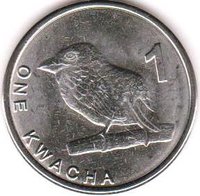
Roan Antelope head. Denomination with latent image.
Inscription:
TWO KWACHA
2
2
Script: Latin
Edge
Segmented reeding
Categories
| Animal> Cow |
| Symbols> Coat of Arms |
Mints
| Name | Mark |
|---|---|
| Mint of Poland | — |
Mintings
| Year | Mint Mark | Mintage | Quality | Collection |
|---|---|---|---|---|
| 2024 | — | — |
Historical background
Zambia's currency situation in 2024 remains challenging but shows signs of stabilization following a period of significant volatility. The Zambian kwacha (ZMW) was one of the world's worst-performing currencies in 2023, depreciating sharply due to a combination of high external debt, low copper production (the nation's key export), and sustained inflationary pressures. This depreciation severely increased the cost of imports, particularly fuel and essential goods, squeezing household budgets and contributing to a cost-of-living crisis. The situation was exacerbated by delays in finalizing a debt restructuring agreement with official creditors and bondholders under the G20 Common Framework, which eroded investor confidence and limited access to foreign exchange.
In response, the Bank of Zambia (BoZ) has implemented a tight monetary policy, significantly raising the benchmark interest rate to 12.5% in an effort to curb inflation and support the currency. These measures, coupled with the long-awaited finalization of a $3.9 billion debt restructuring deal with official creditors in June 2024, have provided a crucial anchor for the kwacha. The currency has experienced periods of appreciation in 2024, reflecting improved market sentiment and increased forex inflows from mining sectors. However, this stability is fragile and subject to fluctuations based on global copper prices and the pace of remaining debt negotiations with private creditors.
Looking forward, the key challenges for Zambia's currency in 2024 include managing persistent, though recently easing, inflation (which remains in double digits), ensuring consistent forex supply, and navigating the final stages of its debt restructuring. The kwacha's performance is inextricably linked to the successful implementation of the IMF-supported economic reform program and the nation's ability to attract foreign direct investment, particularly in its mining and energy sectors. While the outlook is more positive than in 2023, the currency's stability continues to depend on prudent fiscal management, higher copper output, and sustained confidence from the international financial community.
In response, the Bank of Zambia (BoZ) has implemented a tight monetary policy, significantly raising the benchmark interest rate to 12.5% in an effort to curb inflation and support the currency. These measures, coupled with the long-awaited finalization of a $3.9 billion debt restructuring deal with official creditors in June 2024, have provided a crucial anchor for the kwacha. The currency has experienced periods of appreciation in 2024, reflecting improved market sentiment and increased forex inflows from mining sectors. However, this stability is fragile and subject to fluctuations based on global copper prices and the pace of remaining debt negotiations with private creditors.
Looking forward, the key challenges for Zambia's currency in 2024 include managing persistent, though recently easing, inflation (which remains in double digits), ensuring consistent forex supply, and navigating the final stages of its debt restructuring. The kwacha's performance is inextricably linked to the successful implementation of the IMF-supported economic reform program and the nation's ability to attract foreign direct investment, particularly in its mining and energy sectors. While the outlook is more positive than in 2023, the currency's stability continues to depend on prudent fiscal management, higher copper output, and sustained confidence from the international financial community.
⭐ Somewhat Rare