

Obverse
Description:
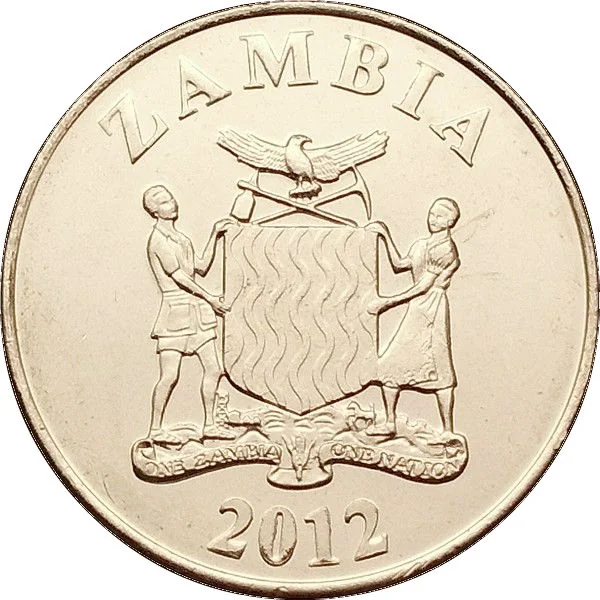
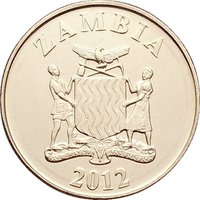
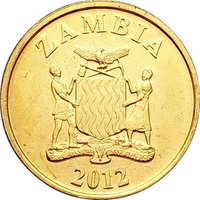
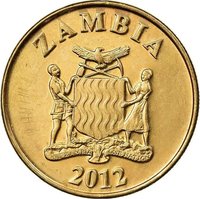
National arms with supporters and date.
Inscription:
ZAMBIA
ONE ZAMBIA ONE NATION
2012
ONE ZAMBIA ONE NATION
2012
Script: Latin
Reverse
Description:
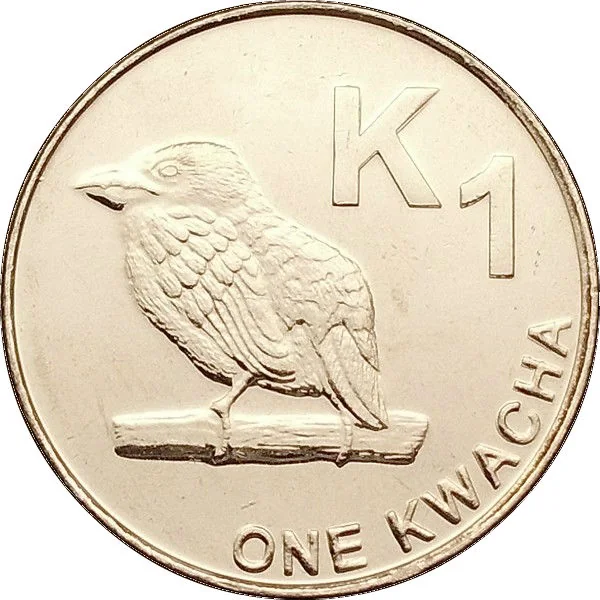
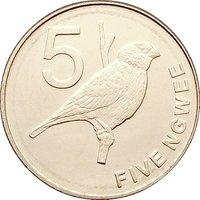
The Zambian Barbet (Lybius chaplini), also called Chaplin's Barbet, is a bird endemic to Zambia.
Inscription:
K1
ONE KWACHA
ONE KWACHA
Script: Latin
Edge
Reeded
Categories
| Animal> Bird> Eagle |
| Symbols> Coat of Arms |
Mints
| Name | Mark |
|---|---|
| South African Mint | — |
Mintings
| Year | Mint Mark | Mintage | Quality | Collection |
|---|---|---|---|---|
| 2012 | — | — | ||
| 2013 | — | — | ||
| 2014 | — | — | ||
| 2015 | — | — | ||
| 2016 | — | — | ||
| 2017 | — | — | ||
| 2019 | — | — |
Historical background
In 2012, Zambia's currency, the kwacha, faced significant volatility and depreciation pressures, largely driven by external economic shocks and domestic policy uncertainty. The year began with the kwacha trading at around ZMW 5,100 per US dollar, following a major rebasing of the currency in January (removing three zeros to create the "Zambian kwacha rebased"). However, confidence was fragile. A key external factor was a sharp decline in the price of copper, Zambia's primary export, due to slowing global demand, particularly from China. This reduced the inflow of crucial foreign exchange earnings, creating a supply-demand imbalance in the market.
Domestically, political factors played a substantial role. The period followed the 2011 election of President Michael Sata, whose Patriotic Front government initially pursued populist policies, including a controversial proposal to force mining companies to pay royalties in dollars and keep those earnings in domestic banks. This created uncertainty for the key mining sector, discouraging investment and further straining forex reserves. Simultaneously, high government spending ahead of the elections contributed to inflationary pressures, which eroded the kwacha's value.
By the end of 2012, the kwacha had depreciated by approximately 10% against the US dollar over the year, trading around ZMW 5,500. The Bank of Zambia intervened periodically by selling dollars to stabilize the currency, but these measures provided only temporary relief. The situation highlighted the economy's vulnerability to commodity price swings and underscored the challenges of managing fiscal policy, currency stability, and investor confidence in a resource-dependent nation. This period set the stage for more pronounced economic challenges in the subsequent years.
Domestically, political factors played a substantial role. The period followed the 2011 election of President Michael Sata, whose Patriotic Front government initially pursued populist policies, including a controversial proposal to force mining companies to pay royalties in dollars and keep those earnings in domestic banks. This created uncertainty for the key mining sector, discouraging investment and further straining forex reserves. Simultaneously, high government spending ahead of the elections contributed to inflationary pressures, which eroded the kwacha's value.
By the end of 2012, the kwacha had depreciated by approximately 10% against the US dollar over the year, trading around ZMW 5,500. The Bank of Zambia intervened periodically by selling dollars to stabilize the currency, but these measures provided only temporary relief. The situation highlighted the economy's vulnerability to commodity price swings and underscored the challenges of managing fiscal policy, currency stability, and investor confidence in a resource-dependent nation. This period set the stage for more pronounced economic challenges in the subsequent years.
Series: 2012 Zambia circulation coins
🌱 Very Common