

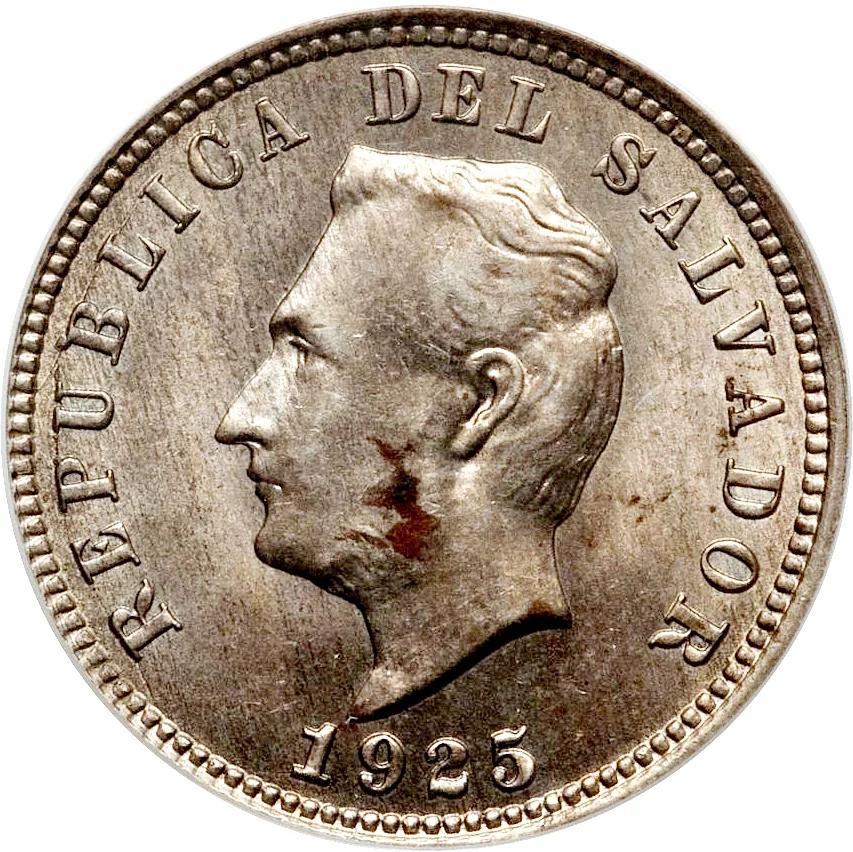
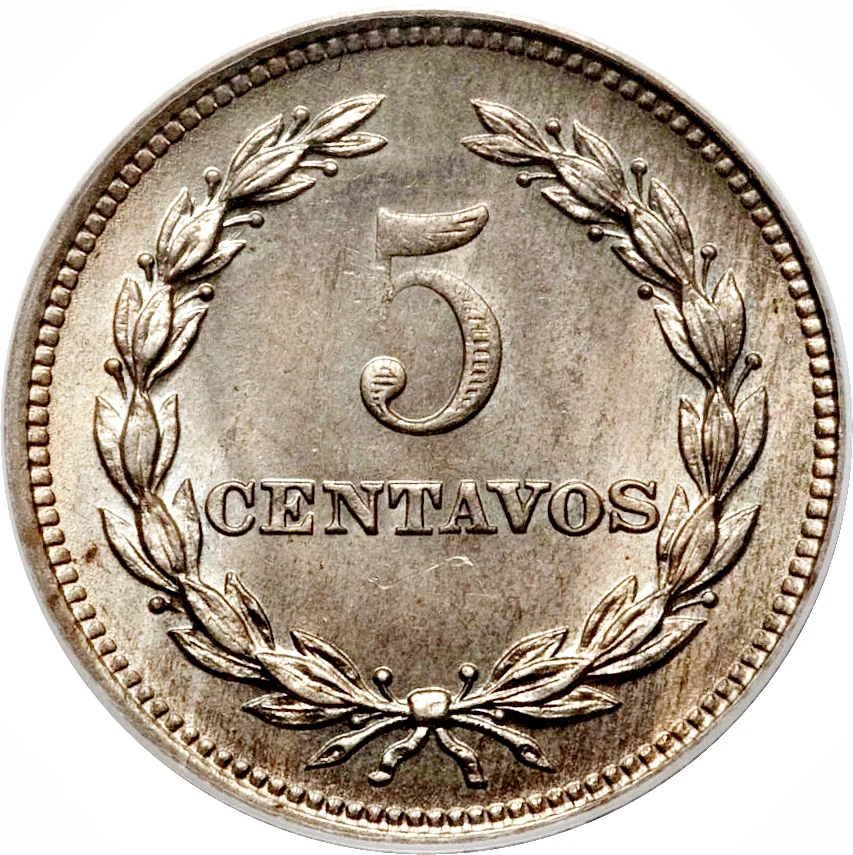
5 Centavos – El Salvador
El Salvador
Context
Years: 1915–1925
Issuer: El Salvador 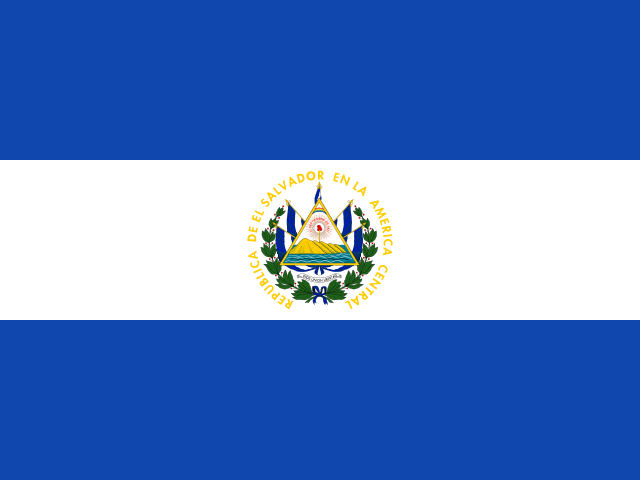
Period:
(since 1841)
Currency:
(since 1892)
Demonetization: 1 January 2001
Total mintage: 15,780,000
Material
References
KM: #Click to copy to clipboard129
Numista: #4631
Value
Exchange value: 0.05 SVC
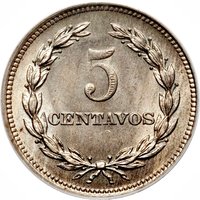
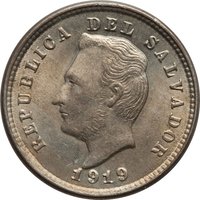
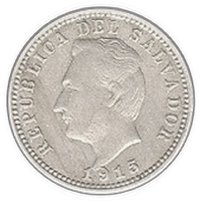
Obverse
Reverse
Edge
Plain
Categories
| Person> Politician |
| Symbol> Wreath |
Mintings
| Year | Mint Mark | Mintage | Quality | Collection |
|---|---|---|---|---|
| 1915 | — | 2,500,000 | ||
| 1916 | — | 1,500,000 | ||
| 1917 | — | 1,000,000 | ||
| 1918 | — | 1,000,000 | ||
| 1919 | — | 2,000,000 | ||
| 1920 | — | 2,000,000 | ||
| 1921 | — | 1,780,000 | ||
| 1925 | — | 4,000,000 |
Historical background
In 1915, El Salvador's currency situation was characterized by a complex and unstable system dominated by the silver peso. The nation, like much of Latin America, operated on a silver standard, but the global decline in the value of silver since the late 19th century had caused significant depreciation. This devaluation created chronic fiscal problems for the government, made international debt repayments (often contracted in gold-standard currencies like the British pound or U.S. dollar) more expensive, and contributed to internal price instability. The Salvadoran peso's value was not fixed, leading to fluctuating exchange rates that hampered foreign trade and investment.
The government, under President Carlos Meléndez, was actively seeking solutions to this monetary chaos. A pivotal step had been taken in 1912 with the creation of a new national bank, the Banco Internacional de El Salvador, which was granted a monopoly on issuing paper money. By 1915, the bank was working to establish a gold-exchange standard, aiming to stabilize the currency by pegging it to the U.S. dollar and holding gold reserves to back the paper notes. This reform was driven by a desire to attract foreign capital, stabilize government finances, and integrate more smoothly into the global trading system, particularly with its major economic partner, the United States.
Thus, 1915 represents a transitional moment in Salvadoran monetary history. The country was caught between the lingering problems of a depreciating silver-based system and the ongoing, challenging implementation of a modern gold-backed currency. The success of this reform was not yet assured, and the economy still felt the pressures of a weak and unreliable medium of exchange. The ultimate move to formally adopt the U.S. dollar as legal tender, however, would not occur until 2001, making this early 20th-century effort a foundational, though ultimately incomplete, chapter in the nation's long quest for monetary stability.
The government, under President Carlos Meléndez, was actively seeking solutions to this monetary chaos. A pivotal step had been taken in 1912 with the creation of a new national bank, the Banco Internacional de El Salvador, which was granted a monopoly on issuing paper money. By 1915, the bank was working to establish a gold-exchange standard, aiming to stabilize the currency by pegging it to the U.S. dollar and holding gold reserves to back the paper notes. This reform was driven by a desire to attract foreign capital, stabilize government finances, and integrate more smoothly into the global trading system, particularly with its major economic partner, the United States.
Thus, 1915 represents a transitional moment in Salvadoran monetary history. The country was caught between the lingering problems of a depreciating silver-based system and the ongoing, challenging implementation of a modern gold-backed currency. The success of this reform was not yet assured, and the economy still felt the pressures of a weak and unreliable medium of exchange. The ultimate move to formally adopt the U.S. dollar as legal tender, however, would not occur until 2001, making this early 20th-century effort a foundational, though ultimately incomplete, chapter in the nation's long quest for monetary stability.
🌱 Common