


Obverse
Description:
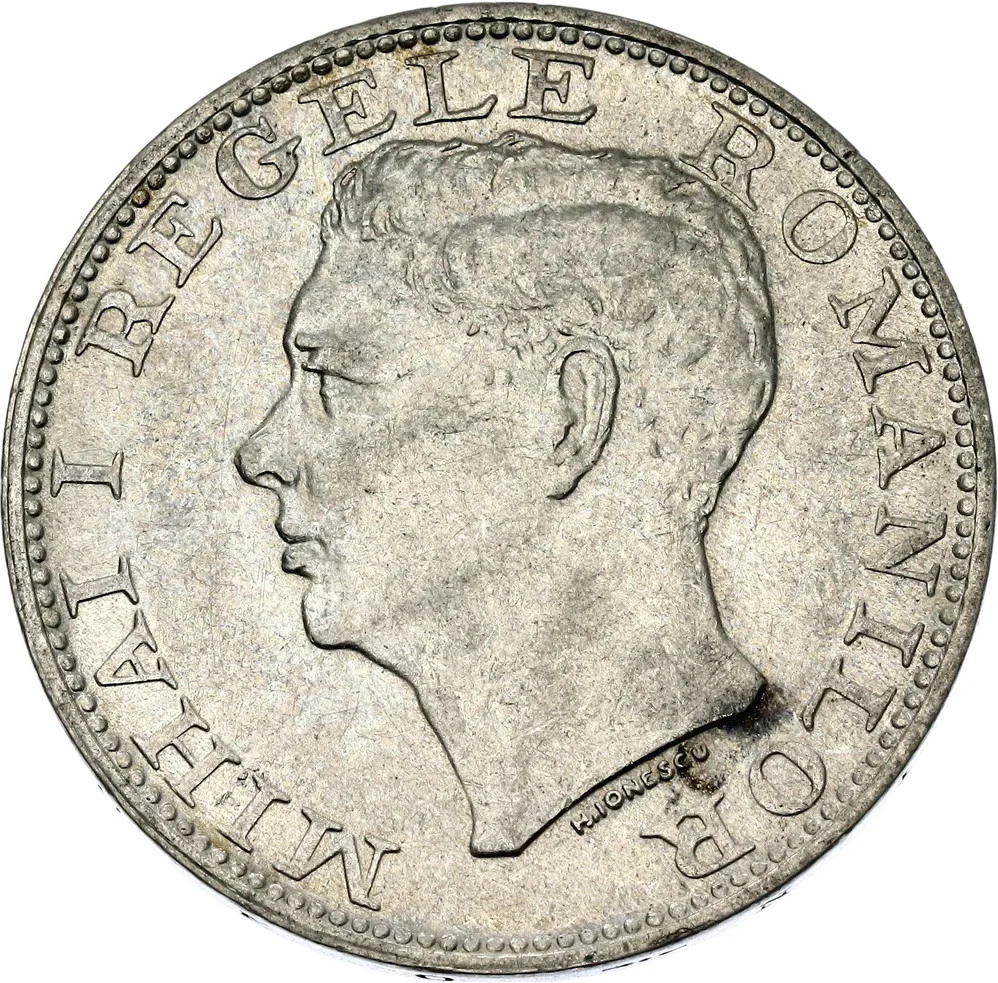
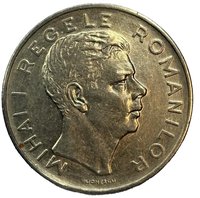
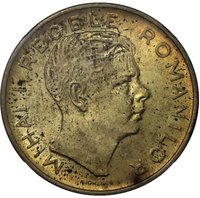
Mihai I left-facing bust.
Inscription:
MIHAI I REGELE ROMANILOR
H. IONESCU
H. IONESCU
Translation:
Michael I King of the Romanians
H. Ionescu
H. Ionescu
Script: Latin
Language: Romanian
Engraver: Haralambie Ionescu
Reverse
Description:
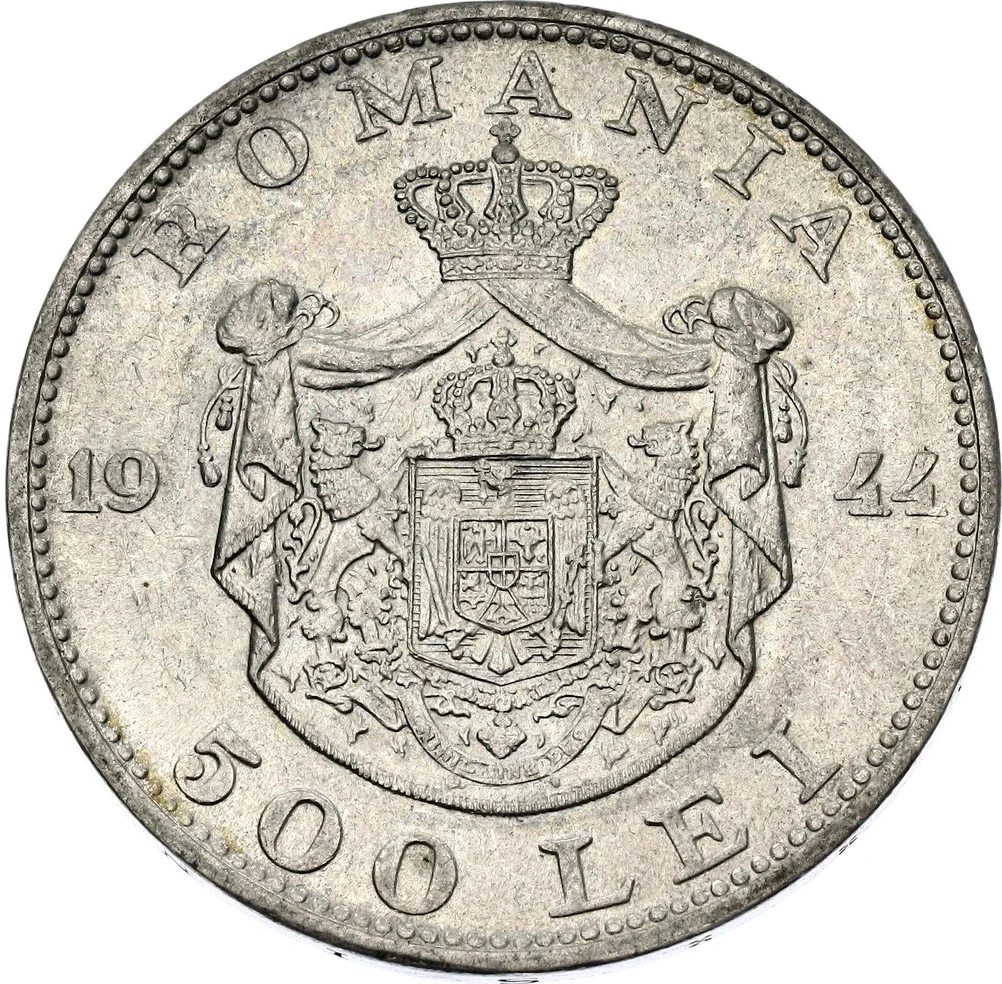
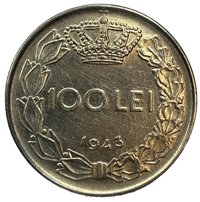
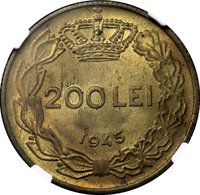
Romania's arms separate the date, with the country name above and the denomination below.
Inscription:
ROMANIA
19 44
500 LEI
19 44
500 LEI
Script: Latin
Edge
Categories
| Symbols> Coat of Arms |
| Person> Monarch |
Mints
| Name | Mark |
|---|---|
| State Mint | — |
Mintings
| Year | Mint Mark | Mintage | Quality | Collection |
|---|---|---|---|---|
| 1944 | — | 9,731,000 |
Historical background
In 1944, Romania's currency situation was one of severe instability and hyperinflation, a direct consequence of the immense economic strain of World War II. The Romanian leu had been steadily depreciating since the country's entry into the war on the Axis side in 1941, as the government, led initially by Ion Antonescu, financed massive military expenditures primarily by printing money. This unchecked expansion of the money supply, coupled with the destruction of productive capacity, shrinking resources, and a crippling British naval blockade, led to a collapse in the leu's value. By the time of the pivotal coup of August 23, 1944, which switched Romania to the Allied side, prices were skyrocketing, and the currency's purchasing power was evaporating daily.
The political shift in August did not bring immediate monetary relief; instead, it intensified the crisis in the short term. The country now faced the costs of fighting alongside the Soviets against its former allies, while also being subjected to heavy war reparations and supporting the large Soviet army now occupying its territory. The National Bank of Romania, under extreme duress, continued to print currency to meet these overwhelming obligations, accelerating the inflationary spiral. The economy operated increasingly through barter and a black market, where goods like food, fuel, and cigarettes became more reliable stores of value than the rapidly depreciating paper leu.
This period set the stage for the drastic monetary reform that would follow in 1947. The hyperinflation of 1944-1947 fundamentally eroded public savings and trust in the national currency, a economic trauma that the incoming communist regime, which consolidated power in the immediate post-war years, would exploit. The eventual currency reform of August 1947, which introduced a new leu at a steeply discriminatory exchange rate, served not only to stabilize prices but also as a tool for the state to confiscate wealth and solidify its control over the Romanian economy. Thus, the currency chaos of 1944 was the prelude to a politically engineered monetary reset.
The political shift in August did not bring immediate monetary relief; instead, it intensified the crisis in the short term. The country now faced the costs of fighting alongside the Soviets against its former allies, while also being subjected to heavy war reparations and supporting the large Soviet army now occupying its territory. The National Bank of Romania, under extreme duress, continued to print currency to meet these overwhelming obligations, accelerating the inflationary spiral. The economy operated increasingly through barter and a black market, where goods like food, fuel, and cigarettes became more reliable stores of value than the rapidly depreciating paper leu.
This period set the stage for the drastic monetary reform that would follow in 1947. The hyperinflation of 1944-1947 fundamentally eroded public savings and trust in the national currency, a economic trauma that the incoming communist regime, which consolidated power in the immediate post-war years, would exploit. The eventual currency reform of August 1947, which introduced a new leu at a steeply discriminatory exchange rate, served not only to stabilize prices but also as a tool for the state to confiscate wealth and solidify its control over the Romanian economy. Thus, the currency chaos of 1944 was the prelude to a politically engineered monetary reset.
🌱 Common