

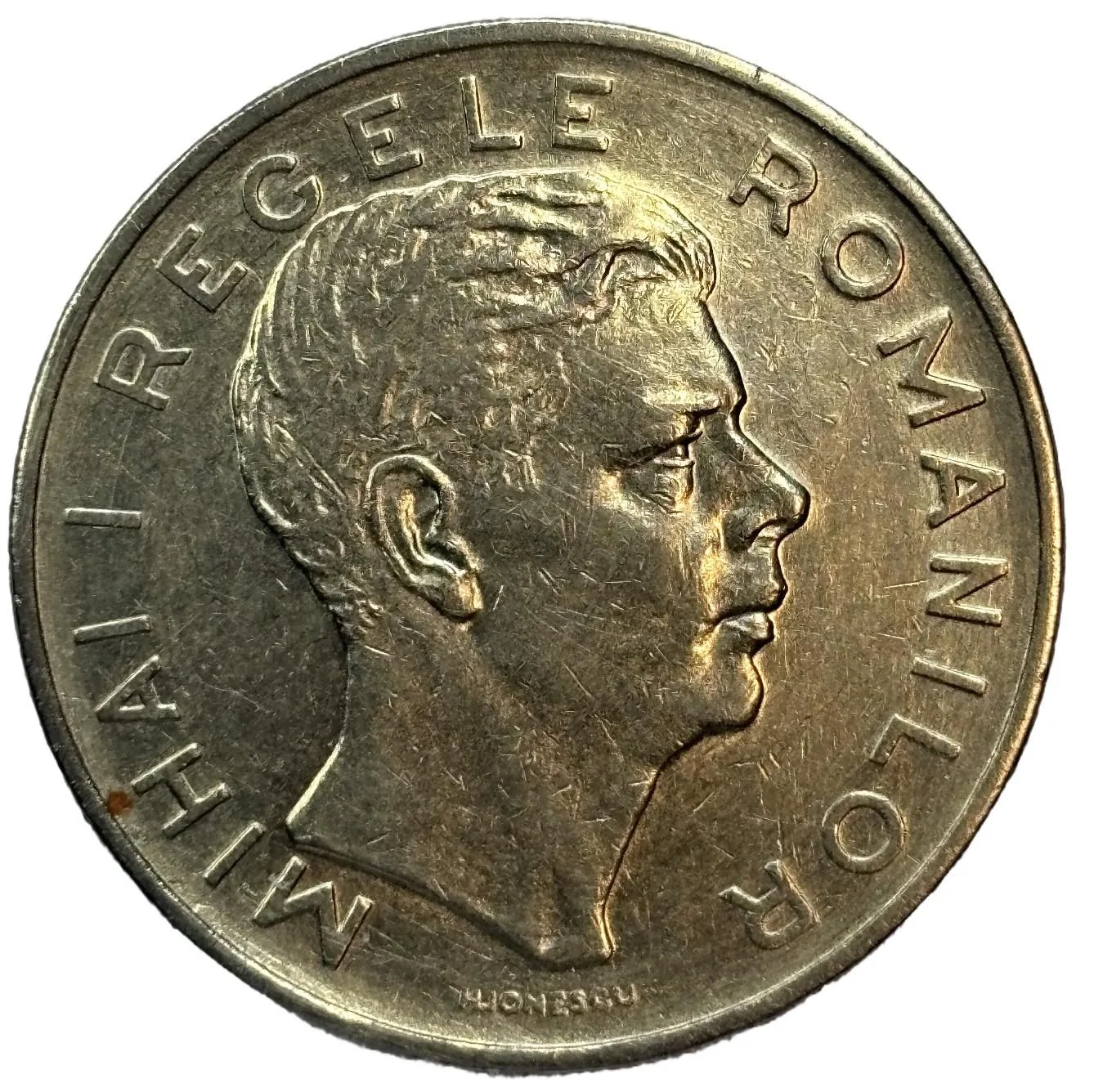

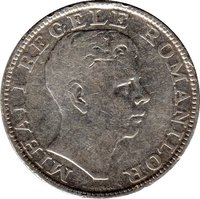
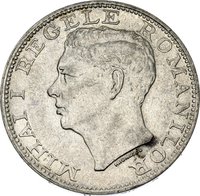
Obverse
Description:
Mihai I facing right, encircled by text.
Inscription:
MIHAI I REGELE ROMANILOR
H.IONESCU
H.IONESCU
Translation:
Michael I King of the Romanians
H. Ionescu
H. Ionescu
Script: Latin
Language: Romanian
Engraver: Haralambie Ionescu
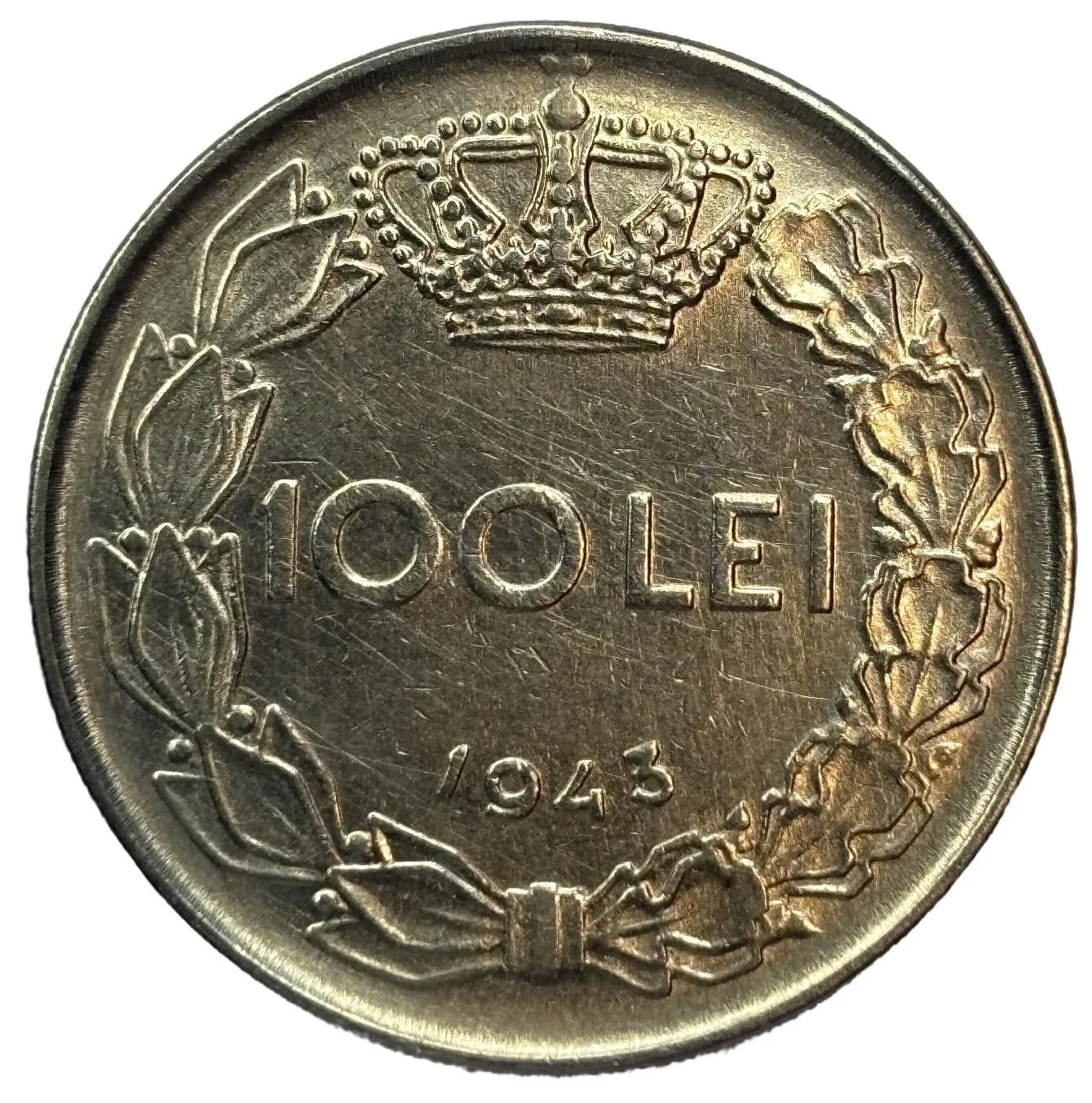
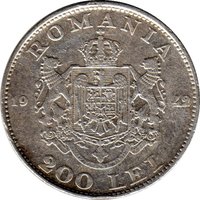
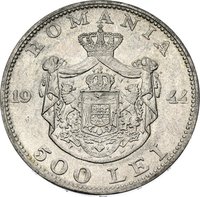
Reverse
Description:
Crown splits wreath, enclosing date and value.
Inscription:
100 LEI
1943
1943
Script: Latin
Engraver: Haralambie Ionescu
Edge
Mints
| Name | Mark |
|---|---|
| State Mint | — |
Mintings
| Year | Mint Mark | Mintage | Quality | Collection |
|---|---|---|---|---|
| 1943 | — | 40,590,000 | ||
| 1944 | — | 21,289,446 |
Historical background
In 1943, Romania’s currency situation was defined by the severe strains of its deep involvement in World War II as a key Axis ally. The Romanian Leu, managed by the National Bank of Romania, was under immense pressure from the exorbitant costs of financing the war on the Eastern Front, where Romania had committed substantial military forces. The government, led by Marshal Ion Antonescu, was compelled to finance the conflict primarily through massive deficit spending and direct monetary financing—essentially printing money to cover expenses. This led to a rapid expansion of the money supply, decoupling it from economic output and laying the groundwork for rampant inflation.
The inflationary effects were acutely felt on the home front, though they were partially masked by strict wartime price controls and rationing for essential goods. A thriving black market emerged where the Leu traded at a fraction of its official value, and goods like food, fuel, and clothing commanded prices far beyond state-set levels. The economy was also distorted by the direct German-Romanian economic relationship, including clearing agreements that favored Germany’s war economy, often at Romania's expense. This further drained resources and contributed to the currency's de facto devaluation.
Despite these underlying crises, a full-blown hyperinflationary collapse was temporarily averted in 1943. This relative stability was an illusion maintained by authoritarian controls and the ongoing plunder of resources from occupied territories like Transnistria. However, the fundamental economic imbalances were severe and unsustainable. The situation would deteriorate catastrophically in 1944-1945 following the overthrow of Antonescu, Romania's switch to the Allies, and the subsequent Soviet occupation and reparations, which would trigger one of the most severe hyperinflations of the 20th century.
The inflationary effects were acutely felt on the home front, though they were partially masked by strict wartime price controls and rationing for essential goods. A thriving black market emerged where the Leu traded at a fraction of its official value, and goods like food, fuel, and clothing commanded prices far beyond state-set levels. The economy was also distorted by the direct German-Romanian economic relationship, including clearing agreements that favored Germany’s war economy, often at Romania's expense. This further drained resources and contributed to the currency's de facto devaluation.
Despite these underlying crises, a full-blown hyperinflationary collapse was temporarily averted in 1943. This relative stability was an illusion maintained by authoritarian controls and the ongoing plunder of resources from occupied territories like Transnistria. However, the fundamental economic imbalances were severe and unsustainable. The situation would deteriorate catastrophically in 1944-1945 following the overthrow of Antonescu, Romania's switch to the Allies, and the subsequent Soviet occupation and reparations, which would trigger one of the most severe hyperinflations of the 20th century.
🌱 Very Common