

100 Francs – Central African States
Context
Years: 1966–1968
Issuer: Central African States
Issuing organization: Central Bank of Equatorial African States and Cameroon
Currency:
(1961—1973)
Total mintage: 18,200,000
Material
References
KM: #Click to copy to clipboard5
Numista: #4566
Value
Exchange value: 100 FCFA
Obverse
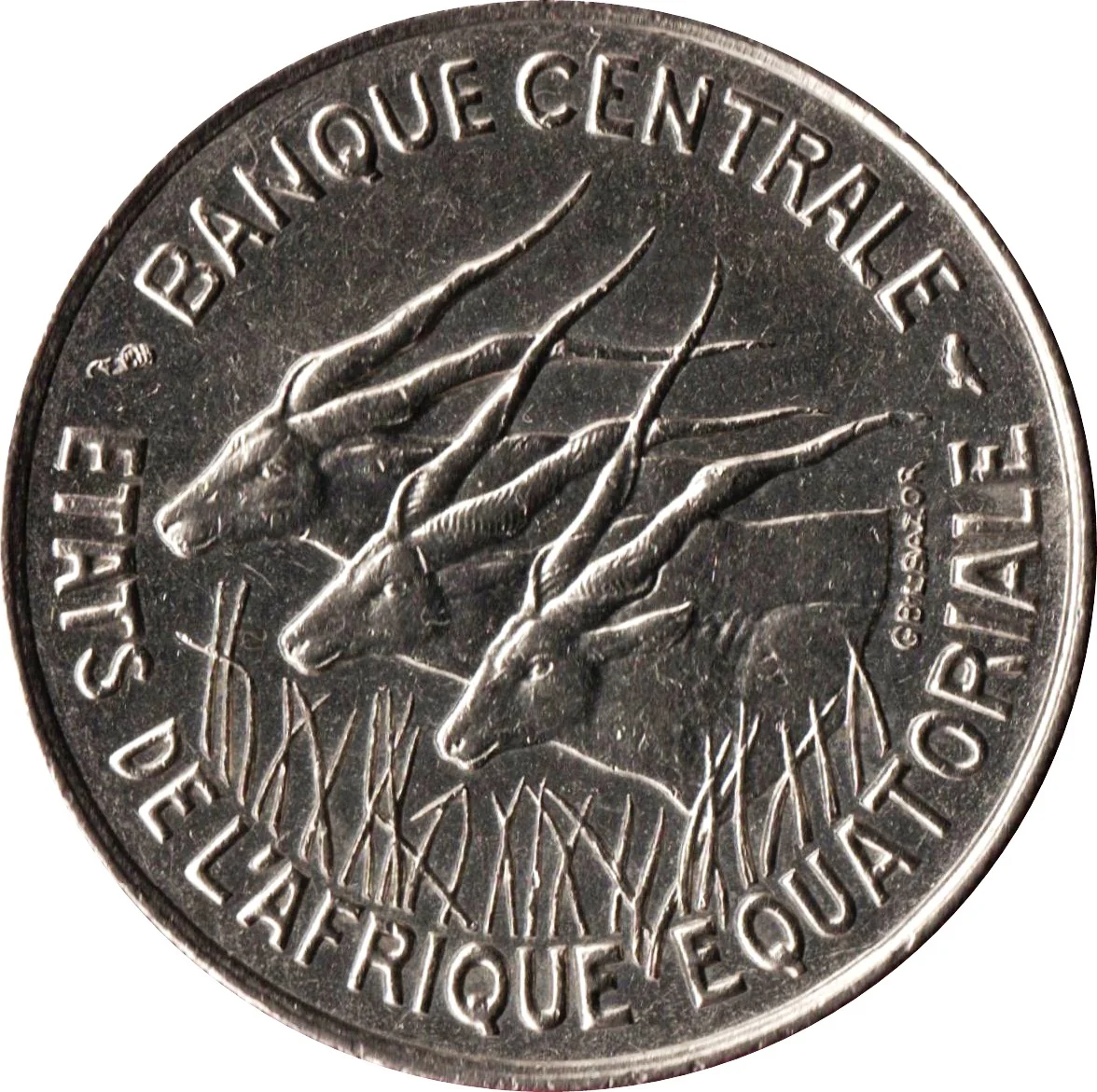
Description:
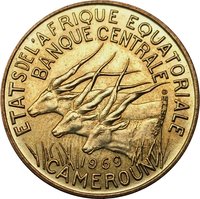
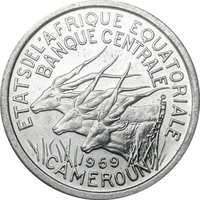
Three giant elands remain.
Inscription:
BANQUE CENTRALE
GB·L·BAZOR
ETATS DE L'AFRIQUE EQUATORIALE
GB·L·BAZOR
ETATS DE L'AFRIQUE EQUATORIALE
Translation:
CENTRAL BANK
GB·L·BAZOR
STATES OF EQUATORIAL AFRICA
GB·L·BAZOR
STATES OF EQUATORIAL AFRICA
Script: Latin
Language: French
Engravers: Gabriel Bernard, Lucien Bazor
Reverse
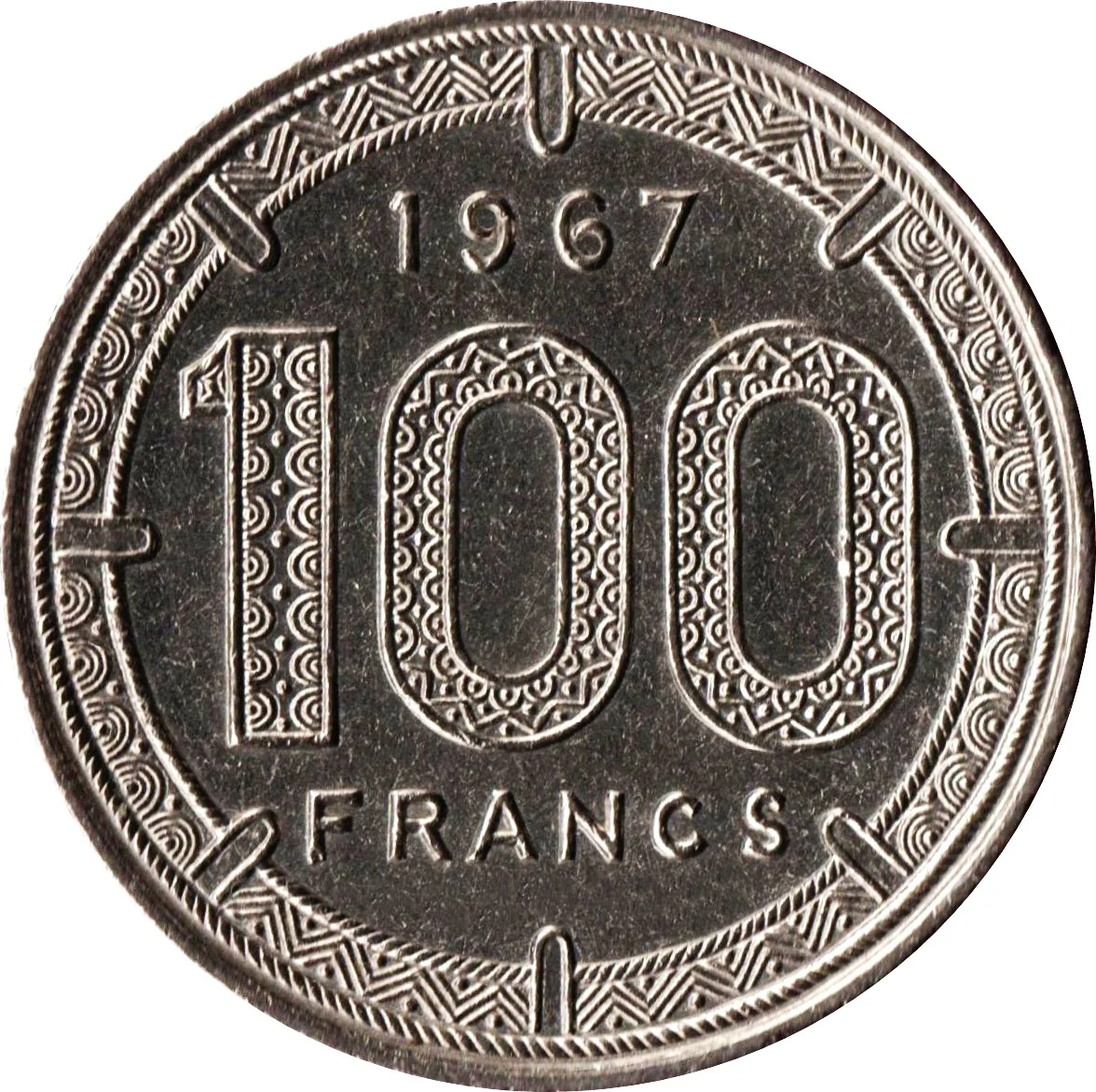
Description:
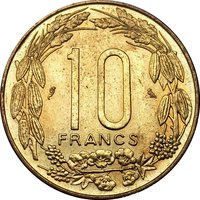
Denomination and date within ornamental band.
Inscription:
1967
100
FRANCS
100
FRANCS
Script: Latin
Engravers: Gabriel Bernard, Lucien Bazor
Edge
Reeded
Mints
| Name | Mark |
|---|---|
| Monnaie de Paris | — |
Mintings
| Year | Mint Mark | Mintage | Quality | Collection |
|---|---|---|---|---|
| 1966 | — | 6,208,500 | ||
| 1967 | — | 5,791,500 | ||
| 1968 | — | 6,200,000 |
Historical background
In 1966, the currency situation in the Central African States was defined by the newly established Central African CFA franc (XAF), which had been created just five years earlier. This currency was the direct successor to the CFA franc issued by "Banque Centrale des États de l'Afrique Équatoriale et du Cameroun" and represented a crucial instrument of monetary cooperation with France. The system guaranteed fixed convertibility and a stable peg to the French franc, providing monetary stability for the member states of the Customs and Economic Union of Central Africa (UDEAC)—namely Chad, the Central African Republic, Congo (Brazzaville), and Gabon, with Cameroon participating closely.
The institutional framework was managed by the Banque Centrale des États de l'Afrique Équatoriale et du Cameroun (BCEAEC), headquartered in Paris. This arrangement meant that while the member states benefited from the credibility of the fixed exchange rate and the French Treasury guarantee, they relinquished direct control over their monetary policy. In 1966, this system was operating smoothly in a technical sense, but it existed within a politically complex post-independence landscape where questions of economic sovereignty and the benefits of the fixed peg were subjects of quiet debate among the new national elites.
Overall, the currency situation in 1966 was one of enforced stability and continuity with the colonial monetary area. The CFA franc system facilitated trade with France and within the region, but it also structurally linked the economies of these nascent nations to the French financial system. This period was less about dramatic currency crises and more about the consolidation of a monetary framework that would shape the region's economic dependencies and policy choices for decades to come.
The institutional framework was managed by the Banque Centrale des États de l'Afrique Équatoriale et du Cameroun (BCEAEC), headquartered in Paris. This arrangement meant that while the member states benefited from the credibility of the fixed exchange rate and the French Treasury guarantee, they relinquished direct control over their monetary policy. In 1966, this system was operating smoothly in a technical sense, but it existed within a politically complex post-independence landscape where questions of economic sovereignty and the benefits of the fixed peg were subjects of quiet debate among the new national elites.
Overall, the currency situation in 1966 was one of enforced stability and continuity with the colonial monetary area. The CFA franc system facilitated trade with France and within the region, but it also structurally linked the economies of these nascent nations to the French financial system. This period was less about dramatic currency crises and more about the consolidation of a monetary framework that would shape the region's economic dependencies and policy choices for decades to come.
🌱 Common