

4 doubles – Guernsey
Add to wishlist
Context
Years: 1956–1966
Country: British Crown dependencies
Issuer: Guernsey
Ruler: Elizabeth II
Currency:
(1808—1971)
Demonetized: Yes
Total mintage: 508,864
Material
References
KM: #
Numista: #10300
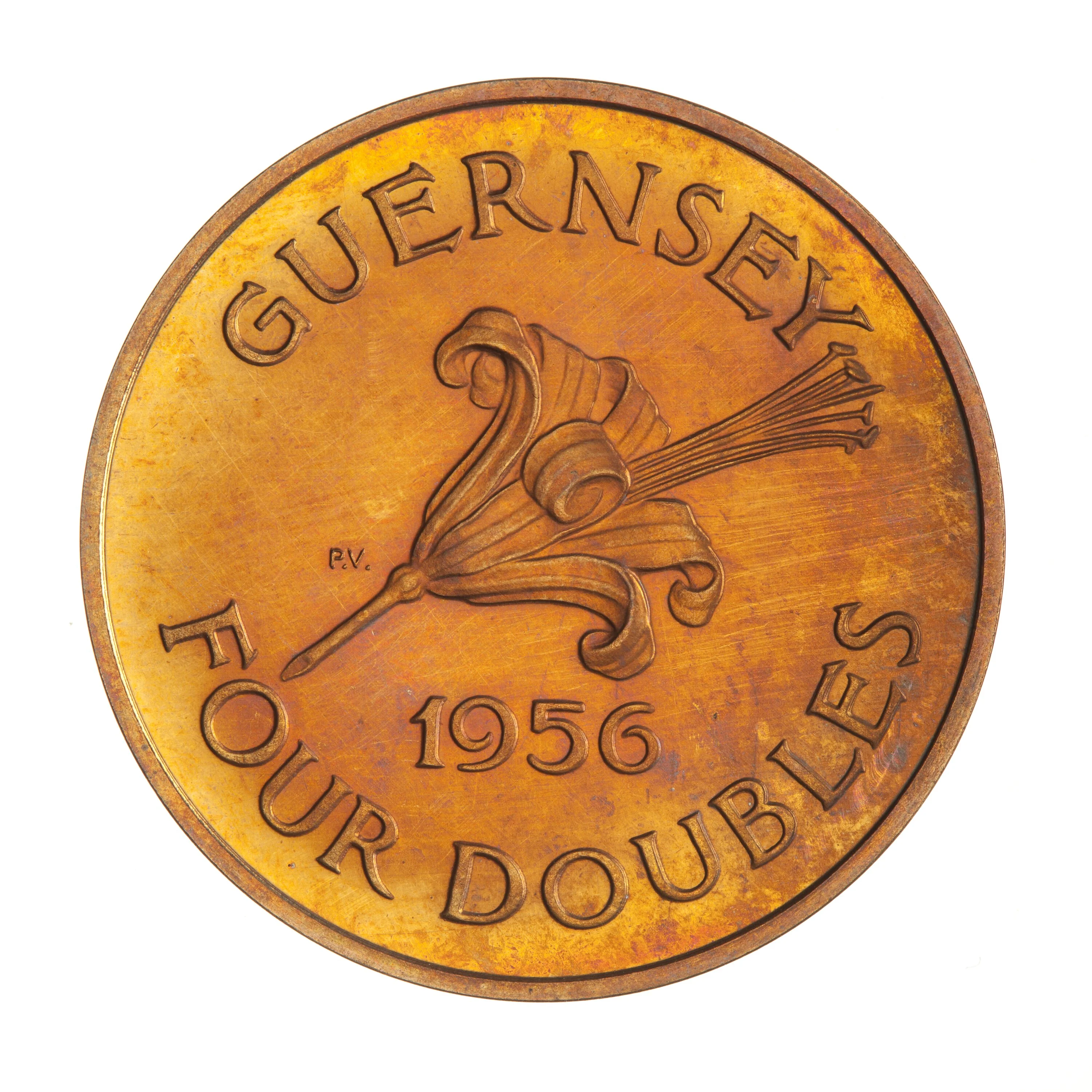
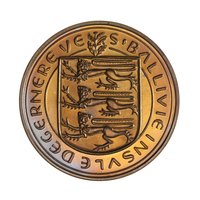
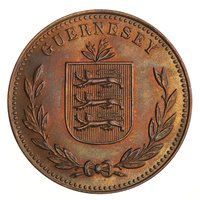
Obverse
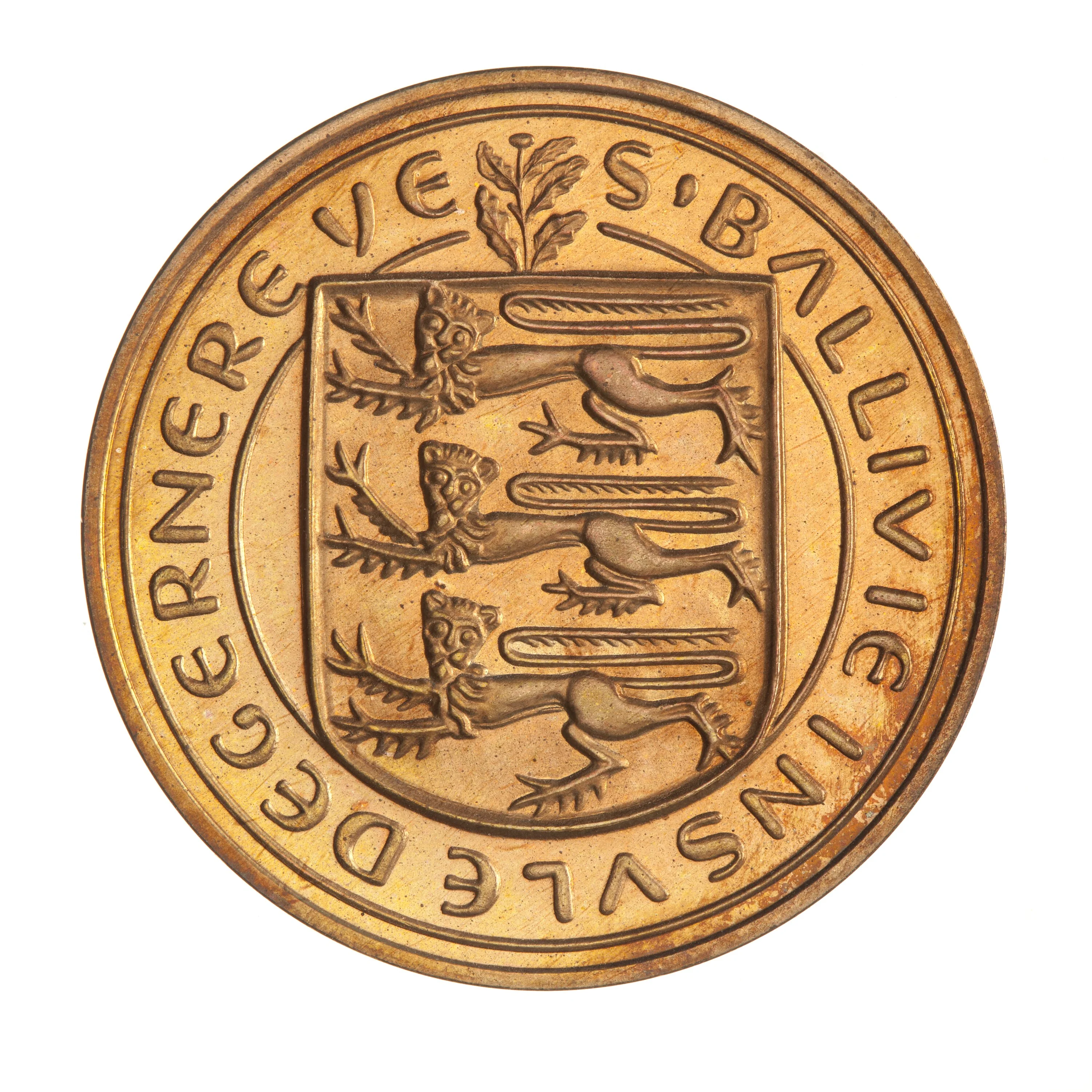
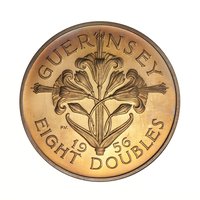
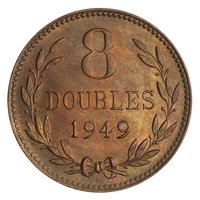
Reverse
Description:
Guernsey lily: a pink autumn flower from South Africa.
Inscription:
GUERNSEY
P.V.
1956
FOUR DOUBLES
P.V.
1956
FOUR DOUBLES
Script: Latin
Engraver: Paul Vincze
Edge
Plain
Mints
| Name | Mark |
|---|---|
| Royal Mint (Tower Hill) | — |
Mintings
| Year | Mint Mark | Mintage | Quality | Collection |
|---|---|---|---|---|
| 1956 | — | 494,664 | ||
| 1956 | — | 4,200 | Proof | |
| 1966 | — | 10,000 | Proof |
Historical background
In 1956, Guernsey's currency situation was defined by its unique, dual-system relationship with the British pound sterling. The island, as a British Crown Dependency, did not issue its own decimal currency at the time; that would not begin until 1971 with the introduction of the Guernsey pound. Instead, the official circulating currency was sterling, with Bank of England notes and British coinage used in everyday transactions. However, Guernsey did issue its own local paper money—Guernsey Treasury notes in denominations like £1 and £10—which were not legal tender in the United Kingdom but were accepted at par with sterling on the island. This created a practical, localized currency within the broader sterling zone.
The economy in the mid-1950s was relatively stable, with horticulture (particularly tomatoes and flowers for export to the UK) and tourism as mainstays. This stability was reflected in the currency system, which operated smoothly without significant inflationary pressures or exchange concerns. The local note issue was carefully managed by the States of Guernsey, backed by sterling reserves and UK government securities, ensuring full confidence in their value. There was no central bank; the island's Finance Committee effectively acted as a currency board, guaranteeing convertibility.
This arrangement underscored Guernsey's political and economic autonomy while maintaining a crucial, fixed link to the UK monetary system. The system in 1956 was one of pragmatic hybridity: it facilitated local financial administration and identity through its own notes, yet relied entirely on the strength and stability of the sterling area for its external value and wider economic interactions. This period represented the calm before the significant monetary changes that would come with decimalisation and the later, more assertive development of the island's own coinage.
The economy in the mid-1950s was relatively stable, with horticulture (particularly tomatoes and flowers for export to the UK) and tourism as mainstays. This stability was reflected in the currency system, which operated smoothly without significant inflationary pressures or exchange concerns. The local note issue was carefully managed by the States of Guernsey, backed by sterling reserves and UK government securities, ensuring full confidence in their value. There was no central bank; the island's Finance Committee effectively acted as a currency board, guaranteeing convertibility.
This arrangement underscored Guernsey's political and economic autonomy while maintaining a crucial, fixed link to the UK monetary system. The system in 1956 was one of pragmatic hybridity: it facilitated local financial administration and identity through its own notes, yet relied entirely on the strength and stability of the sterling area for its external value and wider economic interactions. This period represented the calm before the significant monetary changes that would come with decimalisation and the later, more assertive development of the island's own coinage.
🌱 Common