

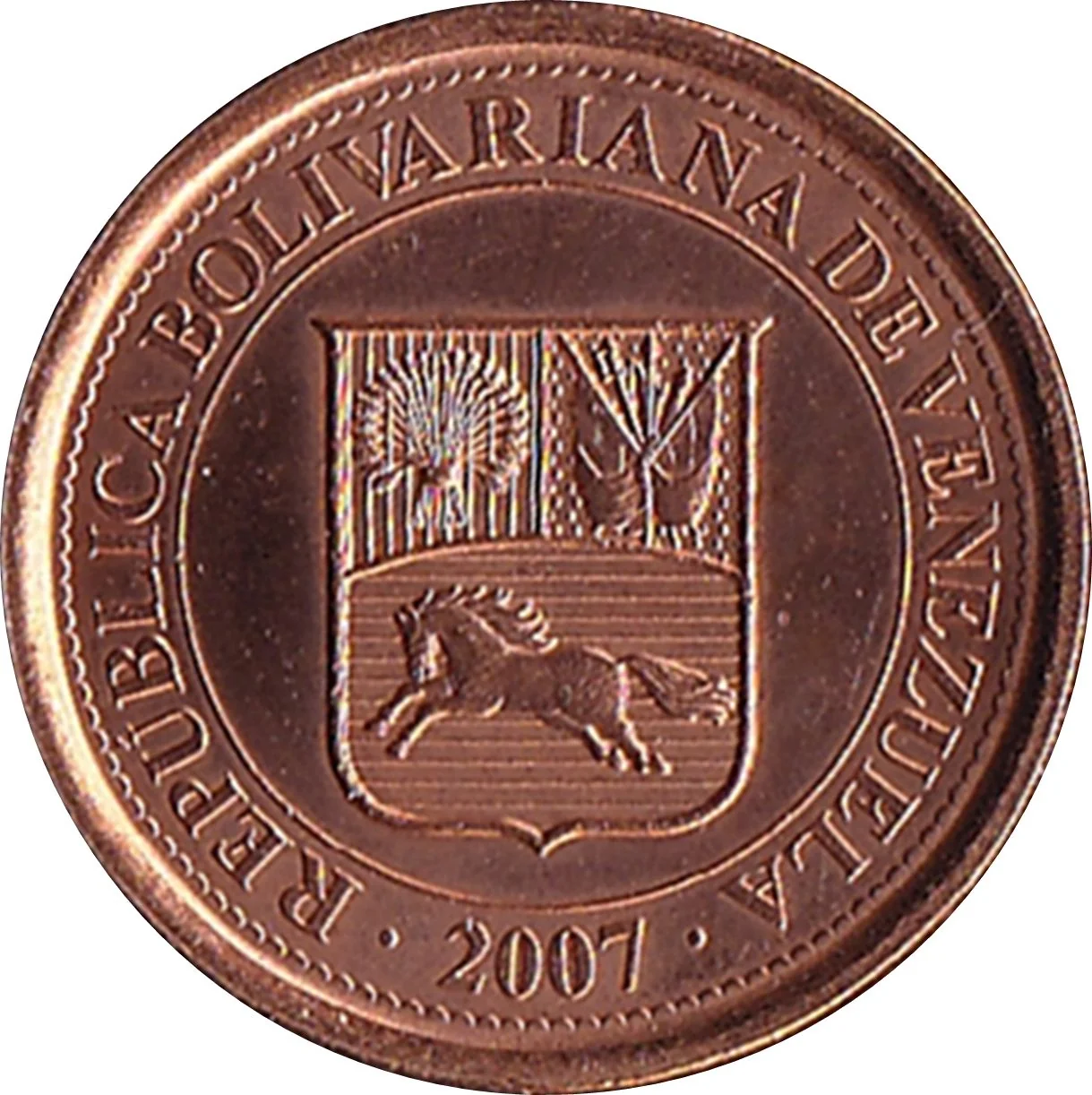
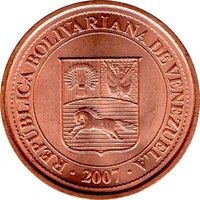
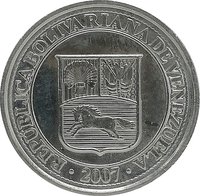
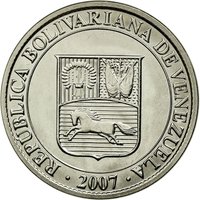
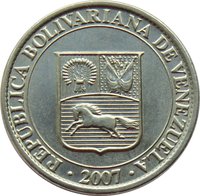
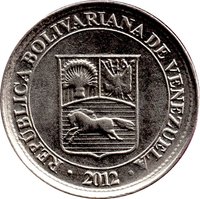
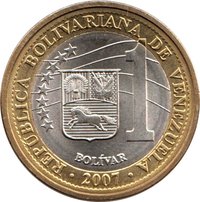
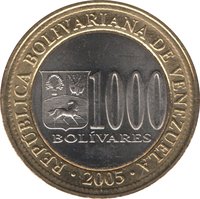
Obverse
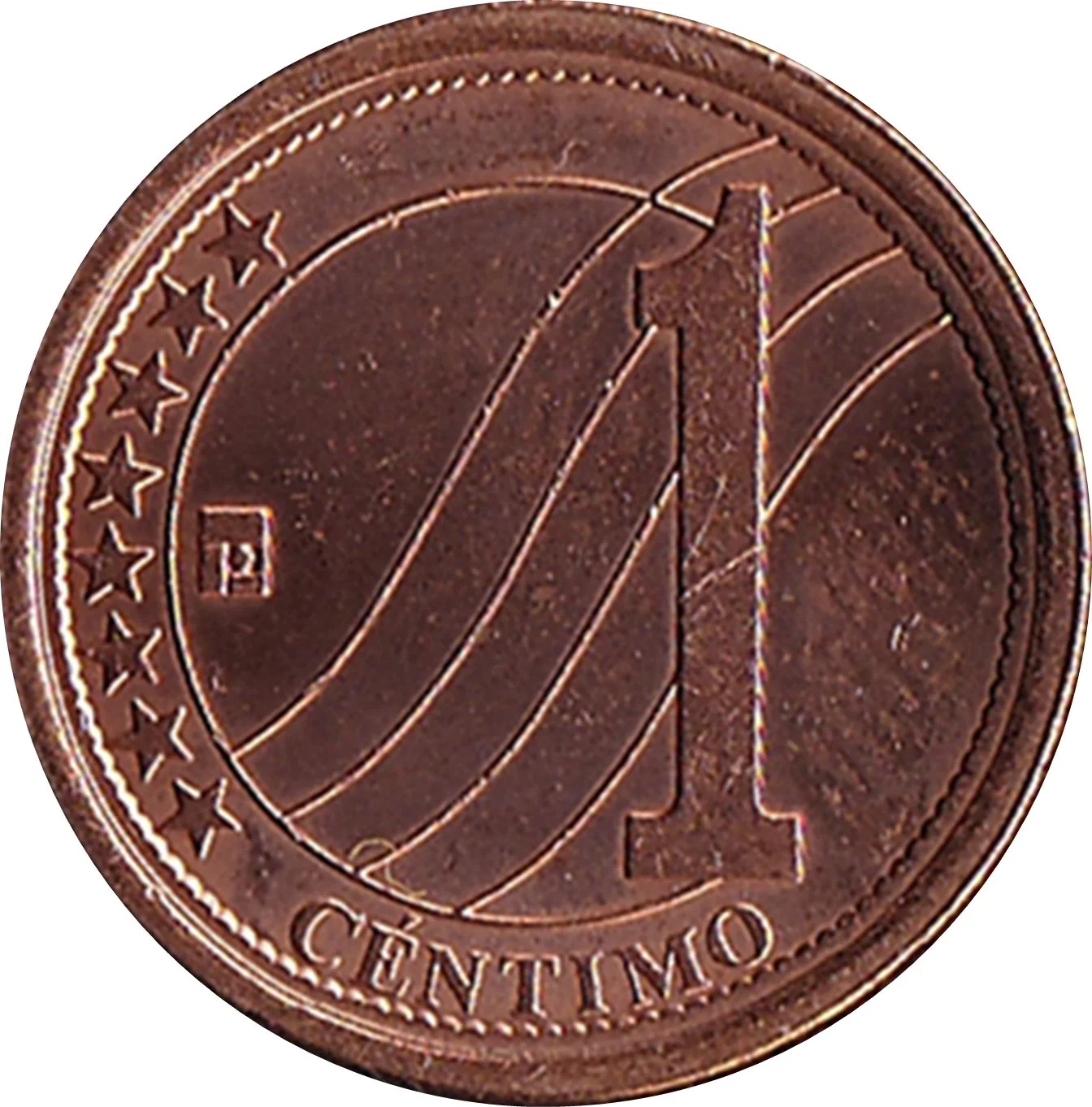
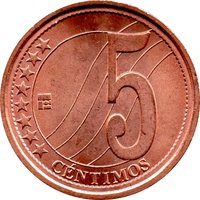
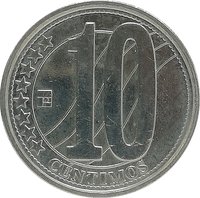
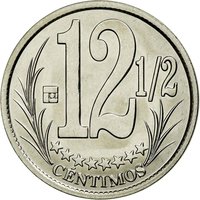
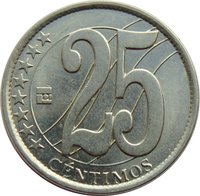
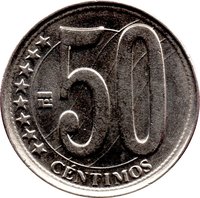
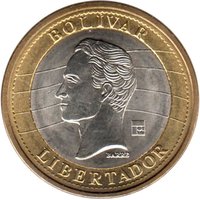
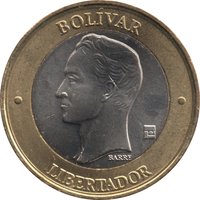
Reverse
Edge
Reeded
Categories
| Animal> Horse |
| Symbols> Coat of Arms |
Mints
| Name | Mark |
|---|---|
| Casa de la Moneda de Venezuela | — |
| Mint of Poland | — |
Mintings
| Year | Mint Mark | Mintage | Quality | Collection |
|---|---|---|---|---|
| 2007 | — | — | ||
| 2009 | — | — |
Historical background
In 2007, Venezuela's currency situation was characterized by a complex system of exchange controls that were beginning to show significant strain. President Hugo Chávez's government had implemented strict capital controls in 2003, creating a fixed official exchange rate (initially 2.15 bolívares to the U.S. dollar for essential goods and 4.30 for other transactions) to stem capital flight and preserve foreign reserves during a period of political turmoil. While initially successful in stabilizing the economy after a devastating national strike, these controls created a burgeoning black market for dollars as the government's currency agency, CADIVI, struggled to meet the high demand for foreign exchange from individuals and businesses.
The year was marked by growing economic distortions fueled by this multi-tiered system. As government spending increased ahead of a key constitutional referendum, imports surged, widening the gap between the official rate and the parallel market rate. This disparity created lucrative arbitrage opportunities and fostered corruption, as those with access to cheap official dollars could resell them on the black market for a massive profit. Furthermore, the overvalued bolívar at the official rate made non-oil exports uncompetitive and encouraged an overwhelming reliance on imports, undermining domestic production.
Despite high oil prices, which provided the state with ample dollar revenues, the rigid controls and expanding money supply to fund social programs planted the seeds for future instability. Inflation was accelerating sharply, ending 2007 at over 22%—the highest in Latin America at the time—as the bolívares injected into the economy chased a limited supply of imported goods. Thus, 2007 represented a critical juncture where the contradictions of the control regime were becoming apparent, setting the stage for the severe currency crises, rampant inflation, and multiple devaluations that would define the Venezuelan economy in the following decade.
The year was marked by growing economic distortions fueled by this multi-tiered system. As government spending increased ahead of a key constitutional referendum, imports surged, widening the gap between the official rate and the parallel market rate. This disparity created lucrative arbitrage opportunities and fostered corruption, as those with access to cheap official dollars could resell them on the black market for a massive profit. Furthermore, the overvalued bolívar at the official rate made non-oil exports uncompetitive and encouraged an overwhelming reliance on imports, undermining domestic production.
Despite high oil prices, which provided the state with ample dollar revenues, the rigid controls and expanding money supply to fund social programs planted the seeds for future instability. Inflation was accelerating sharply, ending 2007 at over 22%—the highest in Latin America at the time—as the bolívares injected into the economy chased a limited supply of imported goods. Thus, 2007 represented a critical juncture where the contradictions of the control regime were becoming apparent, setting the stage for the severe currency crises, rampant inflation, and multiple devaluations that would define the Venezuelan economy in the following decade.
Series: 2007 Venezuela circulation coins
🌱 Common