

5 pesos – Philippines
Add to wishlist
Philippines
Context
Years: 1975–1982
Issuer: Philippines
Issuing organization: Central Bank of the Philippines
Period:
(since 1946)
Currency:
(since 1967)
Demonetization: 2 January 1998
Total mintage: 20,141,993
Material
References
KM: #
Numista: #4518
Value
Exchange value: 5 PHP
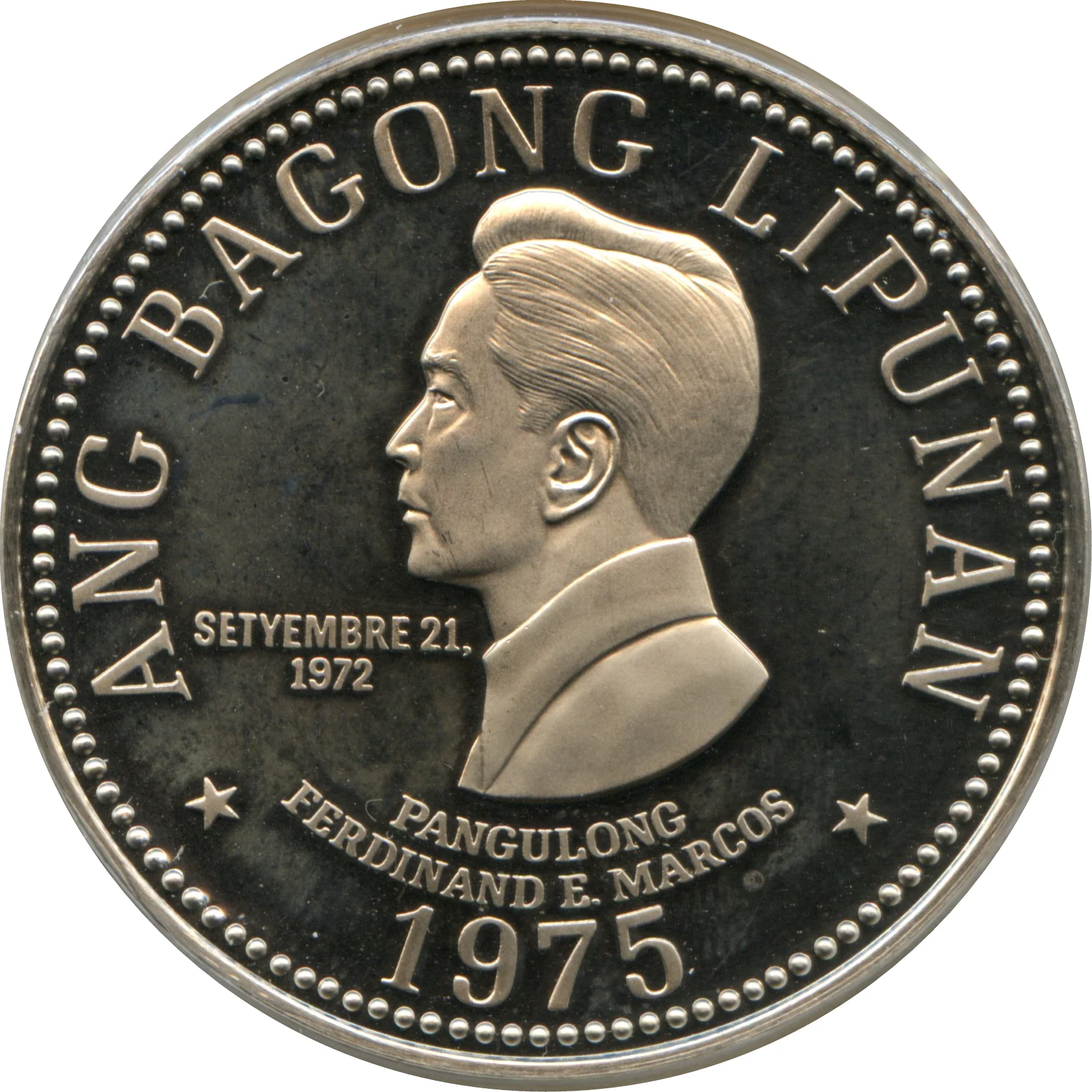
Obverse
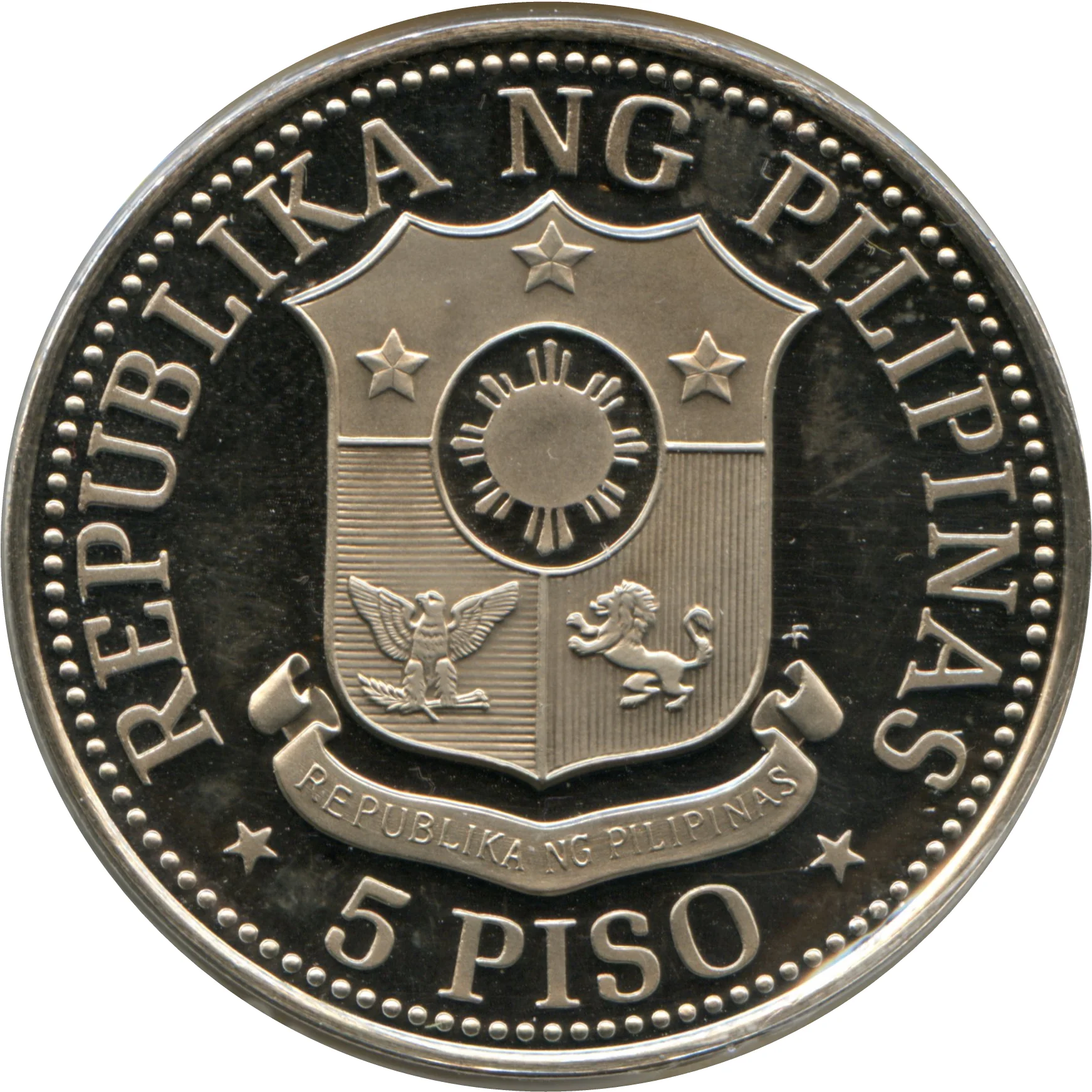
Reverse
Description:
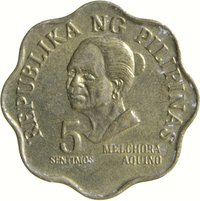
Bust of Ferdinand E. Marcos facing left.
Inscription:
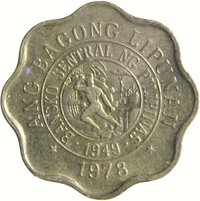
ANG BAGONG LIPUNAN
SETYEMBRE 21,
1972
PANGULONG
FERDINAND E. MARCOS
* 1975 *
SETYEMBRE 21,
1972
PANGULONG
FERDINAND E. MARCOS
* 1975 *
Translation:
THE NEW SOCIETY
SEPTEMBER 21,
1972
PRESIDENT
FERDINAND E. MARCOS
* 1975 *
SEPTEMBER 21,
1972
PRESIDENT
FERDINAND E. MARCOS
* 1975 *
Script: Latin
Language: Tagalog
Engraver: Thomas James Ferrell
Edge
Plain
Categories
| Person> Politician |
| Symbols> Coat of Arms |
Mints
| Name | Mark |
|---|---|
| Munich | — |
| Sherritt Mint | — |
| BSP Security Plant Complex | BSP |
| Franklin Mint | (FM) |
Mintings
| Year | Mint Mark | Mintage | Quality | Collection |
|---|---|---|---|---|
| 1975 | — | 20,000,000 | ||
| 1975 | FM | 3,850 | Matte | |
| 1975 | FM | 7,875 | Special Uncirculated | |
| 1975 | FM | 39,000 | Proof | |
| 1976 | FM | 10,000 | Matte | |
| 1976 | FM | 9,901 | Proof | |
| 1976 | FM | 1,826 | Special Uncirculated | |
| 1977 | FM | 10,000 | Matte | |
| 1977 | FM | 4,822 | Proof | |
| 1977 | FM | 354 | Special Uncirculated | |
| 1978 | FM | 4,792 | Proof | |
| 1978 | FM | 10,000 | Special Uncirculated | |
| 1979 | FM | 3,645 | Proof | |
| 1979 | FM | 10,000 | Special Uncirculated | |
| 1980 | FM | 3,133 | Proof | |
| 1980 | FM | 10,000 | Special Uncirculated | |
| 1981 | FM | 11,000 | Special Uncirculated | |
| 1981 | FM | 1,795 | Proof | |
| 1982 | — | — | ||
| 1982 | FM | — | Proof | |
| 1982 | FM | — | Special Uncirculated |
Historical background
In 1975, the Philippines operated under a managed currency regime with the peso pegged to the US dollar, a system established in the post-war period. This fixed exchange rate, initially set at 2 pesos to 1 dollar in 1965, was maintained by the Central Bank of the Philippines through strict controls and frequent intervention in the foreign exchange market. The primary objective was to provide stability for trade and investment, but it often masked underlying economic pressures and required significant reserves to defend the official rate.
The year fell within the middle of Ferdinand Marcos's authoritarian rule, which had declared martial law in 1972. This political context was crucial, as economic policy was highly centralized. While the official peg remained stable on paper, a growing black market for US dollars highlighted a divergence between the government's fixed rate and market realities. This period also saw increased external borrowing to fund large-scale infrastructure projects and maintain imports, leading to a steady rise in external debt that would later contribute to severe balance-of-payments problems.
Furthermore, the global oil price shocks of 1973-74 had a delayed but profound impact on the Philippine economy by 1975, straining foreign reserves and fueling inflation. The government responded with import controls and continued deficit spending. Consequently, while the currency's value was officially stable, the foundations for a future crisis were being laid. The rigid peg and controlled economy eventually proved unsustainable, leading to a major devaluation and a shift to a floating rate system in the early 1980s following an International Monetary Fund intervention.
The year fell within the middle of Ferdinand Marcos's authoritarian rule, which had declared martial law in 1972. This political context was crucial, as economic policy was highly centralized. While the official peg remained stable on paper, a growing black market for US dollars highlighted a divergence between the government's fixed rate and market realities. This period also saw increased external borrowing to fund large-scale infrastructure projects and maintain imports, leading to a steady rise in external debt that would later contribute to severe balance-of-payments problems.
Furthermore, the global oil price shocks of 1973-74 had a delayed but profound impact on the Philippine economy by 1975, straining foreign reserves and fueling inflation. The government responded with import controls and continued deficit spending. Consequently, while the currency's value was officially stable, the foundations for a future crisis were being laid. The rigid peg and controlled economy eventually proved unsustainable, leading to a major devaluation and a shift to a floating rate system in the early 1980s following an International Monetary Fund intervention.
Series: The New Society Series
🌱 Common