

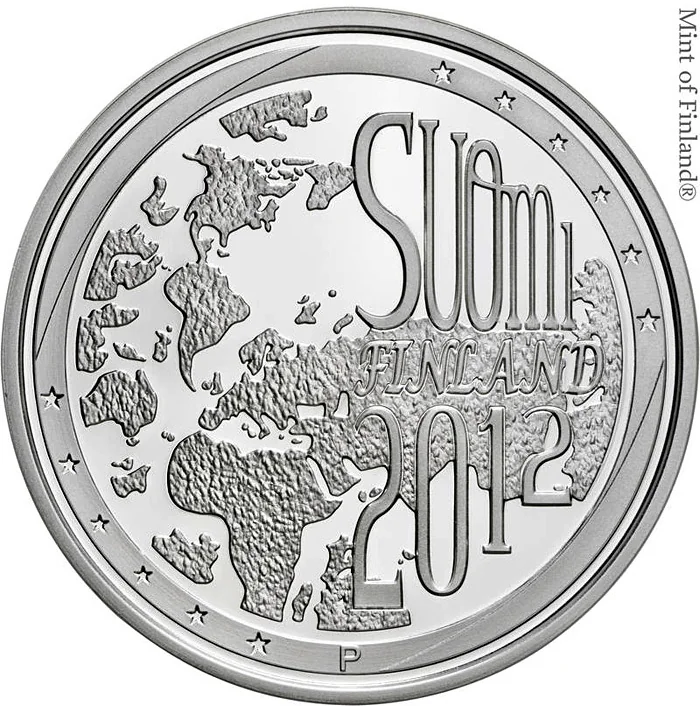
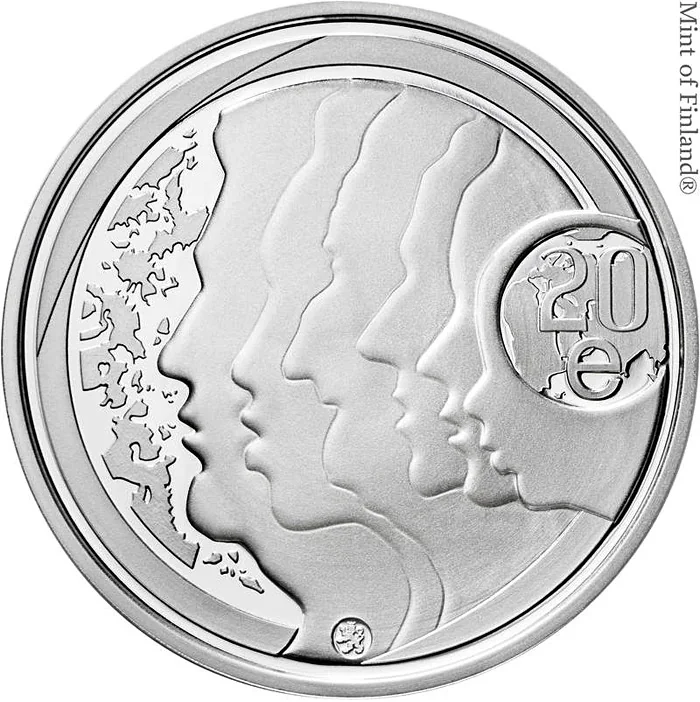
Obverse
Description:
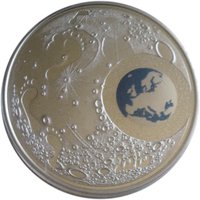
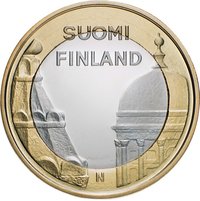
World map from Europe to Asia, country name above, date to the right.
Inscription:
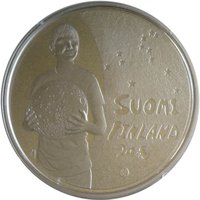
SUOMI
FINLAND
2012
P
FINLAND
2012
P
Translation:
Finland
Finland
2012
P
Finland
2012
P
Script: Latin
Engraver: Katri Piri
Reverse
Edge
Categories
| Map |
Mints
| Name | Mark |
|---|---|
| Mint of Finland | — |
Mintings
| Year | Mint Mark | Mintage | Quality | Collection |
|---|---|---|---|---|
| 2012 | — | 20,000 | Proof | |
| 2012 | — | 20,000 |
Historical background
In 2012, Finland was a full and established member of the eurozone, having adopted the euro as its sole currency in 2002. The country's monetary policy was therefore set by the European Central Bank (ECB), with a primary focus on price stability for the entire currency bloc. Domestically, Finland's economy was still recovering from the severe global financial crisis of 2008-2009 and the subsequent European debt crisis, which had exposed vulnerabilities in its key export sectors, particularly electronics and forestry. However, compared to many southern eurozone nations, Finland maintained a strong fiscal position, a triple-A credit rating, and a relatively low debt-to-GDP ratio, which provided a buffer against the turmoil affecting the common currency area.
The dominant currency issue for Finland in 2012 was the ongoing European sovereign debt crisis, which posed a significant threat to the stability of the euro itself. Finnish policymakers and the public were deeply concerned about the risks of bailouts for crisis-hit countries like Greece, Portugal, and Spain. This led to a hard-line stance from Helsinki, which insisted on strict conditionality for rescue funds and famously negotiated for collateral from Greece in return for its contribution to the second bailout package. Domestically, there was growing skepticism about further integration and financial commitments to preserve the euro, a sentiment embodied by the rising "Finns Party" (Perussuomalaiset).
Despite the eurozone's challenges, the euro remained deeply integrated into Finland's economic framework. The currency situation was characterized by a paradox: while the common currency provided stability and eliminated exchange rate risk within its core trading area, the crisis also highlighted the loss of independent monetary tools to address national economic slumps. Finland's own competitiveness challenges, including high labor costs, were exacerbated by being locked into a strong euro, which was bolstered by Germany's robust economy. Thus, 2012 was a year where Finland navigated the tensions between its own prudent economic management and the collective storms threatening the currency union it depended upon.
The dominant currency issue for Finland in 2012 was the ongoing European sovereign debt crisis, which posed a significant threat to the stability of the euro itself. Finnish policymakers and the public were deeply concerned about the risks of bailouts for crisis-hit countries like Greece, Portugal, and Spain. This led to a hard-line stance from Helsinki, which insisted on strict conditionality for rescue funds and famously negotiated for collateral from Greece in return for its contribution to the second bailout package. Domestically, there was growing skepticism about further integration and financial commitments to preserve the euro, a sentiment embodied by the rising "Finns Party" (Perussuomalaiset).
Despite the eurozone's challenges, the euro remained deeply integrated into Finland's economic framework. The currency situation was characterized by a paradox: while the common currency provided stability and eliminated exchange rate risk within its core trading area, the crisis also highlighted the loss of independent monetary tools to address national economic slumps. Finland's own competitiveness challenges, including high labor costs, were exacerbated by being locked into a strong euro, which was bolstered by Germany's robust economy. Thus, 2012 was a year where Finland navigated the tensions between its own prudent economic management and the collective storms threatening the currency union it depended upon.
Series: Éthique
💎 Extremely Rare