

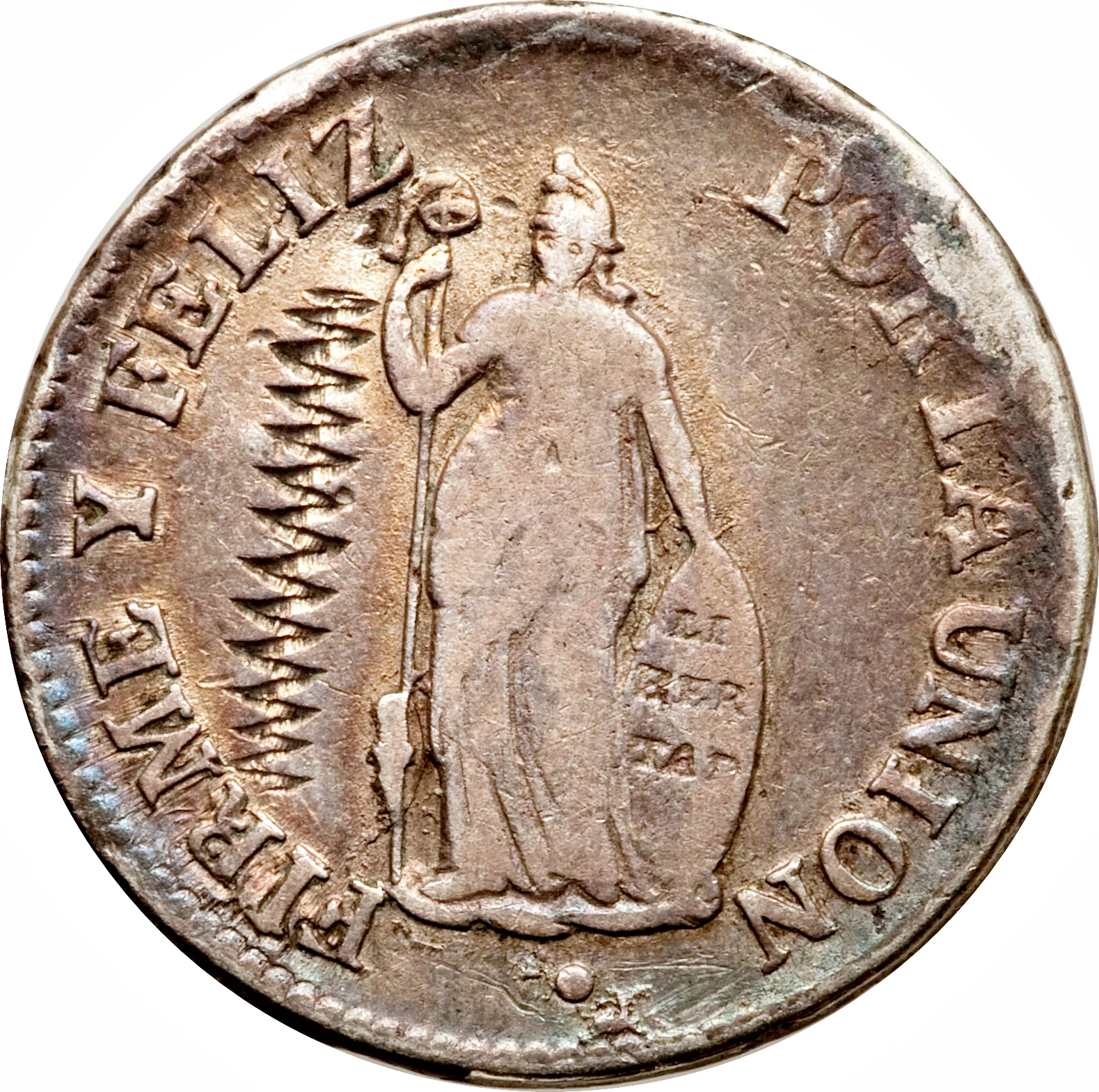
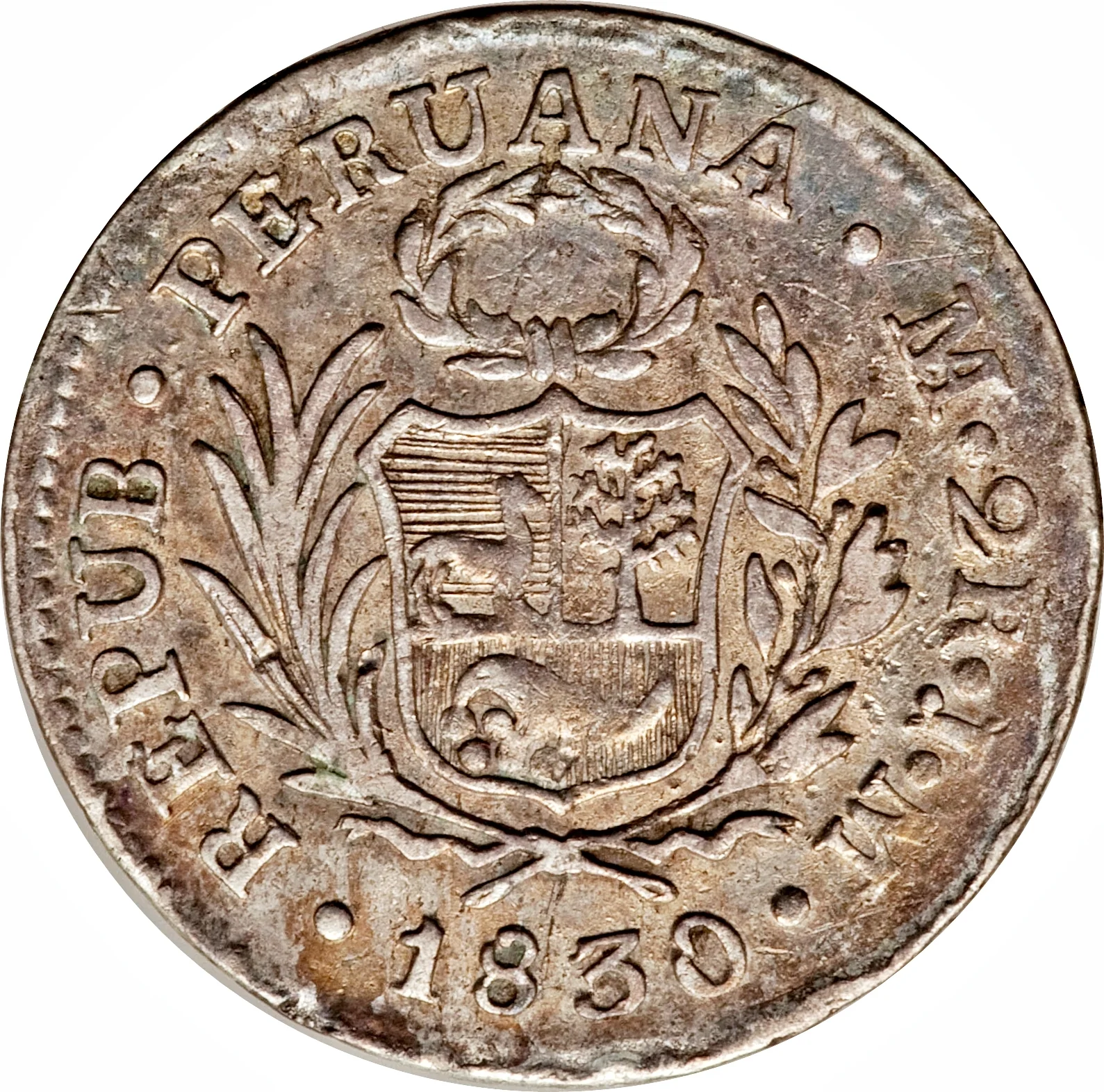
2 Reales – El Salvador
El Salvador
Context
Material
References
KM: #Click to copy to clipboard103
Numista: #45032
Value
Bullion value: $17.68
Mints
| Name | Mark |
|---|---|
| Lima | — |
Mintings
| Year | Mint Mark | Mintage | Quality | Collection |
|---|---|---|---|---|
| — | — | — |
Historical background
In 1834, El Salvador was navigating a complex and unstable currency landscape, a direct legacy of its recent independence from Spain in 1821 and its subsequent incorporation into the Federal Republic of Central America. The nation lacked a unified, sovereign monetary system. The primary circulating medium was the Spanish colonial silver real, often cut into fractional pieces (like pesos, reales, and cuartillos), but its supply was inconsistent and often insufficient for commerce. Alongside these physical coins, a chaotic mix of foreign currencies—including coins from other Central American states, Mexico, Peru, and even older Spanish columnarios—circulated at fluctuating values, creating confusion and hindering trade.
This monetary fragmentation was exacerbated by a critical shortage of small-denomination coinage for daily transactions. To fill this void, local municipalities and merchants often issued their own crude tokens or paper vales (promissory notes), but these had limited acceptance and no guarantee outside their immediate locality. The federal government attempted to impose order by minting national coins at the Guatemala City Mint, but production was limited and failed to meet the demand across the vast and poorly connected federation. Consequently, Salvadoran economic life was characterized by barter, unreliable credit, and constant haggling over the worth and authenticity of a bewildering array of metallic and paper instruments.
The situation reflected deeper economic and political strains. El Salvador's primary export, indigo, faced volatile international prices, limiting the inflow of stable foreign exchange (like silver pesos). Furthermore, the weak federal authority could not enforce a standardized monetary policy, leaving individual states like El Salvador to cope with the consequences. This chaotic currency environment stifled internal commerce, discouraged investment, and became a significant point of contention, fueling Salvadoran desires for greater economic autonomy—a factor that would contribute to the eventual dissolution of the federation and the establishment of El Salvador as a fully independent republic in 1839.
This monetary fragmentation was exacerbated by a critical shortage of small-denomination coinage for daily transactions. To fill this void, local municipalities and merchants often issued their own crude tokens or paper vales (promissory notes), but these had limited acceptance and no guarantee outside their immediate locality. The federal government attempted to impose order by minting national coins at the Guatemala City Mint, but production was limited and failed to meet the demand across the vast and poorly connected federation. Consequently, Salvadoran economic life was characterized by barter, unreliable credit, and constant haggling over the worth and authenticity of a bewildering array of metallic and paper instruments.
The situation reflected deeper economic and political strains. El Salvador's primary export, indigo, faced volatile international prices, limiting the inflow of stable foreign exchange (like silver pesos). Furthermore, the weak federal authority could not enforce a standardized monetary policy, leaving individual states like El Salvador to cope with the consequences. This chaotic currency environment stifled internal commerce, discouraged investment, and became a significant point of contention, fueling Salvadoran desires for greater economic autonomy—a factor that would contribute to the eventual dissolution of the federation and the establishment of El Salvador as a fully independent republic in 1839.

✨ Legendary